
Content Creation | Audience Development | Engagement Marketing
5 Rules of Engagement…Marketing
Easy, applicable rules for building an audience that will last.
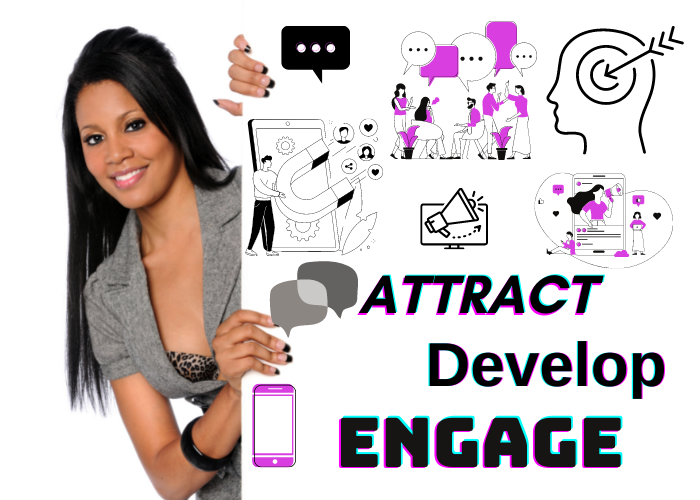
As creators, artists, writers, crafters, and makers — this is our time more than any other time in history. We have an opportunity to partner with platforms and reach our audience, clients, and supporters directly.
We have the power to create content we are passionate about and "make things" we love. Certain generations remember when it was rare to have direct contact with audiences or supporters of your work.
Now, we have the Creator/Passion Economy built on something silently growing as a marketing strategy online. It's called Engagement Marketing.
For Those Who Want to Build a Business and Earn a Living With Your Creativity
If you are serious about building an audience and making a lucrative living with your creativity, you may want to read this story all the way through. This research and knowledge changed everything for me as a creator.
So, I warn you. This is a Deep Dive.
If you don't think engagement and audience development are essential, click on your profile pic and scroll down to Settings. After you click on Settings, look to your left. You will see "Audience Development New." What's that about?
“It’s about something more important than trying to figure out the algorithm.”
It's about engagement.
Engagement Marketing started with emails, chatrooms, and forums, and now we have Social Media Networks.
Social Media platforms allow us to communicate with people all over the world. Now, most platforms offer creators their platform by forming paid partnerships to keep the content coming.
Most importantly, more social media platforms allow you to build an email list of your followers through subscriptions.
Yeah, we all can make money if we can get eyes on our content. But wait…
Those eyes belong to real people. That's the difference between on-page marketing, metadata, and engagement marketing. It's not a spider crawling or semantic indexing of words (all those things are still important). Instead, engagement marketing and audience development are about people.
Therefore, let's get down to some rules of engagement…

1 Your Audience is made up of People. Please get to know them. Get to know your audience. Your audience is a group of people, not bots. If you want to differentiate the needs and wants of your audience, you can develop an Audience Profile.
You can get to know your potential audience by following them.
"But Carmellita, I thought I was supposed to get followers."
Look, folks, the tide has changed. Thousands upon thousands of people vie for followers every day. On this platform alone, there are over 190,000 writers and 100,000,000 readers. Yes, some writers are readers, too (I am). Just sit with that for a moment. I'll wait…
But do you know what your readers are reading, watching, and listening to?
Who else are they engaging with on various Social Media Platforms?
Does this mean you have to investigate every follower? Oh, no. Nobody has that much time. However, if you take the time to learn more about at least 100 of your followers, you will start to see a pattern develop. And you will discover:
- What does your potential audience care about?
- Who does your potential audience care about?
- What are their values?
- And what they want to see from you.
- What are your common passions?
Answers to these questions are how we build community.
On this platform, you can ask questions at the end of your stories. Ask their perspective on the topic you've written. Ask your readers to leave their thoughts or opinions in the comments section.
Asking questions and opinions has worked well for me. I have enjoyed the feedback of my readers. Two particular stories in December taught me the value of audience feedback:
- Healing the Tender Places of My Multidimensional Self…A New Year's Resolution for 2022
- 7 Ways You Underestimate Yourself in Your 20s
2 Create and make things your audience enjoys and values. You will need time to test, try things out, and get your newbie feet wet, but take the time. Discover what you are skillful at doing as a creator, writer, or maker and what you are passionate about.
You may be the Queen of personal essays on this platform, or people may be responding to your short-form life advice stories. You can still write what you like. Just write more of what people are responding to.
Discover ways to infuse what your audience is passionate about with subjects to which your audience is responding.
For example, you may be passionate about nature and poetry, yet your potential audience responds more to your life lessons and life advice stories. Then, perhaps you can write poems about nature, and in a small personal essay after that poem, you can share some life advice related to nature and poetry.
Do this frequently and passionately, and your audience will come to know you for this work.
"I create what I like. I write what I like," one might say.
Well, to that, I say, "Well, do you boo!" No, really, "do you." That's not the wrong thing to do.
If you are a creator, creating for you, not an audience, supporters, and clients, then okay. Maybe you want to get better at a particular skill, so you are using a specific Social Media platform to get feedback and get better. It's okay.
But don't expect to shove what you want down someone else throat because now you're ready to make money.
This is one of the most egregious acts you can perpetrate as a creator, writer, or maker. If you made only what you wanted without consideration of an audience or community, don't get upset because others aren't responding to it.
3 Learn from those at the top of your niche before they were at the top. What? Study those top creators in your industry. Go back to their old posts and see how they responded to others early in their career or business.
If it's a blog, go back to their earliest blog posts. If it is a Social Media page like Instagram, go back to their earliest Instastories or Reels. What did they share, and how did they respond to their audience?
You see, sometimes we get stuck in our heads as creators. We're trying to figure it out, Bass Ackwards. Trust me, I've done it, and I've had to come to my senses and think more strategically.
It’s not about what the Top folks are doing now. It’s about what they did to get there — when they were you.
For instance, a good portion of top writers like Tim Denning and Ayo Dejedi's audience isn't people reading their audience because they enjoy their content. A number of their followers are trying to figure out either how to write like them or what they write, hoping they'll get sprinkled with some crumbs from their audience.
Don’t be a crumb snatcher.
At this point, it is more beneficial to follow what I call "Recent Risers" on Social Media. Why? Because algorithms have changed in just the last year. The social media platforms are gearing up for "The Creator/Passion Economy."
Things are going to be different. Why do you think many social media platforms are removing dislike and like buttons?
It's not because they care about your feelings or are worried about the latest whistleblower who said social media gets off on you feeling bad.
It's because the Creator/Passion Economy is rising.
Simply put, the passion economy is a new wave of niche communities that are challenging traditional social media giants.
Instead of the generalised and non-specific content of larger social media platforms, the niche communities focus on creating and sharing content that resonates with individuals. — Benjamin Vaughan, Forbes.com
That's right. Everybody's got something. No one is better than anyone else in the Creator/Passion Economy. As a micro-influencer, you could build a YouTube audience of 30,000 people who are more loyal and dedicated to your platform than Will Smith's 9.8 million subscribers.
You can create a loyal audience for your podcast with just 500 downloads a month.
more than 26 downloads, you’re in the top 50% of podcasts.
more than 72 downloads, you’re in the top 25% of podcasts.
more than 231 downloads, you’re in the top 10% of podcasts.
more than 539 downloads, you’re in the top 5% of podcasts.
You can attract and sustain this type of platform when you remember that you are not only building an audience but also creating communities — communities of people who share your passion and who may be creators.
Hence, knowing how to engage with others has become a marketable skill.
4 Reach out to Those Valuable People Left Behind in Your Niche. Unfortunately, the crumb snatchers are doing it wrong. These are valuable people who the more prominent folks can't get to.
People all over social media have questions. Content creators with hundreds of thousands and millions of followers can't answer all those questions.
Again on this platform, Tim Denning and Ayodeji Awosika couldn't possibly answer every question or engage with all of their audience. Those left behind are treasures. They are not crumbs for you to pick up by writing like Tim Dennings or the same articles Ayodeji writes.
They have questions. They need clarification. It is productive to look for:
- What are the gaps in how the big guys engage with their audience?
- Are they simply posting "thank you for reading" or "thanks (insert name)?"
- Are they responding at all?
- You can get in there and serve this audience. Perhaps you see unanswered questions in the comment section.
- No likes (or claps). No responses. Perhaps, you can clap and say, "Hey, Jennie, I agree. This is where we all need to start. You don't know how many times I messed up too. I'm glad someone understands. Here's what I would do differently."
No links to your stories (very rude). Just share some info. Gary Vaynerchuck calls this your $1.80. Give your 2 cents to 90 people a day on social media. You may not have time to do a whole $1.80, but you can do about $.60 daily. The point is, get in there and give some value!

5 Engage to Build and Build to Last. You wouldn't want to live in a house built in five days, and you don't want an audience full of people you hurried up and followed without learning anything about them.
It's okay to do a follow for follow on your first 100 or 200 folks to get some momentum and appease your aching heart (LOL), but don't continue this practice.
I made this mistake, and in my story, Fakers are gonna Fake…Even on Medium, you will discover the results of that mistake. I'm cleaning it up as we speak.
Fam (a kind way I refer to my audience, short for "Family"), when we build to last, we can grow.
If you build the foundation of your audience or supporters on:
- fake engagement
- thrown-together content (writing, posting videos, or blogging) because "I need some content)
- and copying what you think someone else is doing.
Your audience will eventually figure you out, and the walls of your community will come tumbling down.
6 Bonus: Good Communication Builds Great Communities. You know I had to add a bonus. This is a deep dive 😁! Once you have an audience, work to make it a community. If your audience is built to last, it can quickly transform into a community.
The developers and creators of this very platform got the message loud and clear. This platform offers email subscriptions for all writers. Tags are becoming more critical. I foresee more tools coming down the pipeline.
Platforms prioritize communication, so do your best to keep communication flowing in both directions. Communication is the key to engagement marketing.
Fam, I hope you found some valuable gems here. Have you been breaking any of these rules?
Please share your thoughts in the comments.
I've had conversations with many writers and/or read their stories about growth, content creation, and engagement on this platform to help me research, develop, and write this deep dive. These writers include:
Amanda Laughtland, Kamil, Bic Wonder, Yana Bostongirl, Sara Burdick, Jesse Wilson, Uwem Daniels, Matthew Prince, Justiss Goode, Winston, J.J. Pryor, Dr Mehmet Yildiz


