
5 Rules for YouTube Shorts THAT ACTUALLY WORK
I’m still learning… but this stuff is golden!
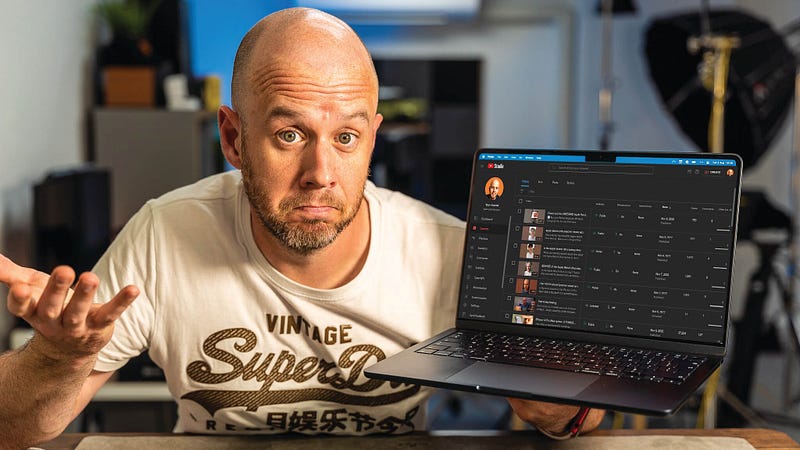
I’ve been putting a lot of effort into short-form video content recently.
Actually, let me rephrase that slightly. I’ve been putting enough effort into short-form video content recently. Which, as it turns out, isn’t that much. Sorry for misleading you.
It took me a while. Too long, really. But I now understand the power of YouTube Shorts. In the last few weeks, my hastily cobbled-together sub-60-second videos have drawn in thousands of viewers and added a surprising number of subscribers to my growing audience.
What has surprised me the most about YouTube Shorts, however, is how quickly you can discover what does and what doesn’t work. So, without further ado, these are my top five tips for creating YouTube Shorts that deliver results.
1. Strike when inspiration strikes
With the occasional exception, I plan each of my regular, long-form videos several weeks in advance. This affords me time to get the blog post written first, and then schedule the time required to shoot, edit, and publish the eventual video.
Time is a wonderful thing in video production. It helps you ensure that no stone is left unturned and that every final element is polished to your own exacting standards.
As it turns out, you don’t need anywhere near as much time to get a YouTube Short out into the wild. In fact, the quicker you are to leap on any inspiration that strikes during the day, the more successful the Short is likely to be.
This is because you’re probably onto something. That idea probably is perfect for a quick vertical video. What’s more, if you keep putting it off and avoid cracking on with it fast, the idea will be lost forever and it’ll be a huge opportunity missed.
Just get on with it, and bang out that Short!
2. Use the least amount of gear possible
This is, admittedly, a case of “do as I say, not as I do” because I fall foul of this particular rule far too often
I’m a bit of a perfectionist when it comes to video production (although I’ll let you be the ultimate judge of that) and I’m also a huge video gear geek. That means I’ll sometimes grab my Sony FX3 camera, RODE VideoMic Pro+, and PGYTECH Mantispod (or, if I’m feeling really fruity, the full-on, full-sized tripod) to shoot the Shorts idea I’ve just had.
This is silly. I don’t need any of that stuff. The expensive full-frame camera and the equally expensive lens attached to it won’t encourage more people to watch my video. Even the quality of that wonderful RODE mic is unlikely to have any bearing on the retention or engagement the video achieves.
When you have an idea for a YouTube Short, just use your smartphone — I can’t stress that enough. Attach it to a tripod if you feel you must, but if one isn’t to hand and if it feels like a massive faff, use your hand instead. I’m trying my very best to do this each time rather than reach for the expensive gear, I promise.
3. Repurpose new stuff
My newfound focus on YouTube Shorts has made me approach the production of my regular long-form content entirely differently.
Whereas I’d usually move directly onto my next video after the current one has been exported and scheduled, I now take a moment, sit back, and think about how that freshly-pressed video could be repurposed for YouTube Shorts.
If you’re doing YouTube right, you’ll be thinking in chapters. That’s exactly how all of my videos are structured. There’s a hook, an intro, and then three or four individual chapters that deliver the value I’ve promised. It’s a structure that works, and those chapters now deliver even more value for yours truly by turning into the focal point of my YouTube Shorts effort after the full video is finished.
It’s blindingly simple — and obvious. Let’s say you’ve got a ten-minute video you’re happy with that contains four chapters of valuable content. Those chapters are four Shorts-in-waiting! All you have to do is isolate them and trim the fat to ensure they sit well within the 60-second time limit.
Oh, and you know what I’m going to say — don’t hang around; get them chopped up, exported and either published or scheduled straightaway. If you put it off, you’ll never do it.
4. Repurpose old stuff
If like me, you’re a bit late to the Shorts party, you may fancy bulking up your short-form content library on YouTube.
A brilliant way to do this is to revisit your older videos and suss out which ones could be repurposed as Shorts. When you find a suitable video, it’s the same process as described above; chop up those chapters, distil them into something short, sharp, and punchy, and get them published as Shorts.
This won’t work for every historic video. For instance, I’d avoid anything that is time-bound or linked to events, products, or trends that have no present-day value. Trust me, though, you’ll still be surprised by how much short-form content you can unearth from your long-form archives.
5. Check your stats
As you might expect, YouTube doesn’t skimp when it comes to the data and analysis it provides for Shorts. In fact, it is pretty much identical to the insight you’re given into regular videos.
I’ve previously admitted to being rather terrible when it comes to analysing my own stats, and this remains something I’m working hard to rectify. You may, therefore, not be surprised to hear that I don’t dig quite as deeply into the performance of my Shorts as I perhaps should, but I know which numbers interest me at the moment.
The first is obvious — views. My Shorts aren’t hitting the big time at the moment; they range from 1,000 to 4,000 views each, but when you add that up across a week of multiple Shorts postings, it’s a lovely addition to my channel’s overall views tally.
I also pay close attention to the engagement. If a Short encourages lots of thumbs-ups and a bunch of positive comments, it has clearly sparked interest among viewers — I’ve got something right.
Lastly, there’s the all-important subscriber number. In my experience, a Short that attracts 3,000–4,000 views can tempt around five people to subscribe, on average. That may not sound like many but, again, if you add that up over the course of a week, it’s a very positive number indeed.
Converting as many views into subscribers as possible is what every YouTube strives for, and when you consider the low effort required to create and publish shorts, the return on your time investment is fantastic. Pay attention to the stats I’ve mentioned above, and you’ll know exactly which Short to make next.
Wrapping up
I’m still in the early days of my Shorts journey and I must point out that I’m far from an expert. I’ll therefore continue to share my experience with this fascinating form of YouTube content and keep you updated as I go.
I hope these tips inspire you to start or maintain your Shorts adventure. I’ll leave you with one final tip, which is to ensure you don’t get too lost in the process of creating and publishing Shorts. By its nature, this process should be a very light lift in terms of your time and effort — and it certainly shouldn’t detract from making those all-important regular videos!
Take my free video editing class
My latest Skillshare class, Video editing basics in Final Cut Pro X (for YouTube success!) is live and free to try:
Learn how to edit a successful YouTube video
If you enjoy my writing, it’s only a snippet of what’s on Medium. I’m a paying member myself and highly recommend joining. Click here to join (a portion of your membership fee will be sent my way and therefore directly support my work!).
Originally published at https://markellisreviews.com on November 9, 2022.


