
Five Reasons Your Running Shoes Affect Your Technique
How to approach and maximize the purchase

Let your legs do the running, your mind do the pacing, and your heart do the pushing.
What about running shoes? Are they important for your runs? For me, they are as important as my mindset, heartbeat, and the condition of my legs.
Without them working for you, they’ll definitely work against you.
So, let’s look at three things to know before you buy it.
Set Up and Construction of a Shoe
There are some basic things you must know before you go to a store to buy your running shoes.
- How much support you get in the shoe’s arch. It’s very important for you to know how much your feet pronate. Some of us over-pronate and with the wrong shoes, we start to see some problems in our bodies in the first training sessions. There are running shoes that can help with this problem.
- What is the heel-drop of the shoe? Some of us need a thicker heel because we strike with our heels and need that extra support to protect the Achilles tendon and the calf muscle.
- How wide or narrow is the toe-box of the shoe? When our feet land on the ground, our toes naturally separate a little bit by the pressure of the foot strike. So, your natural pronation movement and your feet need to separate in the toe-box and must be wide enough to let your feet absorb all the impact. But not as much to make you feel that your feet are not fixed to the structure of the shoe.
1. Truth is, You Can Always Go Faster
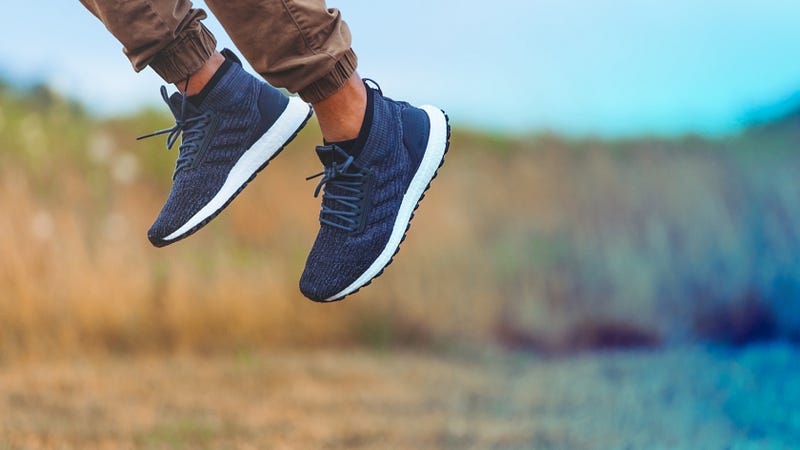
If you're a beginner, it’s important to have all the support you need in your running shoes, and to feel free to run without having to think you may twist your ankle on every step.
Good support in the arch and the heel is fundamental for those who are improving their running techniques.
Even if the shoe is a little heavier, don’t forget:
- If you’re a beginner, you shouldn’t buy the running shoe of a pro. Because this type of shoe is light with little support or cushioning. They may feel like you’re running barefoot. And you may injure your body because it is not prepared for all the initial impact it is going to suffer.
A good running shoe that was released in 2020 was the Asics Gel Nimbus 22.
Reviews say that the heel cushion is out of this world. So, if you’re a heel striker, take a look at this shoe. It is reported to have a lot of flexibility in the toe-box.
Our goal is always to go faster. We want to improve. To feel our body responding to our willpower. But doing it in a fast way, running over steps that must be meticulously followed, is hasty.
You have to be patient and respect the rule of evolution. And your running shoes must correspond to this evolution.
Running shoes must handle the demands of those who buy them, but at the same time, give the fundamental support for the athlete to increase his motor skills.
2. The Energy You Release Into the World Will Return Back to You
If you want to do a 5k to 10k race, and you’re preparing your body for this kind of distance, you need lighter, more breathable and comfortable shoes.
Don’t forget that the running shoe must always respect the characteristics of your feet. If you under-pronate or over-pronate, the shoe you buy should have arch protection so you can be secure in knowing the impact on your body will be supported by the shoe technology.
Running shoes always respond in energy return after you made the contact with the ground. And technology is the key to this little, but so important item.
Nobody wants to be wasting energy with each stride.
Any percentage of returned energy is enough to help you on your ride. And that’s exactly what you want when you buy running shoes.
They are your support to maximize your training sessions and your races.
“In order for that energy to be applied to your stride, it has to be returned at the right time, the right frequency, and the right location”, explains biomechanical expert Benno Nigg in his book Biomechanics of Sport Shoes.
3. Master Technique and Then Forget About It and Be Natural
Let’s be honest, whatever running shoes you buy, if you look like a clumsy Shrek when you’re on the road, there’s nothing I can do for you.
If you are a beginner, and even if you have run for a while, you must focus on technique.
Always.
I’ll tell you why.
Our body is not perfect. Our skeleton has several constraints, and we have to live with them. But we cannot be held hostage by those constraints.
Our back is probably misaligned. Our knees always hurt when we started running.
There’s always something that disturbs us in our functional biomechanics.
However, Goss and Gross (2012) found in their review that there is scarce scientific evidence to substantiate the claims of injury prevention through natural running techniques, such as Chi Running. Results from a survey conducted among Chi Runners suggests that a change in the running technique and a transition to a more natural running style might be beneficial (Cucuzzella 2008; Cucuzzella 2011), but methodological weaknesses restrict the validity and generalisation of these results (Goss and Gross 2012).
So, it appears more research should be done regarding running techniques.
Some studies reflect the importance of Chi Running on technique. Yet, I’m still confused when I go deep in the most credential reviews from the most reputable universities.
There is one thing I’m sure of.
Like everything in life, you can’t go on ignorance. You must know what you’re doing when you go for a run. If you don’t do that, if you don’t care, then shoes may not save you from future injuries and bad posture.
Let’s hear what Benjamin Hardy has to say about technique and self-improvement:
“For best results: Spend 20% of your energy on your work and 80% of your energy on recovery and self-improvement. When you’re getting high-quality recovery, you’re growing. When you’re continually honing your mental model, the quality and impact of your work continually increase. This is what psychologists call, ‘Deliberate Practice.’ It’s not about doing more, but better training. It’s about being strategic and results-focused, not busyness-focused.”
4. You Know You’re a Runner When…Your Running Shoes Are the Most Expensive Pair of Shoes You Possess
There’s no secret about this.
If you want the best, you have to pay the price.
I’m a trail runner. I run in the mountains, and my favorite brand is Salomon. My last acquisition was Salomon Sense Ride 2. They cost me €130.
I’d rather have my shorts torn than take poor quality running shoes.
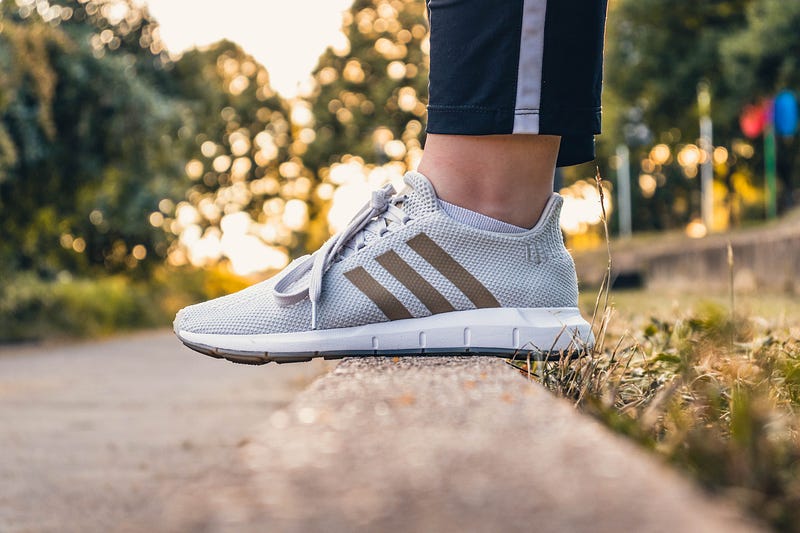
When I run on the road, I pick my Adidas Ultra Boost 20. They cost me €160.
By my math, I invested €290 in my best running shoes. And that’s fine for me. It wasn’t easy to drop so much money onto the counter, but I was sure that this was the right thing to do.
Why should I save on running shoes just to invest in physical therapy?
I love my body.
And 20 years of competition created a lot of damage to my joints, tendons, muscles, and bones. But I want to have a quality life and for that to happen, I have to protect my body with the best gadgets I can put my hands on.
Don’t you have the same opinion?
5. Conclusion
There is this duality of thought with regard to running shoes.
Some studies and reviews highlight the importance of running technique in injury prevention. They describe the influence of Chi Running in the performance of beginners.
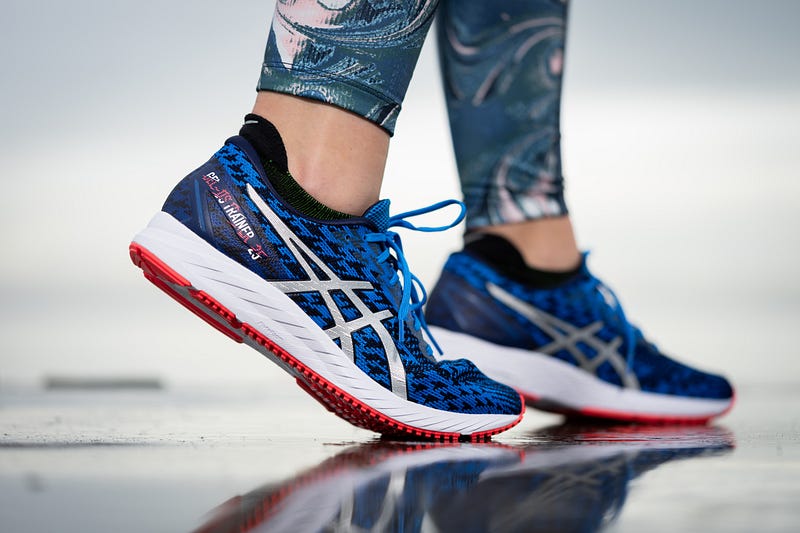
On the other hand, the major brands like Nike, Adidas, Asics, and so many others, have conducted studies about the importance of the shoe and their technology.
My experience tells me they are both right.
Four years ago, I stopped my training sessions to focus on my technique. I watched every YouTube video about Chi Running, and even filmed my own running technique.
And let me tell you: I saw myself as a clumsy Shrek.
I thought:
“Jesus, is it really you? Is this the real carcass that transports my brain through the streets every day?”
I saw myself for the first time from a different perspective.
And that was the turning point to realize that technique is everything.
At that time, I could have €5,000 running shoes. They wouldn’t save me from my own clumsiness.
So, first things first.
Before the shoe, comes the technique. Solve the first one before thinking about the second one.
However, with the technique perfected, you must think about investing in good running shoes.
It’s funny (not for your pocket) because with or without Chi Running, but with your technique issues solved, you start to feel the difference between €50 running shoes and the €100 shoes.
You start to be more demanding because you want to have more quality in your stride. So, it is normal to want to feel the shoes reacting to your demands.
And I have a solution for you!
If you don’t have enough money to buy top running shoes, you have always Medium to solve the problem.
Write a super-viral article, make hundreds of dollars, and run to a store to get those running shoes you’ve been wanting for some time. :)
Thank you.
Nuno


