
5 Quotes from Moby Dick I Would Have Tattooed over My Heart
Why this remarkably poetical book calls to be consecrated in ink
I recently finished a queer reading of Moby Dick by Herman Melville wherein I expected to cobble together an argument for homosexuality based on vague symbolism and subtext. Instead, I found that scholarly whaler Ishmael really won’t shut up about his hot tattooed husband Queequeg.
That’s not what we’re here to talk about right now. We’re here to talk about a list of quotes from Moby Dick I would happily have tattooed onto my body, and why.
Spoiler policy: non-critical spoilers ahead. Selected events are described in some detail to give context to the quotes.

1. True to each other when heaven seemed false to them
“True to each other when heaven seemed false to them” — Ahab, Chapter 70
It is absolutely wild to me that one of the most romantic lines in the entire book is spoken by Captain “Lemme Stab that Whale” Ahab his ownself. And yet in chapter 70 the monomaniacal (Melville’s descriptor, not mine) monarch of the Pequod stomps around his ship and stops to demand that the severed head of a leviathan speak to him. He conjures up images of what the living whale might have seen as it dived the depths of the restless seas, accusing the animal of witnessing murdered officers cast overboard, sleeping by the side of sunken sailors and shipwrecks alike, and:
Thou saw’st the locked lovers when leaping from their flaming ship; heart to heart they sank beneath the exulting wave; true to each other, when heaven seemed false to them.
The imagery is strong and immersive, and there’s an excellent callback to it a few chapters later when Ishmael and Queequeg are literally tied together in a dangerous task. Ishmael reflects that if a mishap happens, both of them will sink and die together like the “locked lovers”.
The motif of weddings and wedding vows follows our protagonist and his husband-friend right through the book, and this particular reference stands out. It is a macabre testimony to the endurance of love even unto death, and terribly, achingly romantic.
Would tattoo over my heart if I had a beloved mad enough to match it.
2. Faith, like a jackal, feeds
“Faith, like a jackal, feeds” — Ishmael, Chapter 7
The scene: our protagonist Ishmael enters a church before his voyage, notices Queequeg sitting in the pews, and reads the epitaphs on the walls honoring whalers that died at sea. He looks around at the faces of the bereaved and thinks that there is a deeper note of grief here from those that can only point to the waters as their loved ones' final resting place.
Ishmael reflects, a little wryly, on how people will grieve death even if they believe the dead are in a better place. The chapter reads as a call to the metaphysical over the material, as Ishmael moves from looking at earthly suffering to thinking of his immortal soul.
But Faith, like a jackal, feeds among the tombs, and even from these dead doubts she gathers her most vital hope.
Fine, thinks our protagonist, if I die, I die.
Faith gives Ishmael the tools to remove himself from a gloomy precipice in favor of a more protective stance. He combats his anxiety by making peace with the idea that he may perish on this whaling voyage, and he’s going to sail anyway.
And therefore three cheers for Nantucket; and come a stove boat and stove body when they will, for stave my soul, Jove himself cannot.
His attitude embodies a material detachment and an utter disregard for personal safety that I cannot help but admire. Would get this tattoo when I’m knee-deep in a depressive episode to remind myself that hope can live on scraps until better food is found.
3. The sea will insult and murder him
“The sea will insult and murder him” — Ishmael, Chapter 58

Every so often in the course of the narrative, Ishmael takes us on a philosophical vacation over various topics, often striding from thought to thought with a giant’s gait. On one memorable occasion he rhapsodizes about the sea and the respect we owe it and the primal fear it commands.
a moment’s consideration will teach, that however baby man may brag of his science and skill, and however much, in a flattering future, that science and skill may augment; yet for ever and for ever, to the crack of doom, the sea will insult and murder him, and pulverize the stateliest, stiffest frigate he can make;
This perhaps doesn’t require much elucidation. If you have ever looked upon the ocean, you know what he means. The twin horror and fascination held by an alien habitat is older than our species.
Would get this tattoo when the overwhelming infinity of my own infinitesimal existence has smacked me in the face.
4. Catskill eagle in some souls
“…Catskill eagle in some souls…” — Ishmael, Chapter 96
The bulk of this chapter gives off the aura of hysterical self-denial: Ishmael is watching the three pagan harpooners work fiery machinery on deck when he should be focusing on manning the helm. For reasons that I cannot legally say have anything to do with watching his hot tattooed husband getting all sweaty by a furnace, he becomes a little distracted and has a small disconnect with his perception of the ship that devolves into a sermon warning against the ecclesiastical dangers of looking too long at a fire.
At the end of the chapter, as he regains his equilibrium, Ishmael proposes that
there is a Catskill eagle in some souls that can alike dive down into the blackest gorges, and soar out of them again and become invisible in the sunny spaces. And even if he for ever flies within the gorge, that gorge is in the mountains; so that even in his lowest swoop the mountain eagle is still higher than other birds upon the plain, even though they soar.
Ishmael may pretend to be a severe and unhappy preacher in the preceding text, but he concludes on this strangely uplifting note. Although it seems apropos of nothing, it comes to mind in a later chapter when Queequeg is remarked on having “higher and holier” thoughts than anyone else.
Would get this tattoo in a fit of unusually high self-esteem.
5. The Whiteness of the Whale
“The whiteness of the whale” — Title, Chapter 42
If you read nothing else of Moby Dick but this one chapter, it would be sufficient to enrich your soul. It is the core and heart of the book, and you needn’t take my word for it:
I almost despair of putting it in a comprehensible form. It was the whiteness of the whale that above all things appalled me. But how can I hope to explain myself here; and yet, in some dim, random way, explain myself I must, else all these chapters might be naught.
Ishmael in Chapter 42 pauses the story, as he often does, to write what is essentially a prose poem expounding on all the good things that are white in color, and then lists all the bad things that are white in color. It is my belief that this is inherently radical because of how irrevocably tied to “good” things the color white is, and how darkness is synonymous with an incorrect and inferior state of being in not only contemporary writing, but in a legacy of prejudice that endures to this day.
The whiteness of the whale quietly realigns your expectations in a way that will be revisited a short chapter later when Ahab himself is described in terms of light. It is a difficult chapter to digest, with racist ideology sitting side by side with high ideals and wrapped entirely in some of the loveliest language I have ever had the pleasure to read.
Would get this tattooed right over my heart for the deep symbolism as well as the sheer aesthetic.
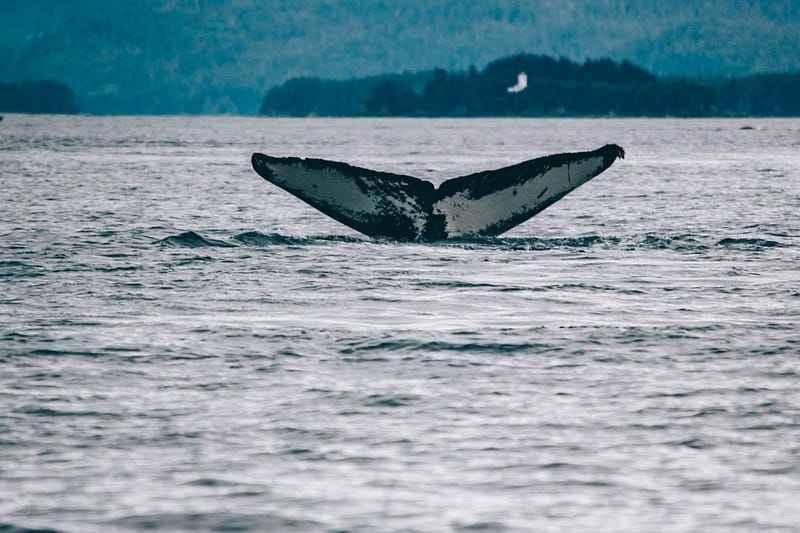
Moby Dick by Herman Melville is a book with as many layers as the reader cares to see, and Ishmael as a narrator too is as literal as you want him to be. While there is an element of hyperbole to the title of this article the sentiment stands strong: these lines and more are invisibly scrawled over my heart and they will remain there for a very long time.
Have radically different takes on these quotes? Disagree with my analysis? Have better tattoo ideas? Drop them in the comment section, as Ahab dropped a single precious tear into the sea.


