
5 Quotes From Elizabeth Gilbert That Will Transform How You See Your Creativity
How to live creatively and let go of your fear
Once in a while, you read a book so incredible you have to get highlighters out to mark your favorite passages.
Elizabeth Gilbert’s Big Magic: Creative Living Beyond Fear was one of those books for me.
The book is packed with useful insights on unlocking your creativity and insights into Gilbert’s own creative process. But the real reason Big Magic is so good is that everything about it comes from the heart.
Few writers have impacted the literacy world more than Elizabeth Gilbert, who TIME named as one of the world’s 100 most influential people in 2008. Still, anyone yearning to become a successful writer will relate to Big Magic.
Big Magic has become my bible for creative living. I still open it up and skim through my favorite passages now and again. It changed the way I think about my writing and creativity, and it can change yours, too.
Here are five quotes from Big Magic, which will transform how you see your creativity.
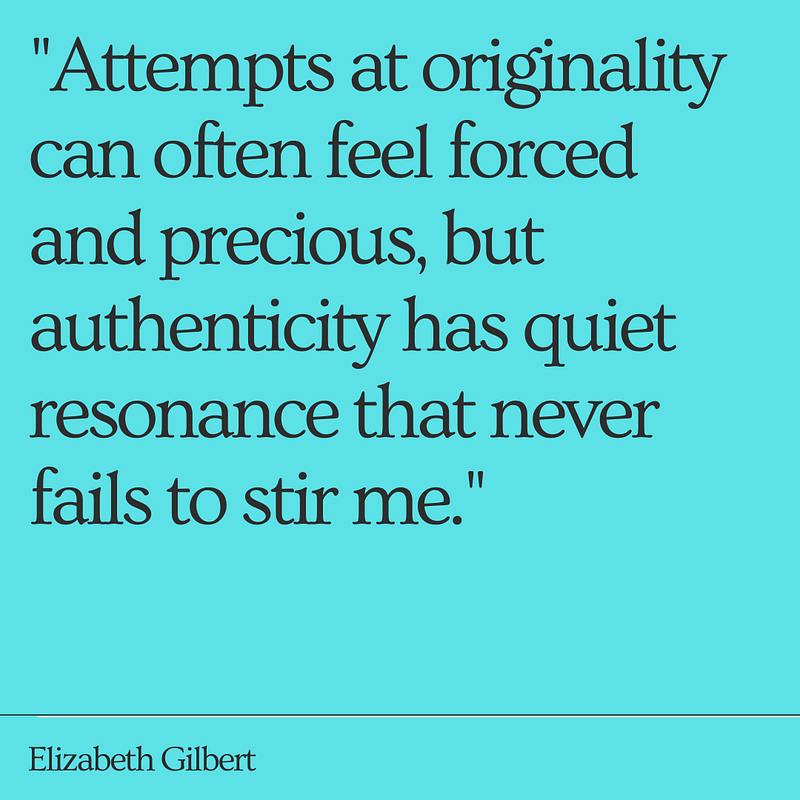
“Attempts at originality can often feel forced and precious, but authenticity has quiet resonance that never fails to stir me.”
When you write, it’s easy to feel pressure to create something unique or describe an idea nobody has written about before.
When I first started writing, I thought I had nothing important to say because everyone had covered it already.
When I started to link ideas to my life experiences, I realized being myself was what made my writing unique.
What to do:
The earliest known evidence of writing dates back 5,500 years. We’ve been writing to express our thoughts and ideas for so long that it’s almost impossible to say something that hasn’t been said before.
Rather than putting pressure on yourself to create something brand new, focus on what you do have control over.
An idea you have may have been expressed before, but no one can write something in your exact voice or filter it through your personality and lens of experience.
Be unashamedly yourself in your writing, rather than searching for originality. Take an idea that inspires you and make it your own.
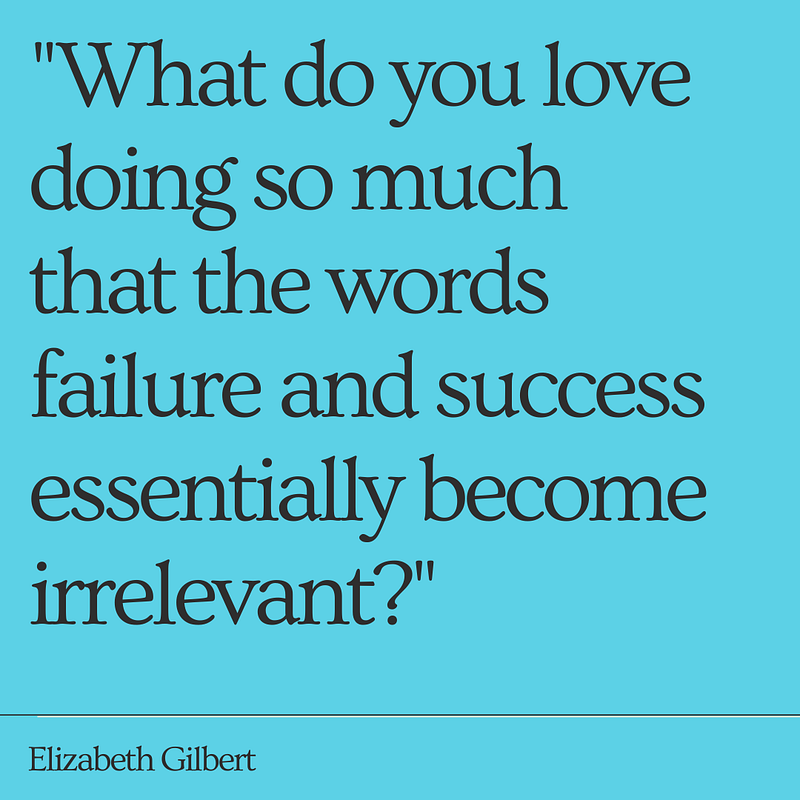
“What do you love doing so much that the words failure and success essentially become irrelevant?”
If you are truly serious about writing, you have to come to terms with the fact that success might not come for a long time.
Heck, success might never come in the capacity or sense that you want it to.
Ever since I’ve known how to hold a pencil, I’ve been writing. I wrote stories as a child, fanfiction as a teenager, and endless journal entries throughout the chaos of my college years.
What to do:
If you want to devote yourself to any creative pursuit, you’ve got to disregard any metrics of success. This isn’t school: no one is going to grade your work or award you a prize.
Find something you love doing so much that you won’t abandon it. Then make sure to quietly show up every day and do the work.
Much of success depends on consistency, and you can only be consistent when you truly love something.
Forget about measuring your achievements initially and create something that you love enough without needing validation for it.
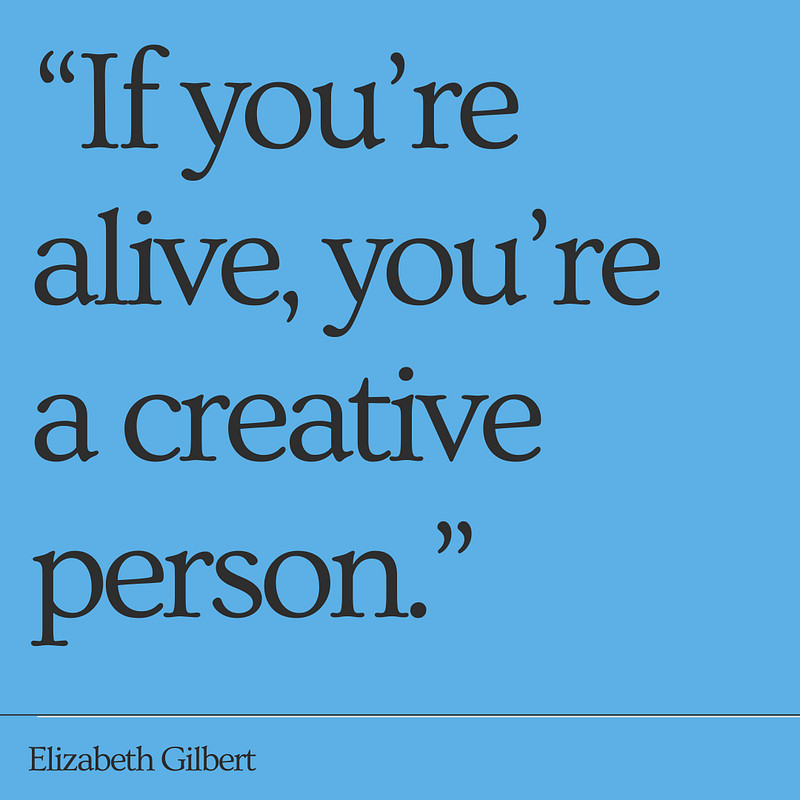
“If you’re alive, you’re a creative person.”
Elizabeth Gilbert believes that to create something is to be human. I couldn’t agree more.
The earliest forms of human art date back as early as 700,000 BC. Making art from your imagination is one of the oldest forms of self-expression and is interwoven into your evolutionary biology.
One of the beliefs I had to overcome when starting to write regularly was that I wasn’t a naturally creative person.
I thought that coming from a science and engineering background meant I was only suited to logical, left-brained tasks. Then I learned that there’s no qualification for creativity other than simply being alive.
What to do:
Stop getting hung up on whether you are creative enough or not. The best thing you can do is accept that you’re human and, therefore, you have the capacity for creativity.
Overthinking kills action. Kill self-limiting beliefs by showing up to work on your art. The more you practice, the less you’ll worry about your natural creativity.
“You can clear out whatever obstacles are preventing you from living your most creative life, with the simple understanding that whatever is bad for you is probably also bad for your work.”
In Big Magic, Elizabeth Gilbert dispels the myth that the best art comes from tortured souls.
While it’s true that some of the best writing is inspired by tragic life events, such as a breakup, sickness, or death, deliberately seeking self-destruction is a path that should be avoided.
I’ve been lucky enough not to suffer any majorly tragic life events. Initially, I thought this meant I didn’t have enough life experience to write well, but I soon realized this wasn’t the case.
What to do:
If you don’t take care of your creativity, how can you expect it to care for you?
Dedicate yourself to your work, but practicing basic self-care should always be a priority.
Making time to get out there and live your life, exercise regularly, and eat mindfully will keep your mind and body healthy and ensure that you can show up consistently to create your art.
Don’t fall into the trap that you need to have experienced hardship to create something beautiful. You can find inspiration from all aspects of life, and consistent inspiration begins with taking care of yourself.
“You can measure your worth by your dedication to your path, not by your successes or failures.”
With so many writers being transparent online about their achievements and how much money they make, it’s easy to get into the habit of comparing yourself to others.
You see other people getting published in places you get rejected from or earning more money than you do and begin to think that you’re getting nowhere.
Even worse, you start to contemplate quitting entirely.
Comparing yourself to others and thinking about ‘success’ and ‘failure’ is a one-way ticket to killing your creativity.
What to do:
As a writer, the most important thing you have to do is show up consistently and work on your craft.
Start thinking of success in terms of how many hours you put in and how often you publish something, and you’ll feel a lot better about where you are in your journey.
Final Thoughts
Big Magic is a beautiful book to help you tap into your creativity.
Anyone can be creative, and the best way to do so is to show up, be consistent, and be as true to yourself as you can.
Sometimes we need a push of inspiration to take action and get started with doing the work we love. As people passionate about words, remembering our favorite quotes is a wonderful way to become more motivated, free ourselves from comparison, and ultimately make something amazing.