
5 Quick Minimal Interior Design Tips
For a cozy, comfy, airy, and tidy home
I’ve been practicing minimalism for 3 years now. At least, I try because as a father of 5 with a house, it’s basically impossible to go all-in. I do my best though. Here are 5 little interior design tips, I try to remember whenever we overhaul a room or change something in our house.
1. Neutral colors go with everything
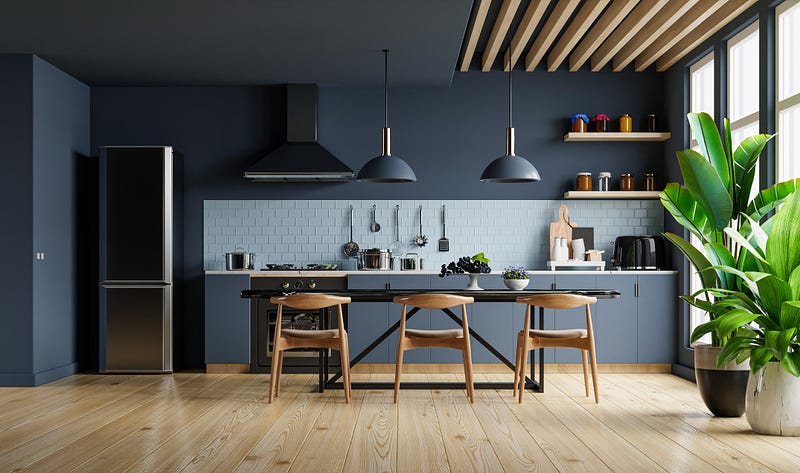
Even better, neutrals go well together without any effort. This is true for interior design, architecture, or even clothes. Neutrals are white, black, grey, beige, or even colors like navy and material colors like wood, concrete, stone, etc.
Pick these (non-)colors and stick to them throughout 90% of your home. It will look like it came out of an interior design magazine.
Fill the remaining 10% with colors of your choice and taste and your personality shines through in all the right ways.
2. Don’t push the furniture to the walls
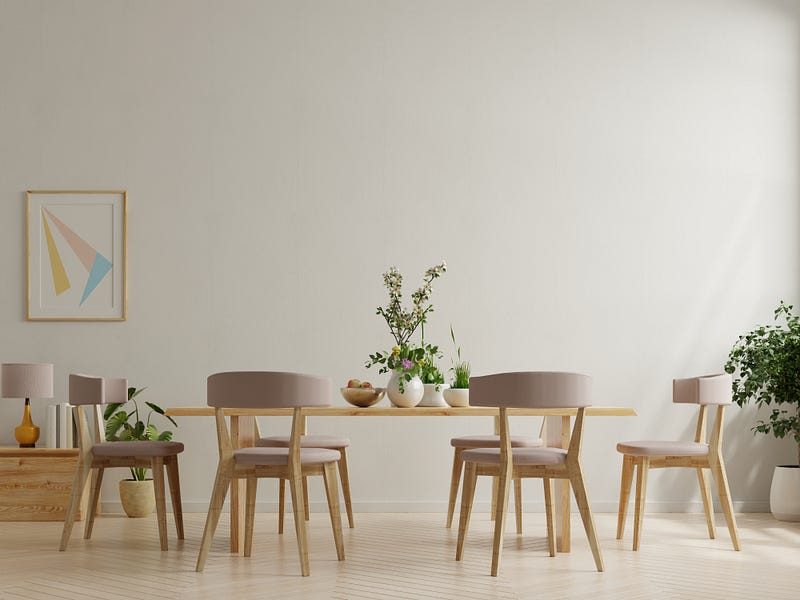
At first, this seems odd, but it makes a huge difference. Instead of pushing a sofa, a coffee table, or even a dining table to a wall, let it free in the room. Meaning (if possible) placing it in the middle of the room. This makes the room feel airy while looking stylish without much effort.
3. Use warm light, preferably from the side or bottom
Ceilings lights aren’t cozy if you ask me. Instead, a well-placed floor lamp or standing lamp makes a room warm and inviting. Combine that with warm light bulbs instead of cold blue light and it’s perfect.
If you go for ceiling lights, it should basically be a piece of art, like an artfully-shaped hanging lamp that serves as the main eye-catcher in a room. I’d still stick to warm light though.
4. Don’t overdo the decor
Small decorative objects are great but less is more was never more true than with decoration. A decorative object is mainly there to be… well, decorative.
Even better if it serves a function, but even if it’s strictly decorative, it loses its purpose when sitting in a sea of other decorative objects.
The beauty of all individual objects gets lost in the sea of the many.
This doesn’t mean using just one item. But I’d stick to 3–4 tops for any given little empty space, and 2–3 tops in the room overall.
5. Embrace negative space
Finally, to go hand-in-hand with the previous tip, use negative space to your advantage. Without negative space (which is essentially empty space in interior design) the non-negative space — the things, decorations, or furniture you’d like to showcase — won’t get noticed (as much).
Negative space is crazy important for design in any form, interior, architecture, web design, artwork, etc.
The bottom line
I used to try to fill every empty corner in our house. I thought that was the way to go for a cozier, hip place.
What happened was the opposite. The place felt more cramped, less airy, less cozy, and definitely too full of stuff.
Embracing these 5 tips has helped me and our growing family in reducing clutter, saving money (through buying less furniture and decorative objects), styling our interior with less effort, and feeling a lot happier with the results.
If only we could get rid of all the little handprints on every surface there is in our home ;-) I guess I’ll have to wait about 18 years for this to happen.
P.S.: First of all, you should get my posts in your inbox. Do that here! Secondly, if you like to experience Medium yourself, consider supporting me and thousands of other writers by signing up for a membership. It only costs $5 per month, it supports us, writers, greatly, and you have the chance to make money with your writing as well. When I started, I made $3000 in 6 months. By signing up with this link, you’ll support me directly with a portion of your fee, it won’t cost you more. If you do so, thank you a million times!


