
5 Questions About Humans That Science Could Not Answer Yet

Science is a phenomenon that is impulsed by human curiosity (or should be), in strict terms, is all knowledge that is acquired by the scientific method through observation, identification, research, and explanations of certain phenomenons and facts. Yet, science does not bring truths directly, it brings tendencies and those tendencies may become truths. Is not rare to find some questions that the scientific community is not able to answer or fully understand. Those unanswered questions are found in every area of knowledge, even when the issue is about ourselves. In 2005, the Science Magazine published a special edition with 125 questions that science could not answer yet, they tried to contemplate a lot of areas and its doubts, like the universe, mathematic, society, and others. In terms of scientific communication, that type of publication is a lot more efficient, because it is not made only for scientists, but any person can read and understand those contents. Here are some questions about us that are yet to be answered.
1. Why doesn’t a pregnant woman reject her fetus?
This question was first raised in 1952 by the Nobelist Peter Medawar. In pregnancy, the foreign antigens of the fetus and placenta come into direct contact with cells of the mom’s immune system, and even with half the genes of the fetus coming from the father, the mother’s body doesn’t acknowledge it as a strange body, like happens in organs transplantation. If we take a closer look at the question, the “why” is kinda obvious, after all, if the mothers reject their babies, then, life could not exist. So, we may say that there is a biological background that makes necessary women to not reject their fetus, I believe the real question here is how it happens.
Some might ask why is this important, people might ask why should we spend our time and resources with this question. After all, why should it matter how women don’t reject their fetus, what is important is that they don’t. But it does matter, a lot. I wrote an article about why all areas of science should be financed, explaining how other problems answer might help other different areas of science. Scientists believe that getting to know about this question may put us one step further in some problems with rejections in organ transplants. But for now, as Peter Medawar said: “The verdict has yet to be returned”.
2. Where Does Consciousness Come From?
One of the human body parts that most intrigue science is our brain, and it’s crazy in my opinion, it is what we use to think, like trying to study some tool using that same tool. And conscious is a big mystery that most believe that lies in our brain. We, humans, have an awareness of our surroundings, of other living beings and ourselves, our minds are able to have inner conversations about who we are and what is our purpose, and as far as we know, we are the only being that possesses this sort of active consciousness. Yet, we have no clue where it comes from.
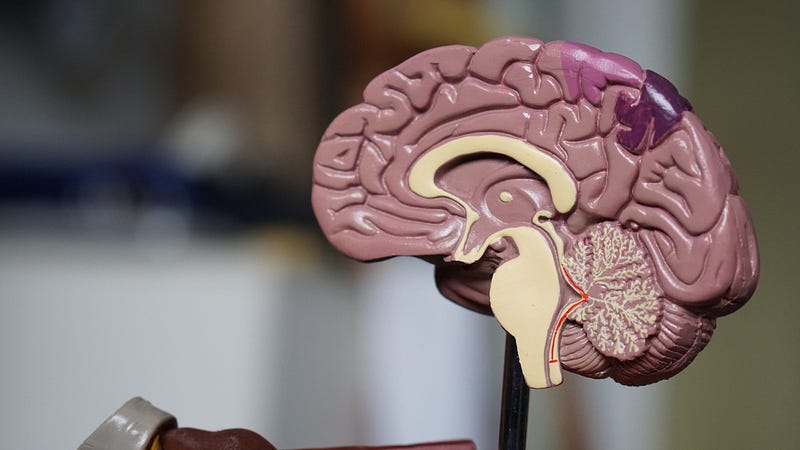
For so long this question was in the hands of philosophers, Descartes was one of its main scholars, he thought that both mind and body were separated beings, as the body lives both in time and space dimensions, our mind has no spatial segments. But in most recent researches, scientists think that they are two different aspects of the same entity and that consciousness might be some physical arrangement in our brain. There is evidence found in neurological patients that had suffered some trauma in their brainstem and completely lost consciousness bringing them into a comatose state, but scientists believe that the brainstem is more like an “on/off button” of consciousness than its sole source. I think that we might never fully understand our brain, if our brain is simple enough for us to understand it, then we’ll never make it because it is simple enough, crazy paradox it offers us, doesn’t it?
3. What are the evolutionary roots of music?
That is one of the most intriguing questions for me, there is a lot of areas that study music and its origins. Music is present in our society since our most ancient civilizations, music historians can track down the path of music centuries in the past and its way through different cultures. But the question here is, why and how music established itself in the story of mankind? Unlike language, that had a huge and visible revolutionary importance, it’s hard to find it in music. There are a lot of hypotheses that try to explain it, in zoomusicology area, they see human musical behavior is based on the behavior of other animals to find partners. There is a branch in psychology that sees that music helps children acquire verbal, social, and motor skills.
“They say music can alter moods and talk to you” (Eminem)
An Australian ethnomusicologist, Joseph Jordania, proposes that music, just like other artistic manifestations like dance and body painting may be part of something that he calls Audio-visual Intimidating Display (AVID), that is an altered state of consciousness that early hominids used to threat its prayers, more of his research can be found here. As we can see, there is a lot of studies and hypothesis about the biological roots of music, perhaps someday we’ll be able to be conclusive about it.
4. Why do humans have so few genes?
It is a little embarrassing to say that we have about the same number of genes as a worm and even more embarrassing to know that we have less than a grape or a tomato. Yes, we, “The Great Humans” have about 25.000 meanwhile grapes have about 30.000, but what does that mean? Geneticists believe that our genomes and other mammalian are far more complex than we once thought. The notion that one gene produces only one type of protein is no longer, actually, some recent research from Haifa University that used big data to study our genetic, showed that we know very little about our genes and what they do, and probably our “obsession” on counting genes have misled us of the real path of understanding them.
5. How Did Cooperative Behavior Evolve?
That question kept in Charles Darwin’s mind when he was proposing his Evolution’s Theory, after all, on his theory, individual fitness was key to surviving over the long term, later, he proposed that cooperation is also essential to groups communities of animal for their survival and reproduction. This might seem the answer to the question above, but it answers the “why”, not the “how” the cooperative behavior evolved in our society. There is a lot of research centers in the world that studies human altruistic behavior, and we made great advances so far, also, evolutionary biologists are still searching for genetics evidence of cooperative behaviors, as well as the physiological, environmental, and behavioral impetus for sociality.
“Life did not take over the globe by combat, but by networking.” (i.e., by cooperation) (Lynn Margulis)
Lynn Margulis, an American biologist, one of the founders of the Gaia Hypothesis, along with James Lovelock, is the woman who discovered the Endosymbiosis’ Theory, which consists of the origin of eukaryotic cells from prokaryotic organisms, in non-scientific terms, she proposed that some organelles, like mitochondria, descends from a free-living thing, like a bacteria, and it became part of our cells through the process called Endosymbiosis. Margulis was a strong voice in debates against the Neo-Darwinist scientific community.
Bonus: Why is there something rather than nothing?
That is a tricky one, why is there life on Universe? It is very complex to think of it, if we remember the quote from Jeff Goldblum’s character, Ian Malcolm in Jurassic Park in response to the type of breading control in the park, “Life finds a way”. I’m not sure that someday we’ll have the answer to that.
“…life will not be contained. Life breaks free, it expands to new territories and crashes through barriers, painfully, maybe even dangerously…” (Dr. Ian Malcom on Jurassic park movie)
If you want to receive more content about science, like riddles and questions that humanity could not answer yet, just click here and subscribe. ( :


