
FREELANCE WRITING & TAXES
5 Tax Deductions Overlooked by Freelance Writers
Freelance Writers not only have to track all earnings and expenses, but we must ensure those are translated to tax savings.

Whatever you spend to conduct business is potentially deductible.
No one wants to pay more taxes than is necessary. However, Freelance Writers easily overlook many deductions because they have so much going on while writing and promoting their work.
Although it has nothing to do with writing per se, this is a new option open to all filers. If you made charitable donations during the year, you’re allowed to deduct up to $300 if filing single or $600 for joint filers.
Check with a tax advisor to ensure anything you are unsure of is deductible.
Union dues as a newspaper employee are not deductible, but your union dues as an independent freelancer are. According to H & R Block,
“For tax years 2018 through 2025, union dues — and all employee expenses — are no longer deductible, even if the employee can itemize deductions. However, if the taxpayer is self-employed and pays union dues, those dues are deductible as a business expense.”
The key is to save every receipt throughout the year and let your accountant or tax advisor decide what is deductible. That is their job, after all.
#1 — Communications Devices
Did you have to replace your dedicated business cell phone or tablet? It’s probably deductible. Any communication device you use for your business is deductible.
When you use a device for both business and personal, you will need to identify the percentage of use is business, just like your home office.
#2 — Home Office Expenses & Supplies
Do you maintain a home office? Almost everything you purchase for that home office is deductible. Standard office supplies typically used in business or company offices that are traditional and tangible are deductible.
Printer ink and paper? Yes. The laptop that you use for writing is deductible as well. Did you buy a new mouse or keyboard? That too. A refill for your Parker pen, yes to that also.
Do you keep a dedicated landline for business calls? It is likely deductible. The key to every deduction is the percentage of use for business.
Just because you have an extension of your home phone in your office does not make the total expense deductible. However, the device’s cost in your office and a portion of the business expense could be deductible.
A portion of your mortgage or rent equivalent to your home office’s percentage of space compared to your home’s size could be deductible. Don’t forget the renter’s or homeowner’s insurance.
Say, for example, your home is 2500 square feet, and your home office is 250 square feet, which means that ten percent of your rent, mortgage, and/or insurance is deductible as a business expense for your home office.
Once again, if you write on your dining room table, what percentage of your space is used for business? It is something you will need to determine.
#3 — Tools & Storage
Almost everything you buy for your writing is deductible, Grammarly premium, your copy of Hemingway, and any other editing or publishing tools you use.
If you pay for a Microsoft Office subscription for Note and Word or another word processing program, it is deductible. Yes, even your Dropbox subscription or other cloud storage is deductible as a business expense.
If the tool, program, or equipment is acceptable as “necessary” for your writing, it is deductible. Everything helpful or appropriate to your profession could be considered deductible.
Google AdWords, Facebook Ads, and others are tax-deductible. Actually, any advertising expense is a cost of doing business.
Do you have a subscription to Shutterstock, iPhoto, Pexels, or another or buy individual images? That is a business expense.
#4 — Coaches, Conventions, & Creative Assistance Costs
Classes and conferences that help you stay updated with your industry can be used as a tax deduction. Your hotel and meals while traveling are also deductible.
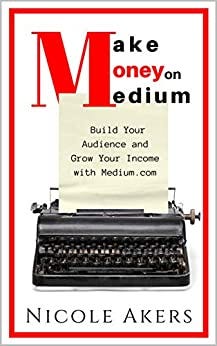
The books you bought to learn or help you with writing and editing, such as Bird by Bird by Anne Lamott, On Writing by Stephen King, or Make Money on Medium by Nicole Akers, are also deductible.
The cost of attending a writing convention or hiring a coach is deductible. Any writer organization such as The Writer’s Den, The Writer’s Room, or others. Did you pay an editor or illustrator? Your subscription to Substack or Patreon is deductible; however, the money you made from there must be claimed as profit.
#5 — All Business Expenses
When PayPal, Payoneer, Stripe, or others charge you a transaction fee to process your payment or invoice, that is a cost of doing business and, therefore, deductible.
Dental and health insurance as a freelancer or self-employed is deductible.
Everything for the website containing your Author’s Page or an e-commerce business, the developer, designer, hosting, domain name, themes and plugins, stock photos, and your internet fee (once again, only the percentage used for business).
If you frequently outsource writing to other freelancers, you should have them fill out a W-9, though it is unnecessary to file an IRS Form 1099 unless they earn more than $400 for the year.
Takeaways to Remember
Remember, almost everything necessary or appropriate for the operation of your writing business is deductible. What I gave you here, communications devices, home office supplies, programs and data storage, training and conferences, and all other business expenses, are just a small sample. It would be best to ask a professional accountant or tax preparation professional about anything you believe is borderline.
Keep all your receipts and hire a professional to do your taxes; you can deduct their fee next year.
Disclaimer: I am not a tax or legal professional, and this is meant only as a reminder of what items could be deductible. Always use a tax professional to do your taxes to avoid an audit.
Note: This post might contain affiliate links. Read my disclosure statement for additional information.

Stephen Dalton is a retired US Army First Sergeant with a degree in journalism from the University of Maryland and a Certified US English Chicago Manual of Style Editor. Top Writer in Fiction, Short Story, VR, NFL, Design, & Creativity. Editor of Pop Off, Top Dalton’s Blog, 100WordStory, B.O.S.S., and SportsShorts100WordsOnly
You can see his portfolio here. Email [email protected]
Website | Facebook | Twitter | Instagram | Reddit | Ko-fi
If you want to make money writing online, start by signing up for a Medium Membership Today!
It only costs $5 per month, I’ve made money every month since I became a paying member, and you can too. Thank you.


