
5 Old School Workouts You’re doing Wrongly
Fix these mistakes to increase your metabolism.
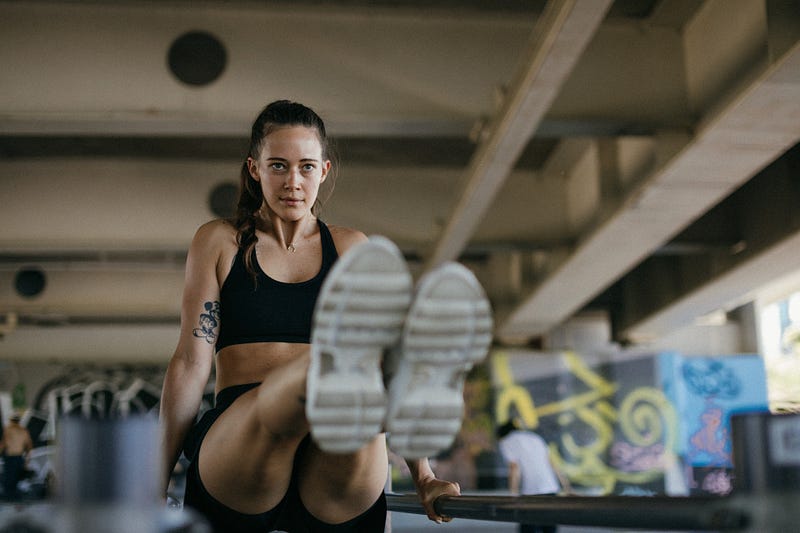
It’s Christmas. You are probably munching meat and pies and working out on days you can to prevent gaining weight.
I get it. I’m in that same boat too. I’m eating more calorie-packed foods and taking more sugary drinks than I do on average days.
It is difficult to resist Christmas recipes with your family and friends. We tend to overeat during the holiday with various food prepared meals to make the occasion a memorable one.
The wide variety of delicious-looking holiday foods in stores and restaurants, the food gifts we receive, and the eating habits of those around us create a perfect formula for overeating.
Many people weigh a few pounds more in January and desperately need a break from all that tasty, festive food.
If you’re looking to avoid excessive weight gain and fully enjoy your food whilst burning calories, you should increase your body metabolism.
How does metabolism contribute to weight loss?
One way to think of metabolism is to think of your body as a car engine that’s always running.
The engine idles like a car at a stoplight when you stand still or sleep. A certain amount of fuel is burned just to keep the engine running.
But as for humans, the fuel source is the food you eat. They are the calories that we contain in the food we eat and the beverages we drink, energy that can be consumed immediately ( in the form of fat) or stored for later use.
How fast your body’s engine runs on average, over time, determines how many calories you burn. If your metabolism is high, you will burn more calories at rest and during activity.
A high metabolism means you’ll need to take in more calories to maintain your weight.
This explains why some people can eat more than others without gaining weight.
Whereas a person with a low metabolism burns fewer calories at rest and during activity and therefore needs to eat less to avoid obesity.
So how do you increase your metabolism in order to burn more calories and store less fat?
Exercise that speed up metabolism
The disadvantage of eating too much is that your body mass index will increase and can lead to obesity.
In order to avoid additional weight this Christmas without restricting yourself to a specific diet, you will need to incorporate these workouts that boost your metabolism.
Though they have existed forever, most people do them wrongly and do not see results for months. If you can avoid the following mistakes, you can get the most of your weight training.
1. Crunches
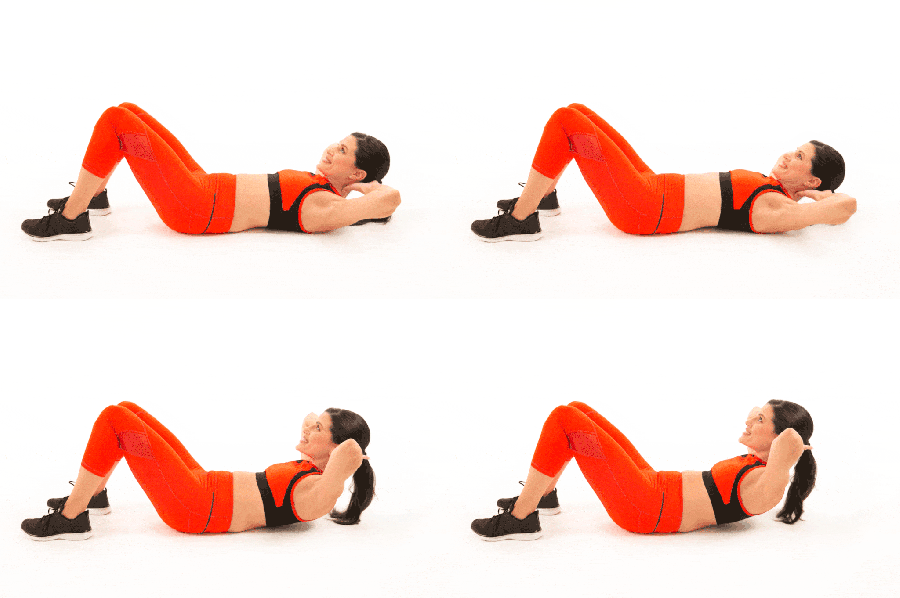
Crunches have been the mainstay of abdominal training for decades. They target the six-pack muscles that runs along the front of the torso. They can be part of a core strength training program or a full body workout.
How to do crunches
To properly perform a crunch, you need to lie on the floor and bend your knees at a 90-degree angle.
Pull your belly button up toward your spine in preparation for the movement.
Slowly contract your abdominals, bringing your shoulder blades about 1 or 2 inches off the floor.
Exhale as you come up and keep your neck straight, chin up. Slowly lower back down, but don’t relax all the way.
Avoid these mistakes
Back arch: If your back arches too much, it may take longer to build strength.
Curved neck: In this case, some of the weight is transferred to the neck or hands when you hold it behind your head and put pressure on the back of the head.
Tightening of legs: This reduces stress in the abdominal muscles as well as stresses the hips muscles.
The trick to training your abs is to realize that strength training is important to keep your core strong.
2. Push-ups
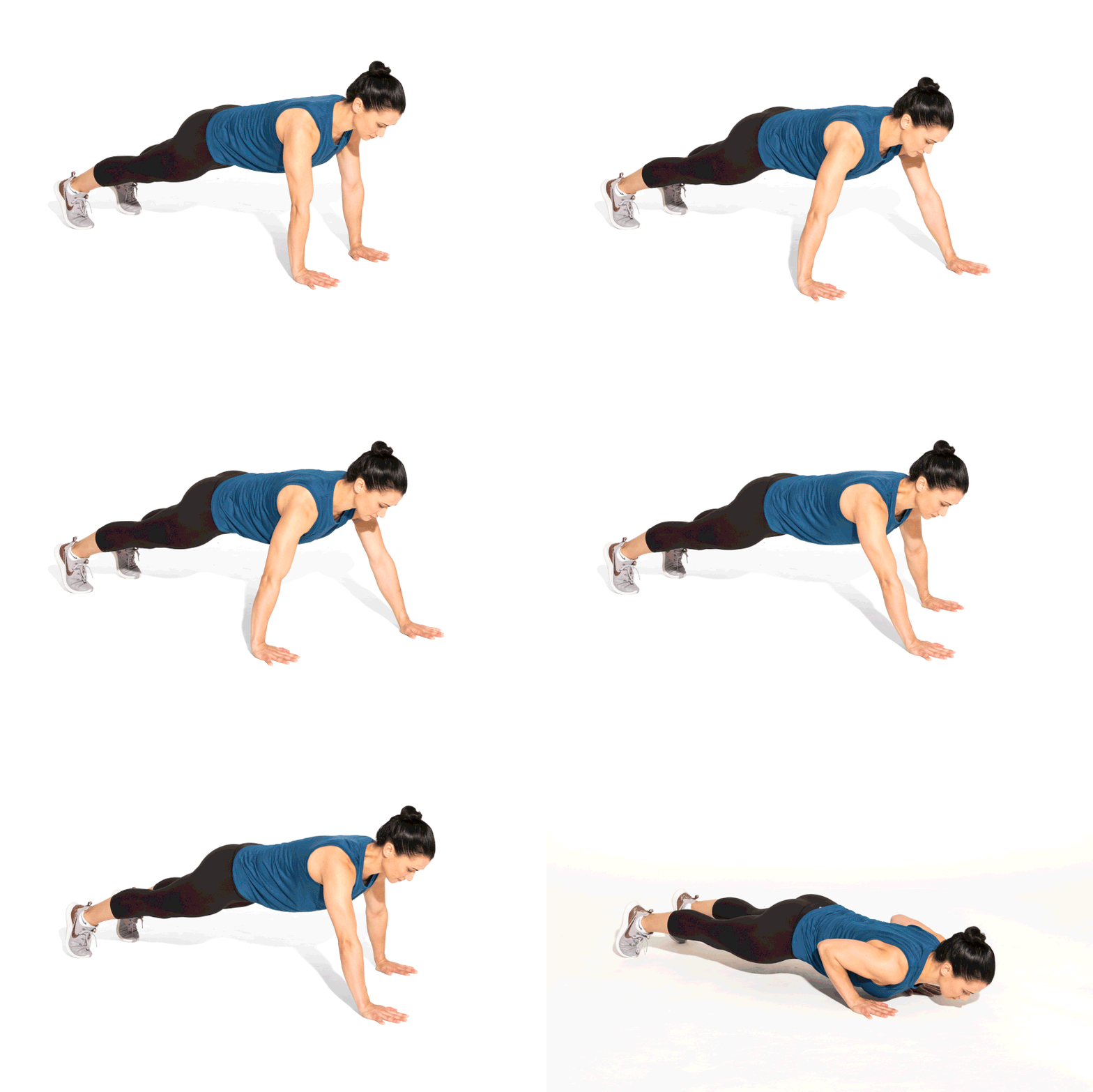
Studies show that a lighter version of push-ups requires the same target muscles without excessive strain. It can be push-ups from the knees or toes, but you can also make them from the wall, a bench, or a sofa.
How to do push ups
Start in a high plank with your palms flat, hands shoulder-width apart, shoulders stacked directly above your wrists, legs extended behind you, and your core and glutes engaged.
Bend your elbows and lower your chest to the floor. It is perfect if your elbows stand at a 45° angle to the body.
Push through the palms of your hands to straighten your arms.
Exhale while contracting your chest muscles and pushing back up through your hands, returning to the start position.
Mistakes
Stretched out hands: If your hands are farther out from your body than your shoulders, you are placing more strain on your shoulders.
Improper neck alignment: If you point your chin up or drop your head so much that you can see your toes, you are out of alignment.
3. Squats
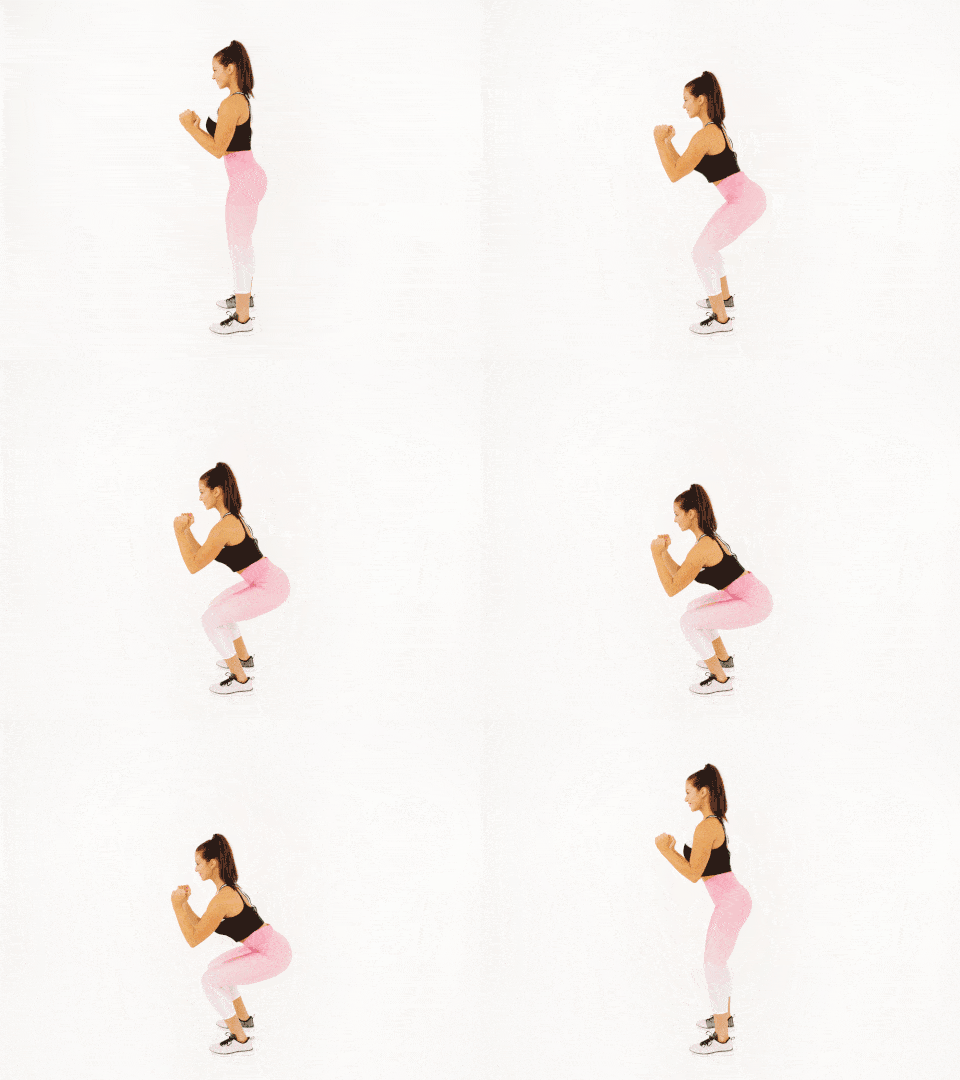
Squats are your go-to booty builders to sculpt the lower body of your wildest dreams.
They strengthen pretty much every muscle in your lower body, including your quads, hamstrings, and calves. They also fire up your abs.
How to do it properly
Stand with feet a little wider than hip width, toes facing front. Drive your hips back — bending at the knees and ankles and pressing your knees slightly open.
Sit into a squat position while still keeping your heels and toes on the ground, chest up, and shoulders back.
Strive to eventually reach parallel, meaning knees are bent to a 90-degree angle.
Press into your heels and straighten your legs to return to an upright standing position.
Mistakes
Keep your heels glued to the floor as you squat.
Don’t allow your knees to go too far forward. You don’t want them to stick out past your toes — instead, try to keep them in line with your toes. This reduces the strain on your buttocks and can lead to pain.
Don’t raise your head during the squat. It ruins balance and technique and can also cause pain in the lower back and neck.
4. Lunges
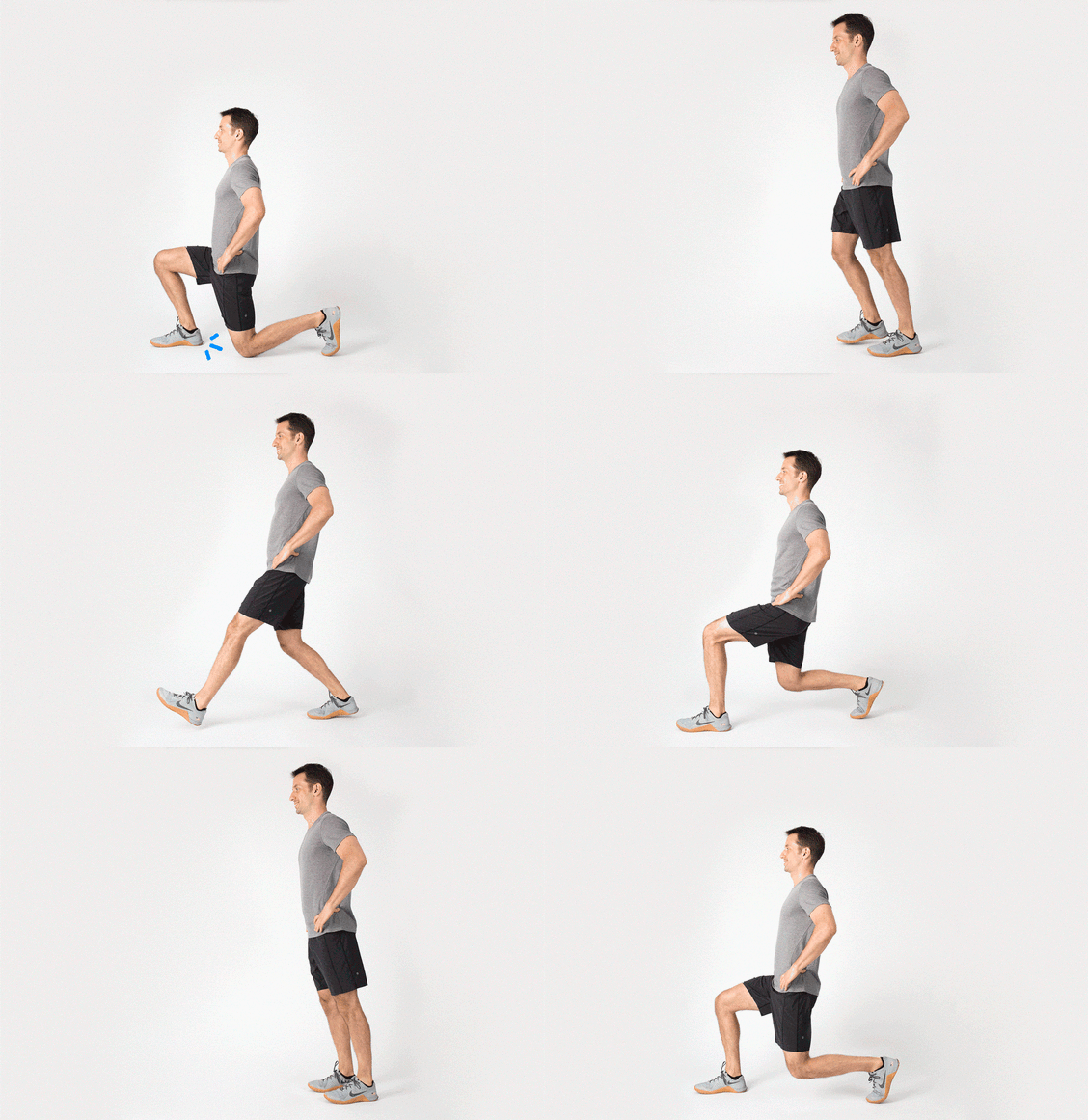
A lunge is a single-leg bodyweight exercise that works your hips, glutes, quads, hamstrings, core, and hard-to-reach inner thigh muscles.
If you perform them correctly, lunges train the buttocks and quad muscles in the same way as squats and deadlifts.
The knee of the front leg goes beyond the line of the toes. This leads to uneven load distribution and engagement of the front part of the thigh, as a result of which the buttocks cannot work.
How to do a lunge
Stand tall with feet hip-width apart. Start with feet hip-width apart and maintain that gap as you step.
Engage your core. Think about pulling your belly button toward your spine. Also, keep your eyes forward instead of looking down.
Take a big step forward with your right leg. Lower your body until your right thigh is parallel to the floor and your right shin is vertical.
Repeat all steps on the left leg (alternate between the right and left leg, performing ten reps on each side).
Mistakes
Back foot misaligned: Avoid bringing your front foot directly in line with your back foot, as if you’re walking on a tightrope. This dramatically reduces stability.
Back rotation: Twisting the knee out or in during a lunge can lead to pain and injury.
5. Standard plank
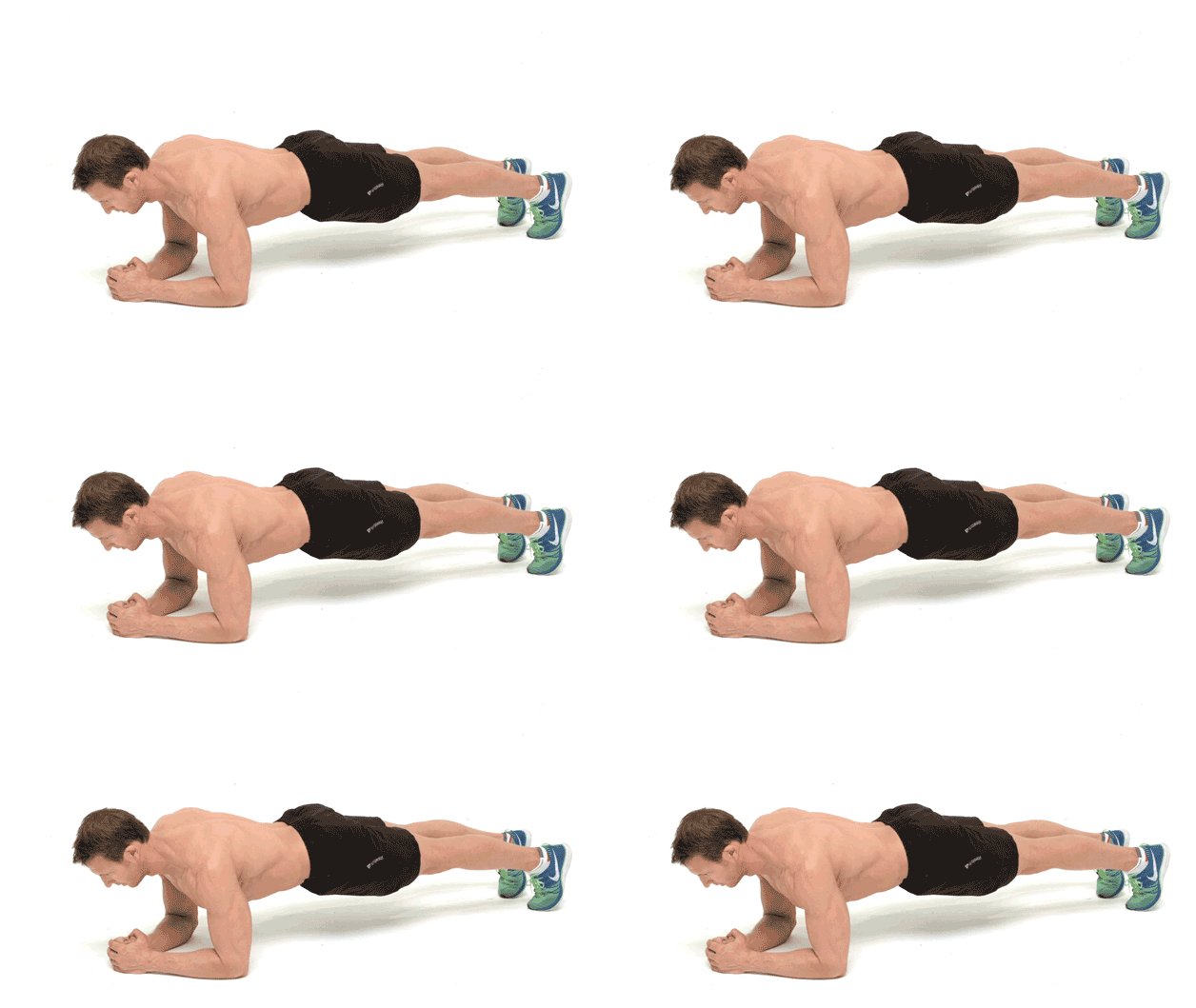
The plank is an excellent abdominal and core exercise to ensure you keep your core strong and stable. But the poor performance of this exercise resets its effectiveness and can lead to problems in the spine.
How to do it
Begin in the plank position, face down with your forearms and toes on the floor.
Keep your torso straight and rigid and your body in a straight line from your ears to your toes with no sagging or bending.
Neutralize your neck and spine by looking at a spot on the floor about a foot beyond your hands. Your head should be in line with your back.
Hold this position for 10 seconds.
Mistakes
Sagging your hips: The pelvis’s elevation causes a misallocation of the load, which exerts too much pressure on the shoulders, causing pain in the neck.
Arching your back: If you arch your back, you are not engaging your abdominals sufficiently and are putting more weight onto your arms.
Poor head position: Your neck should be in line with your body, not tilted up. This can lead to cervical Osteochondrosis.
Everybody is different, and factors like height, weight, fitness level, muscle/fat ratio, and so on all factor into how many calories a person might burn doing any exercise.
But you can be sure these exercises get your metabolism firing because you’re working mostly through big muscles in your leg and butts.
Thank you for reading! If you like stories like this, sign up to Medium and get unlimited access to more stories.


