Five of the Best Foods for Building Muscle
Add these foods to your diet to improve exercise performance and optimise recovery.

You know what people say about abs “being made” in the kitchen — we should think of building muscle from the same philosophy.
We obviously need to be working out in the gym — both hard and smart, but diet is also essential. Yet many people overlook their diet, thinking exercise is enough. This is a trap and why many people don’t get the results in the gym that they should/want.
If you’re spending time and energy in the gym to gain muscle and get stronger, you need to have your nutrition also on point to maximise your results.
Here are five great foods to add to your diet to help build muscle.
Eggs
The first food I’m talking about is eggs. A staple for anybody wanting to build muscle. With 6 grams of protein in a large egg, it is a great option.
Eggs are also one of the most bioavailable protein sources — meaning we can efficiently digest, absorb and utilise the protein’s amino acids.

The Cholesterol in the egg yolk has benefits such as maintaining the muscle cell membrane and helping keep Testosterone high.
Egg white is also very high in Iron and Zinc. Iron is a mineral the body needs for growth and development, and Zinc boosts our immune system and metabolism function.
Higher quality eggs provide better nutrients with a better ratio of omega 3s to omega 6 — this is pasture-raised or free-range. Anything like cage-free or even organic is meaningless.
This study indicates that “the ingestion of whole eggs immediately after resistance exercise resulted in greater stimulation of myofibrillar protein synthesis than did the ingestion of egg whites….”
In other words, consuming the yolk is probably beneficial for building muscle.
Lean Beef
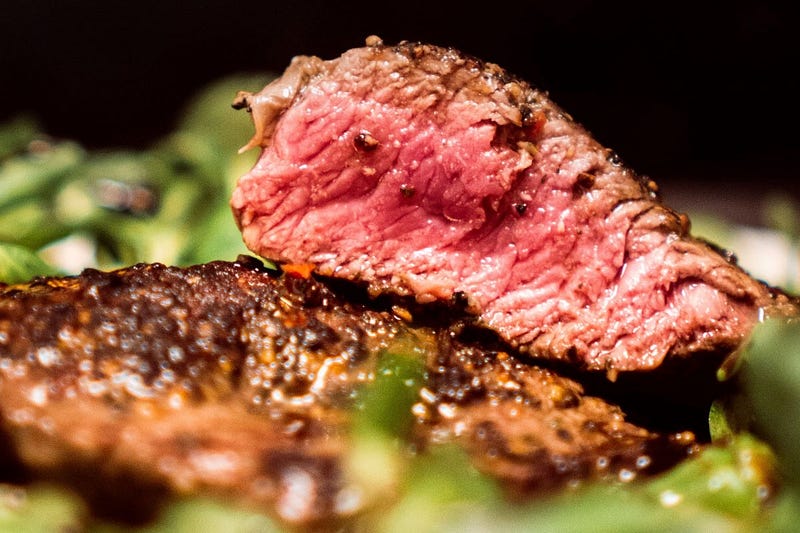
Eating beef (meat from Cows) has several benefits for anybody wanting to build muscle. Beef has very high levels of protein and also high bioavailability for the body to absorb and utilise. 100 grams of beef provides around 30 grams of protein, depending on how lean it is.
Protein helps repair muscle but helps boost Testosterone, as does Cholesterol and saturated fat, all abundant in beef.
Obviously, we don’t want high amounts of saturated fat, as fat is high in calories. We should choose leaner cuts and cut some of the fat off.
Saturated fat is not actually as bad as we have come to believe over the past several decades. There’s a dose-response relationship which means consuming too much is a bad thing. However, there are also many benefits, and often, dieting means we don’t consume enough.
Saturated fats can help increase testosterone production by increasing luteinising hormone (LH). This study found that men who ate more than 20% of their daily calories as fat had increased LH hormones compared to those on a low-fat diet.
This study found that Vegetarians tended to consume lower levels of saturated fats than omnivores (meat-eaters) and had lower levels of plasma Testosterone comparatively.
Beef also contains Creatine and helps the body produce it naturally, improving performance in the gym through the ATP process, providing muscles with a greater energy supply and enhancing endurance.
Beef also has high levels of several essential minerals to help us perform at our best, such as iron, phosphorus, selenium, and Zinc.
Protein powders
I don’t want to get into a debate about whether a supplement is a food.
As far as this article goes, protein powders provide many benefits to help you recover from exercise to build muscle.
Remember that we should rely on whole foods as our primary protein sources. Supplementation should be used alongside a diet, not as a meal replacement.
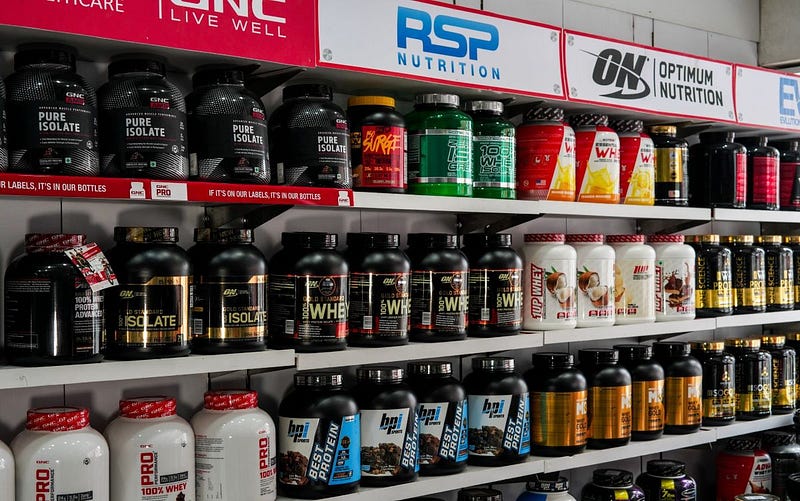
Okay, now we’ve put a little disclaimer on protein powders; what are the main benefits?
- Convenience — Easier than preparing meals with time isn’t of the essence
- Bio-availability — the body can easily digest and utilise the protein
- High protein ratio — a high portion of a serving is protein. usually 80–90%
- Low fat and carbs ratio — the fat and carbs ratio is meagre, less than 10%
This study and this study concludes that consuming protein right after a workout could be beneficial due to speeding up the process of protein synthesis. A rapid spike in amino acids quickly becomes available to repair muscle and recover sufficiently.
Whey is the most popular form of protein powder, produced from dairy. Whey protein comes in Isolate and Concentrate — Concentrate usually has around 80% of the total content made up of protein, and Isolate is approximately 90% — it’s slightly more processed.
Whey is a fast-absorbing protein and exceptionally high in leucine, the most anabolic amino acid (best for muscle growth).
Another popular form of protein powder, Casein, also comes from dairy but is a slow-release protein. Bodybuilders often use Casein before bed or before a workout. It has similar properties to whey but releases into the bloodstream more slowly.
Casein could be better than whey in preventing muscle protein breakdown, which along with increasing muscle protein synthesis, is how we build muscle.
Plant-based protein powers need a mention. These don’t taste as good as whey, have a weird texture, the protein quality isn’t as good, and don’t have the same high bio-availability. But, it’s a good option for people who are intolerant to dairy.
Beetroot
I bet you didn’t expect the humble Beetroot to make the list! Fabulous in burgers and salads, Beetroot is the taproot portion of a beet plant.
Beetroot has negligible protein amounts — about 1.5 grams per 100 grams of Beet. It is also low in carbs at around 10 grams.

Instead, Beetroot makes the list for the nitrates it contains — natural chemicals that break down into nitrites in the body, which we convert into nitric oxide.
Consuming beets can have similar effects to L-citrulline; the nitrates stimulate vascular dilation, relaxing the inner muscles of blood vessels and improving blood flow during a workout. This process is what gym-bros refer to as “the pump” — the muscle feels tight and full of blood.
This study finds that Beetroot improves aerobic endurance, energy output, muscle recovery between sets and potentially anaerobic endurance.
However, consuming enough Beetroot is difficult, so it is better to juice it for concentrated amounts of nitrates — around 500 ml of juice should be enough.
Oats
The last food on our list is probably another one you didn’t expect — Oats. Oats are gluten-free whole grains filled with vitamins and minerals, fibre and antioxidants.
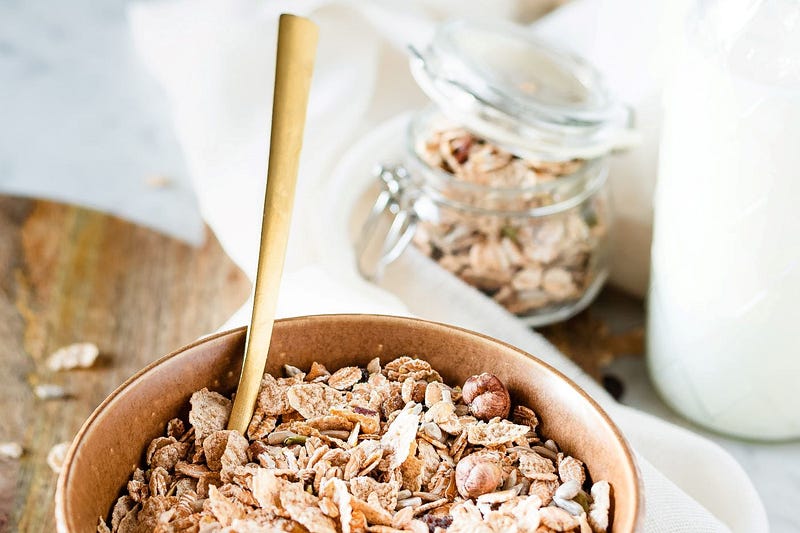
A slow-digesting complex carbohydrate, Oats are great before or after a workout or for breakfast. They come in steel-cut, rolled and quick oats. Steel-cut is the least processed, slowest burning and least insulin-raising effect.
Oats are high in lipids, and as it’s a whole grain, the rate at which the body absorbs the carbs is slower. Therefore, glycogen is released into the bloodstream more slowly.
Oats are also very calorie-dense — Oats have about 66 grams of carbs per 100 grams and 17 grams of protein. This energy helps power your workout, especially when dieting and glycogen stores in the muscles are low.
This study compared lifters who trained with carbs pre and post-workout to those with just protein before and after the workout. Those who consumed carbs experienced better endurance through their exercise.
Oats is a decent protein source, but it doesn’t contain the full array of amino acids — so it’s not a complete protein source. It’s best to combine it with another protein source, such as a scoop of protein powder.
In Conclusion
This article has given five of the best foods you can eat to help you train harder and recover more effectively, improving performance and growing muscle.
The five foods were Eggs, Beef, Protein Powder, Beetroot and Oats.
If you’re serious about building muscle, make sure these are on your next grocery list!
Thanks for reading.
How much protein do we require to maximise muscle growth?
Want to build muscle? You need to overload progressively.
Subscribe to be notified when I publish new articles.