
5 Myths About Chinese Food
When it comes to Chinese Culture, Westerners tend to believe almost anything. The Great Wall can be seen from space. Nobody in China has more than one kid. And Gizmo from the movie Gremlins required no greater origin story than simply.. that he was purchased in Chinatown.
But when you combine Chinese Culture with food, another greatly misunderstood subject of the world, then of course, you’re going to get a bunch of nonsense as a result. However, there is good news. As we can at least clear the air and bring a few things down to edible credibility.
Breath of the Wok
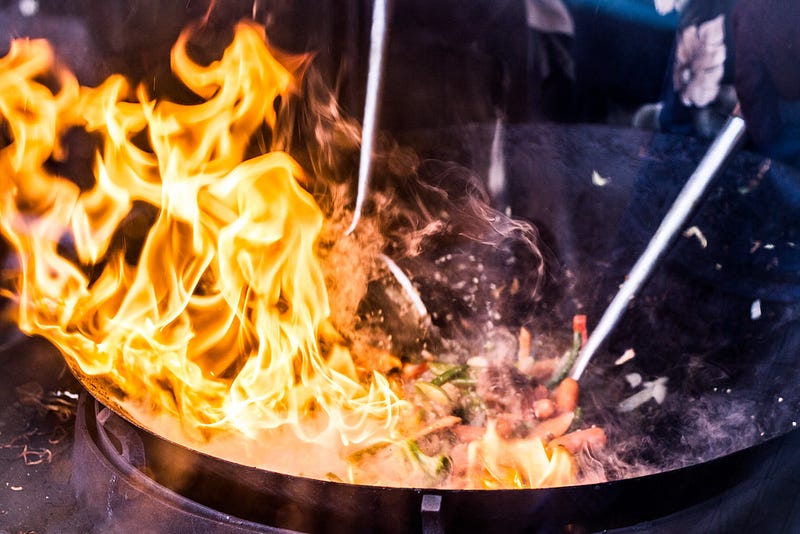
This one is a relatively new concept that’s been getting passed around by culinary types who want to appear as if they are on the inside track. There is this expression known as “Wok Hei” or the “Breath of the Wok.”
The idea is that a wok must be used over extremely high heat, higher than a home burner is capable of doing, in order to really release the true flavor of wok cookery. Therefore there is no point to using a wok at home because it’s not authentic.
Now it is true that Wok Hei is a thing, but the idea of forgoing a home wok purely because it lacks authenticity is maddening. First off, if cultural accuracy is your goal, then realize that switching over to a saute pan or skillet isn’t going to be authentic either. So it’s not like there’s a victory gained if you do so.
However, the more important failing of this mentality is how it defines authenticity in the first place. Because in order for this definition to work, it has to stem from a commercial mindset.
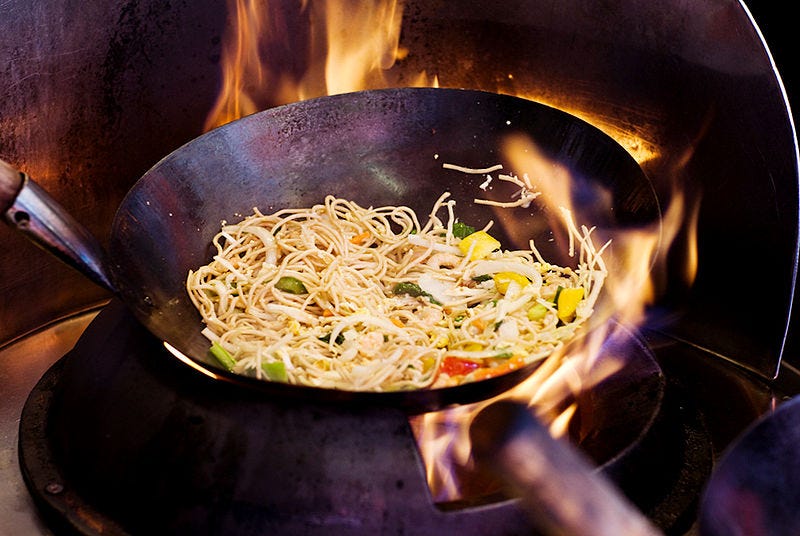
Yes, it is true that home burners aren’t capable of matching industrial restaurant levels of heat. However, who says that restaurants are authentic in the first place?
If the only thing you know about Chinese cuisine comes from a commercial operation, then of course when you try it yourself at home, it won’t match your take out experience.
On the other hand, considering that millions of Chinese people around the world cook for themselves on a daily basis in the comfort of their own home, that would mean that all their food isn’t authentically Chinese because it’s not made on a commercial stove.
MSG
For years it’s been a piece of common medical “knowledge” that MSG is bad for you. What does it do? Why is it bad? Who knows? But yet, no one feels the need to find out any of these answers.
Now to get more specific, there was once a term known as “Chinese Restaurant Syndrome.” Which covered a wide range of symptoms from headaches to sweats. This was allegedly caused by MSG.
The reality is, that MSG had been used for decades since it’s discovery by other cultures including Americans. However, in 1968, thanks to a speculative letter by Dr. Robert Ho Man Kwok on the perceived ill effects from MSG in Chinese food, printed in the New England Journal of Medicine, MSG became publicly seen as purely a Chinese ingredient as well as being harmful.
However, no actual science went into this, as the findings were merely observational. Then once real science started investigating this, the findings were that MSG was not responsible for any of these claims.
Sadly, despite this and even today, there are those who still fear MSG. However, to those who have their reservations in today’s society, there are two questions that should be asked. “What does MSG stand for?” and “What is Umami?”
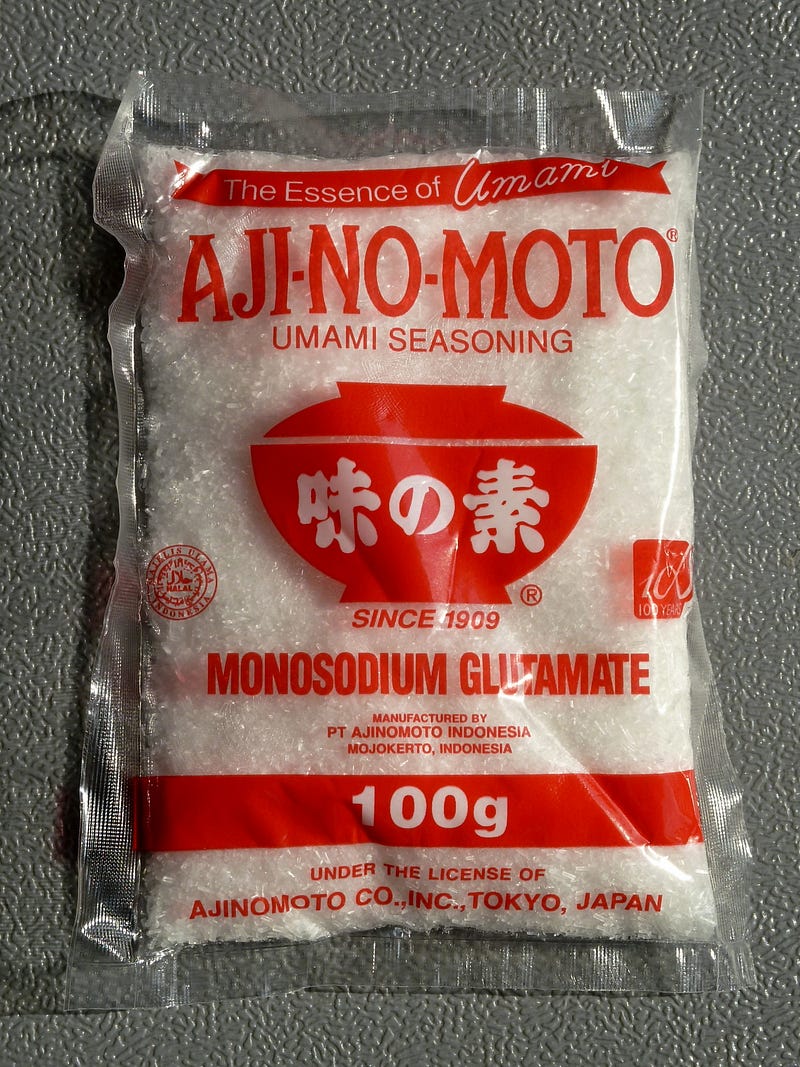
Umami or savory taste, which is all the rage as of late, is caused by the substance known as Glutamates. Which occur naturally in everything from tomatoes to Cheese. And MSG is just another delicious Glutamate which research and science has given the approval for.
General Tso’s Chicken IS Authentic/General Tso Chicken is NOT Authentic
This one is a double edged sword. Let’s answer one question first. Yes, General Tso is a real guy. Zuo Zongtang, otherwise known as Tso Tsung-tang, was a military leader during the Qing Dynasty.
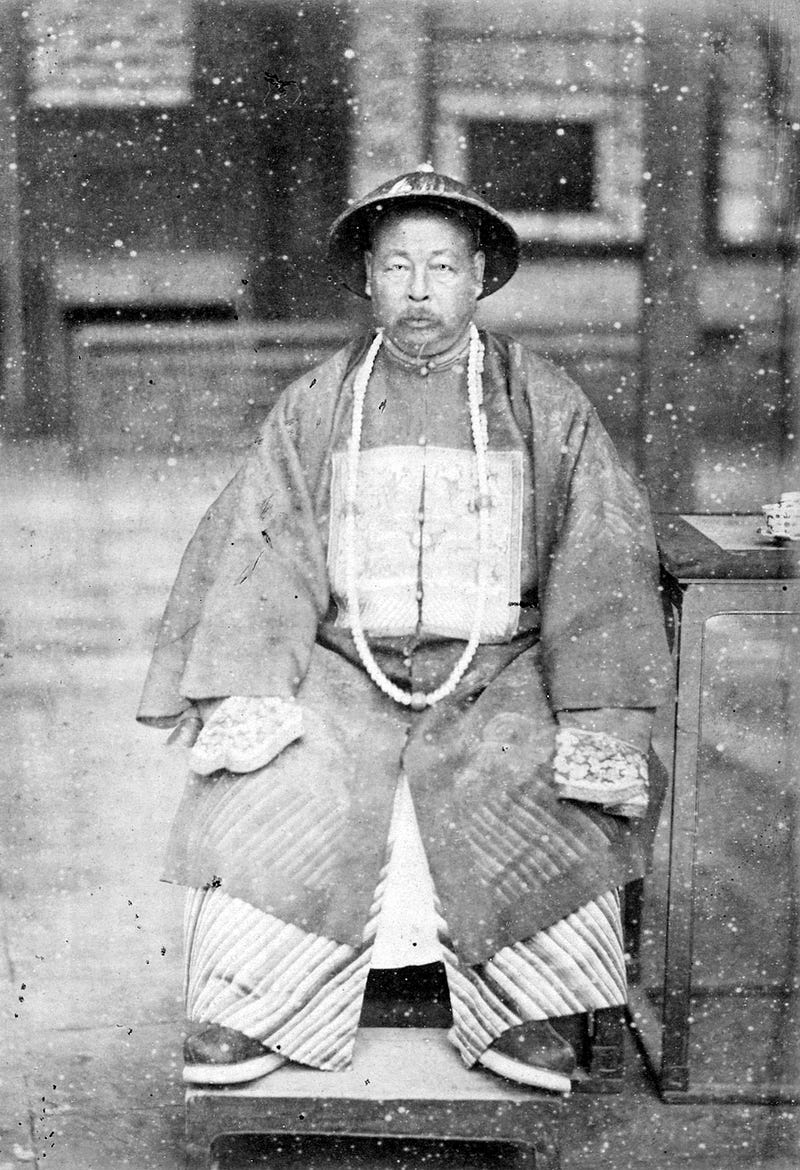
However, when exactly his name started getting mixed up with the a menu item is up for debate.
Some reports have claimed that the preparation originated as a Hunan style dish that’s name got confused with Zongtang’s. Other reports have named a Hunan style chef, Peng Chang-kuei as the creator of the dish, allegedly debuting in his New York City restaurant. However, there are also others who state that T.T. Wang of New York’s Shun Lee Palace is the originator.
Now regardless of who came up with it, the one thing that seems to be true across the board is that the popular dish that Americans know today as General Tso’s Chicken is probably nothing like what it was the first time it was ever made.
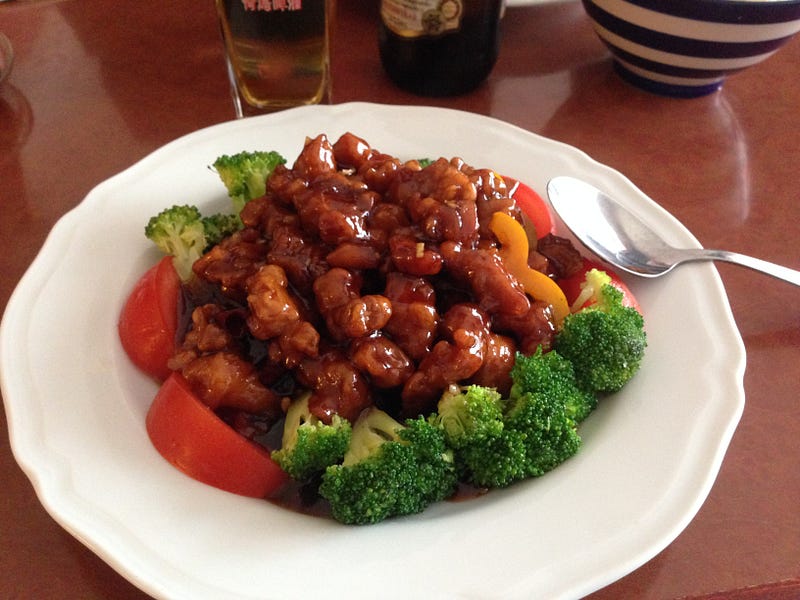
The sweetness of the dish is not common among old school traditional Hunan style cooking. Broccoli isn’t a classic Chinese ingredient, since broccoli is actually Italian in origin. And by two counts, the dish was created in New York and not China.
Trader Vic’s Menu
Sometimes brilliant marketing can override fact to dominate people’s perception. So true is that of food franchise guru Trader Vic. Victor Jules Bergeron Jr. may not be known to younger folk today, (as they might incorrectly assume that Trader Vic is just an extreme typo for Trader Joe) but once upon a time, Vic’s Polynesian themed restaurants were quite popular.
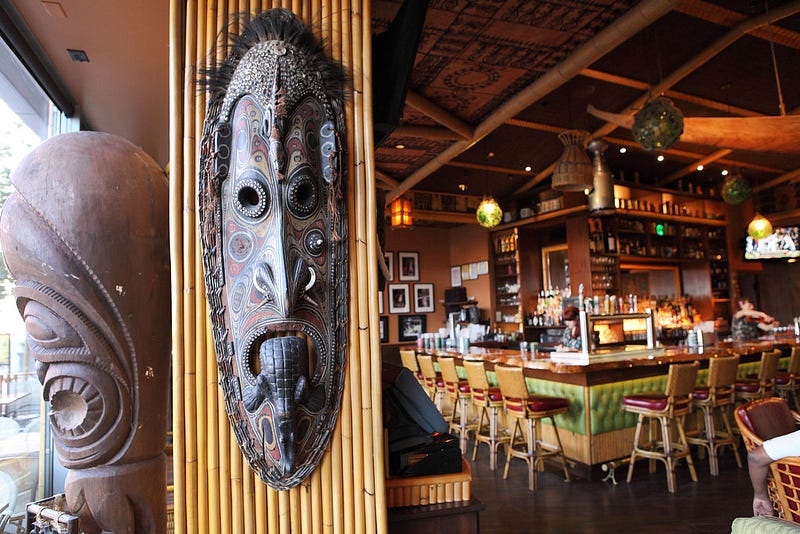
Although with popularity can sometimes come confusion. As much of Vic’s menu was only inspired by Polynesian culture and not striving for authenticity. But also, the menu itself has also crossed over into other territory like Hawaiian and Chinese adjacent cooking. Featuring supposedly Chinese dishes like BBQ Spare Ribs and Crab Rangoon. As a taste of foreign culture was once the appeal of the chain. But sadly, no one eating there was going to be getting that.
Now to be fair, Vic’s did have an appeal outside of foreign tastes. As it was seen as a fun and festive escape from the ordinary. A place where you could feel like you were on vacation at an exotic locale, but without the hassle or the expense of international travel.
And in order to cater to a widespread and casual clientele, cultural accuracy had to take a backseat to quick, affordable and accessible food that just gives the illusion of being from a far away land.
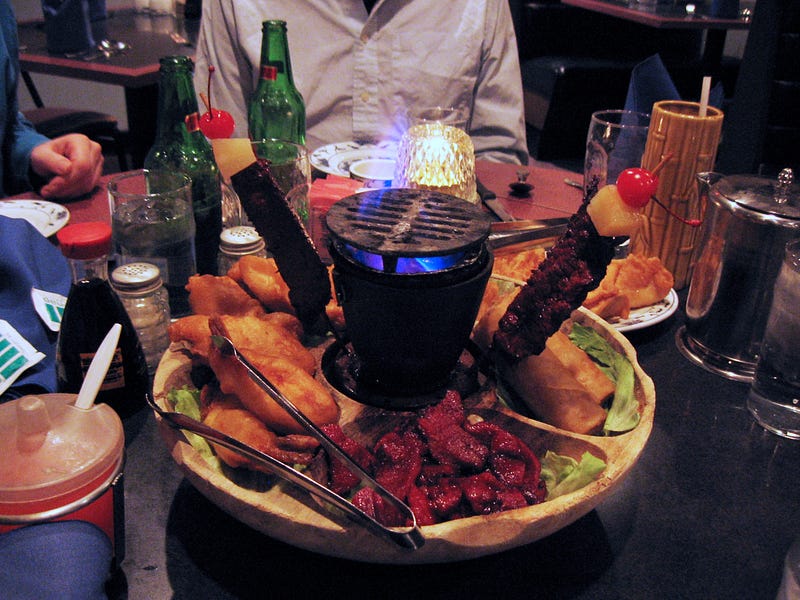
But where things got complicated is that on the reverse side of the spectrum and to blur the line even further on the other end, many American Chinese restaurants would end up trying to cash in on the popularity that Vic’s once had, adding dishes like the Pu pu platter to their offerings, despite not being Chinese at all. Meaning that many dishes associated as being Chinese food is about as Chinese as… Trader Vic himself.
All Chinese Food Is The Same
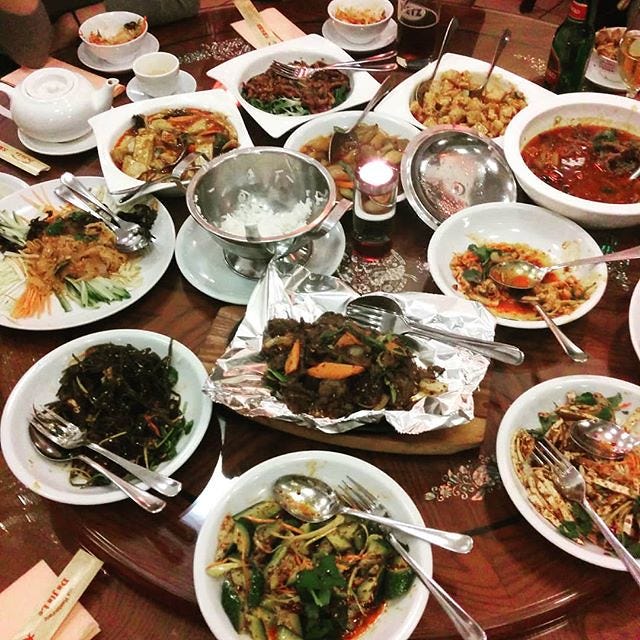
And finally, in case it hasn’t become obvious throughout this article, it should be noted that Chinese food is not just one thing. There are different regions and different subsets within Chinese cuisine. Hunan, as already discussed, Sichuan, Cantonese and many others are all different styles of cooking.
Sure, to the uninitiated they may all seem the same, but there are many differences in technique, ingredients and presentation. Some styles prefer spicier ingredients while others tend to have more mild levels of heat. Some are made with simplicity in mind while others are going for extravagance.
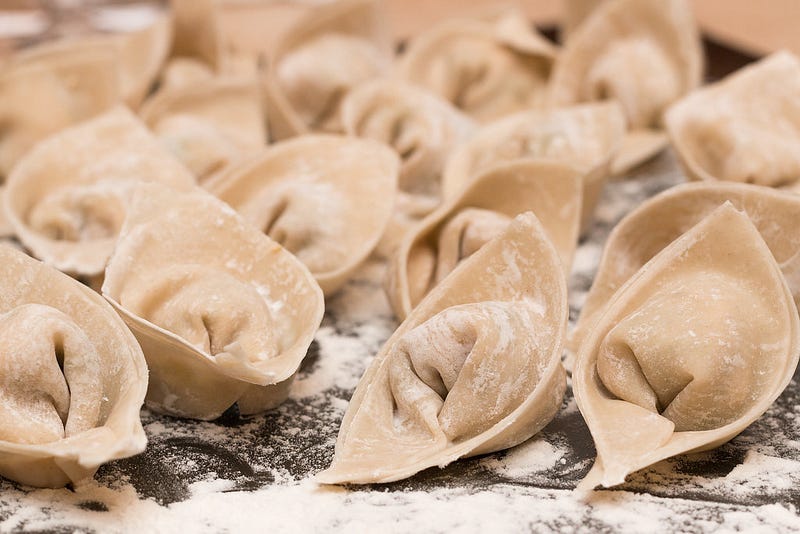
Just look at the simple wonton. While they may seem like one simple food, the truth is that there are many, many variations, which all say a lot about it. For example, depending on availability to the region, the meat filling can be made of pure pork or it can have shrimp in it. The soup that they are served in can have noodles as well or it can have nothing but wontons floating in it. And also even the folding method used to seal them up changes depending on who’s doing it. With some folding them to look like nurse’s hats and others folding with a specific number of pleats for good luck. And those are just two of the many folding methods and their meanings.
Conclusion
Well there you go, some easily dispelled misconceptions when it comes to Chinese Food. Hopefully the more you know about what’s on your plate, the better the food will taste. Because for some, knowledge is the tastiest side dish there is.


