
5 Most Significant Turning Points of the Past
From consequences of World War II to Black Plague.

Over time the world has become more civilized. People have progressed with time, and history is believed to reflect the summons of civilization because human beings have achieved and discovered so much till today.
As we all know, change is constant; therefore, whenever any event happens, it brings change, or we can say a turning point in the life of humans.
Modern-day civilization has played an essential role in the changes of this new era.
Some turning points bring positive outcomes in society, while others may bring incapacitated situations for humans. Let’s have a concise view of five crucial turning points in history.
5. 536 AD — The undesirable year of history

The most challenging year of history is renowned as 536 A.D. Also, this was the darkest year of history because the fog obstructed the sun during the day.
Europe, the Middle East, and some parts of Asia were affected by this fog for eighteen months. According to researchers, a volcano eruption in Iceland caused this fog which caused the temperature to fall between 1.5°C to 2.5°C.
538 AD was the year without sunlight. It looked like a lunar eclipse as there was no sun luminosity.
Economically this was the most challenging year as the harvest could not grow due to cruel weather conditions, and people started to die due to cold.
It takes a long time to recover from this economic stagnancy. It was a drastic turning point in history as no one had ever thought about such a hysteric situation.
4. Year 1918 — Strange Flu that took many lives
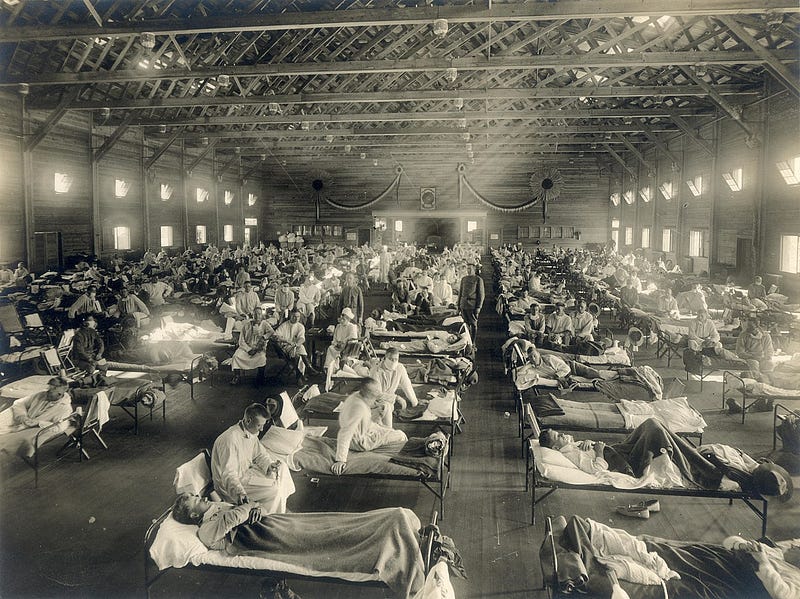

It can also be quoted as the Spanish Flu pandemic, which killed around fifty million people. Also, it affected one-third population of the world.
The duration of the pandemic was from 1918 to 1919, and this was not like the common flu. It took many lives, particularly ages between twenty to forty years respectively. It was more like a contagious disease.
The Americans had just fought world war I, and immediately after the war, they were dealing with this pandemic.
The doctors could not prepare effective care; no other preventive measures were introduced to control the virus. Thus this was the most traumatic situation.
3. The Black Plague — Pandemic that nobody wants to talk about
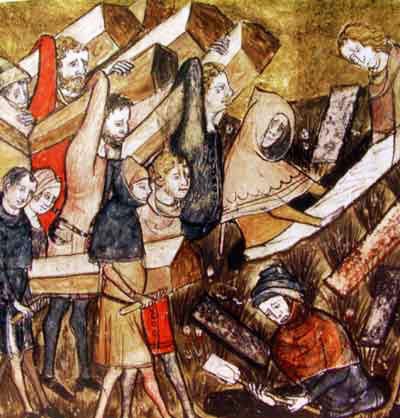

The black plague hit Europe in 1348. The disease in which people initially suffered flu-like symptoms further developed into swelling of the armpit and groins.
The victims died within two to three days, and the disease resulted from some bacteria named the bacterium Yersinia Pestis. The pandemic almost killed half population of Europe by shaking the economy upside down.
The shortage of workers affected the trade. People started to become pious because they thought it was a curse, so they turned their heads to Jesus Christ.
People were unable to understand the situation as their world changed completely. So this was a turning point because of the fatal disease and its consequences.
2. 1945 — Consequences of Second World War
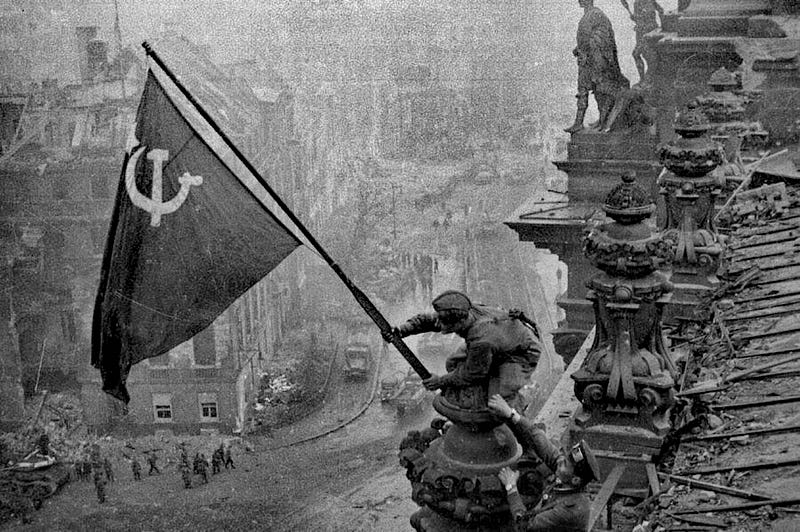
The day when officially it was declared to end the second world war is a Victory Celebration day in Europe. The war ended after the surrender of Germany in May 1945.
It was a dual celebration as Germany surrendered to western allies, including Great Britain and America, on 8th May, and another surrender took place in Russia on 9th May.
The end of the war brought significant changes in Europe. The second world war was the biggest in history. The battle formed a new perception of the world by shaping contemporary history.
The cold war began soon after the war ended, and both Soviets and western markets tried to establish as much post-war territorial dominion as possible.
Also, nuclear power and technology started to develop after the war. The innovations were being observed along with the development of new weapons.
Moreover, there was more advancement in medical science and communication. Therefore the second world war was one of the pivotal turning points in history.
1. The Industrial Revolution — An era of innovations
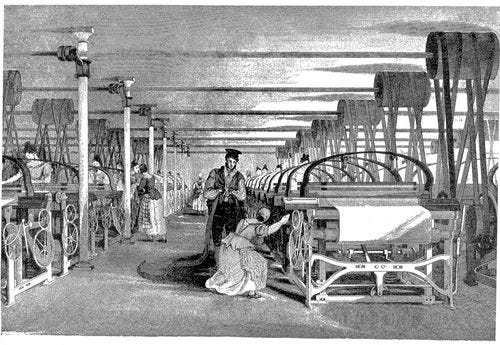

During the 18th Century, the process of scientific and technological developments started to flourish. It was the time of the industrial revolution.
The revolution gave an entirely new shape to America and Europe’s agricultural and industrial areas. Things that were handcrafted before began to be produced by machines in bulk quantity.
New technologies and innovations were being introduced in the market. For instance, machines producing cloth made the process faster and easier and required less time with less human effort.
The stock exchange was entrenched. The Industrial Revolution brought fast urbanization with a drastic increase in economic yield. Thus this was an essential turning point in the Eighteenth Century.
Final Words
Therefore the turning points significantly impact the modern-day history of the world. Each event in history has a different story.
These events sometimes bring a positive outcome; sometimes, the results are a lesson for ages to remember.
So we can not deny the fact that each turning point has significantly changed a social group’s social and economic aspects.
More from the author: