
5 Mistakes to Avoid as a New Investor
Common mistakes investing in financial markets and how to avoid them
It is common that you feel nervous when you first start investing. You will probably be asking yourself Am I doing it right? Am I paying too much? Is it normal for the value of my investments to fluctuate? Luckily you are not alone. Many before you have felt the same way, and many others are asking themselves these very same questions right now. Here is a list of the most common mistakes rookie investors make when they begin their investment journey.
1. Waiting too long to invest
The value of time is an important consideration when investing. When you begin investing early in life, you benefit from time and the power of compounding. Compounding is receiving interest over your interest, which is essentially a way of multiplying your money. The longer time you give your investments to grow, the better off you’ll be. By the rule of 72, an investment with a 10% compound fixed interest rate would take 7.2 years to double its value (72/10).
Additionally, if you put money into your investments regularly (say $100 a month), you will likely end up with higher returns in the long run than if you wait and put your money in all at once and hope for the best. Even while five years may not seem like much, it can have a significant impact on the amount of money you need to put into your portfolio when it comes to investing. A 35-year-old would need to invest $590 per month to reach one million by the age of 65, while a 30-year-old would need to invest $220 less per month (assuming a 9% yearly return).
2. No diversification
It’s like your grandma used to tell you, “Never put all your eggs in one basket.” The most effective strategy to reduce risk is to diversify your investments. Diversification balances riskier assets with more reliable alternatives. Without proper diversification, you will have less error margin if something goes wrong. Ideally, you will diversify between asset classes (your portfolio will have a portion of stocks, bonds, and cash-like assets), as well as within asset classes (you will have more than one company’s stock). Your financial situation, objectives, and risk tolerance will determine the optimal degree of diversification. You don’t want to overdo it either; the efforts required to keep track of 100 stocks on your own will outweigh the benefits.
3. Having a short-term view (being impatient)
There is a chance that immediate earnings will not materialize. Financial markets fluctuate, and daily swings are essentially random events, so don’t lose patience if you see a stock price decline. Beginner investors often make rash and ill-informed decisions in an effort to generate quick money; this is short-term speculation rather than investment. When it comes to your portfolio’s returns, you will not get rich overnight, so keep your expectations in line with reality, and never invest money you will need soon.
4. Letting your emotions decide
Around two-thirds of investors have regretted an investment decision they made due to a spur-of-the-moment or emotional judgment. As a beginner investor, you’ll likely discover that your investments are deeply entwined with strong feelings. Investing in financial markets can be scary and intimidating. You are using your savings to invest in a brighter future, which will probably make you anxious, but you must prepare yourself emotionally for the ups and downs of the market. Overvaluation of stocks is often overlooked by inexperienced investors who acquire shares based on excitement or following a trend. Putting your faith in a volatile market is a common financial mistake. If the market as a whole or some of your stocks fall, you may be tempted to panic sell. Don’t! Try to keep emotions out of your investment decisions as much as possible. Do a little research before deciding on a whim.
5. Paying too much in commissions
Fees and transaction costs can be return killers for investors. The greater the fees, the higher the return needs to be to break even on an investment. For example, if you invested $3,000 every year for 35 years (a total contribution of $105,000), with an average annual return of 10%, a 0.5% fee would almost equal your entire deposits.
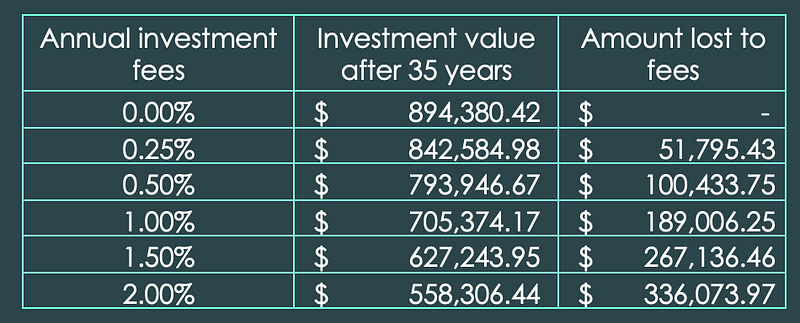
When making an investment decision, you should conduct thorough research and attempt to minimize expenses whenever possible. Make sure there are no hidden fees that would accumulate over time.
“Have a well-thought financial plan that is not dependent upon correctly guessing what will happen in the future.” — Barry Ritholtz
About the author: Mariana is an experienced investor with a passion for financial markets. She enjoys supporting others in learning about money and finance to make better financial decisions.
Check out the Buckets Investing App