
5 Mental Imagery Tricks to Drastically Change Your Mood
Imagine your worries as dried leaves flying far away.

Our minds have an extremely clever way of making us feel so negative and unhappy.
It’s no surprise to see that research has found stronger negative emotions are brought on by negative mental imagery.
For example, if you picture yourself doing poorly on a presentation, there’s a high chance you’ll feel like crap.
On the flip side, studies have found when individuals are probed to generate positive mental images, there is an increase in positive emotions. Individuals in these studies also perform well on a behavioural task after these positive images are generated. This tells us two things:
- Images have a profound effect on our emotions.
- Images are capable of generating better, more favourable behaviours.
In short, we can use mental imagery to influence our emotions and behaviours in a positive way. As Maxwell Maltz said:
“Change your mental imagery, and the feelings will take care of themselves.”
1. Picture Your Worries Flowing Away
Mental imagery involves perceiving something when it’s not actually present. It can mainly involve developing positive images or experiences.
However, this isn’t the only thing required to change your mood for the better.
It’s vital to think about how your current negative mood or state of mind is flowing away from you.
In simple terms, you need to get that crap away.
I love doing this. Before I think about anything positive, I always imagine how my unhelpful thinking or bad mood flows away from me like a river.
Clinical psychologist and hypnotherapist Dr Traci Stein suggests “envision allowing ways of coping that no longer serve them to flow out easily with the breath. And, imagine them as dried leaves or other debris that can blow safely off into the distance. Another helpful image is to imagine shedding an old, out-of-style outfit for something that suits you better.”
These are brilliant ways to try and get rid of your negative mood.
Once that negativity is blown into the distance, you can create more positive images and experiences.
2. Use All Your Senses When Utilising Imagery
Imagery should always involve a multi-sensory approach — seeing, hearing, tasting, smelling and touching.
It can’t just be about closing your eyes and trying to see a positive image. You need to try and use as many senses as you can.
Immersing yourself completely in this way when using mental imagery can help with making it feel real.
And, the more real it seems, the greater the impact it can have on your behaviour and emotion — in a positive way.
For example, if you have a goal of wanting to lose weight, close your eyes and see yourself as your ideal weight. Imagine hearing people comment on how well you’ve done to get to your ideal weight. Imagine tasting your favourite cheat meal at the end of your dieting period.
Combining your senses gives a holistic approach to your mental imagery.
A study published in Imagination, Cognition and Personality Journal found seeing and hearing had the greatest effects on the quality of the image people visualised.
So, you can always try to use those two senses, in particular, to make your image feel real.
If you find yourself in a negative mood over something, stop for a moment.
Close your eyes. Now try to use at least three senses to help combat this negative state you’re in. What can you see that’s more positive? What can you hear that’s more friendly? What can you smell that will make you feel good?
This can help you feel like the images you’re creating are real — which as research shows, can help change your mood in a good way.
3. Use Guided Imagery to Make It More Powerful
Using imagery alone can be tough, to begin with. I remember staring blankly at my table for ages thinking “what do I visualise?”
Instead, using guided imagery could be a great way to get you into the realm of mental imagery.
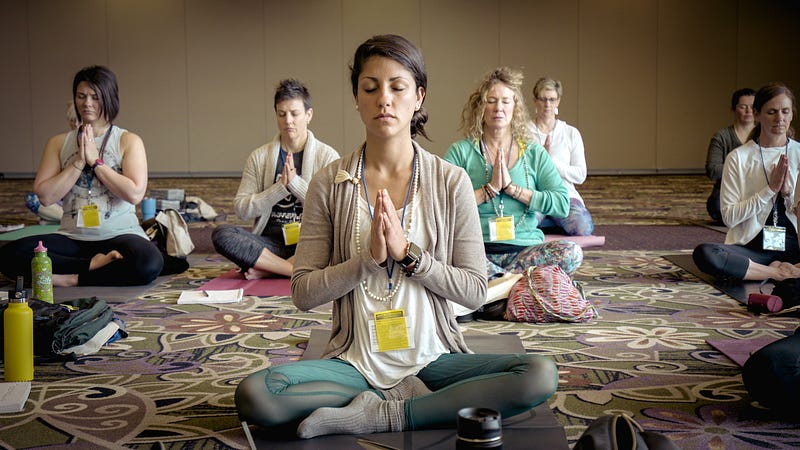
Guided imagery involves mental imagery but with an instructor or recordings to help you go through the process. You’re taken through this visualisation process with an aid.
It’s like with anything, when you first start, having someone or something there to support you makes the process easier — it can have a greater effect on you.
Research in 2018 found students who went through a guided imagery intervention using a 10-minute audio recording, showed a reduction in test anxiety after the guided imagery.
To really feel the effects of mental imagery, having a guide there with you is a great tool.
So, if you’re thinking about utilising mental imagery, start with a recording of someone taking you through the process.
You can easily find guided imagery videos on YouTube, apps like Headspace or even listening to different guided imagery podcasts like A Healthier Michigan Podcast.
This can help you feel more calm and positive because you have someone or something there supporting you through the process.
4. Imagine The Small Steps Too
The end goal we may have is great.
But sometimes, that end goal can seem so distant that it makes us feel horrible.
For example, I’ve always had the goal of becoming a clinical psychologist. But when I was at university, it seemed so far and so difficult. If I was to visualise myself as a clinical psychologist when I was at university, it can actually be disheartening because the process seems so long and far.
In this context, mental imagery may have a negative effect.
Something to try out when visualising your goal is to take time to envision the journey, the small steps and all the little things that will help with the bigger goal.
For me, I would visualise getting a first-class honours at university. I would visualise getting my first job. I would visualise getting an assistant psychologist job or a research worker role. I would even visualise completing an assignment and getting a high grade or visualise myself working with people with mental health difficulties.
These small steps are closer and a bit easier to attain, which can make you feel a lot better when using mental imagery.
To help you envision the small steps:
- Write down things you can achieve in the next two weeks to help you with your larger goal.
- Close your eyes and imagine achieving that small goal.
- Picture how you would feel, what it would mean to you and how you would look if you achieved it.
- Keep repeating so you’re building up more small steps to visualise.
Don’t underestimate the power of how the visualisation of the small goals can help with your long term goal.
It’s a method of mental imagery that can change your mood in a great way because the smaller goals are within reaching distance.
5. Draw Attention to Your Emotions
A massive goal of mental imagery is to alter your mood for the better. But it’s no good doing this if you’re not going to pay attention to how you feel after.
Being mindful of your positive emotions induced by mental imagery can make you realise how impactful imagery is.
For example, if you’ve just done some exercise and you get an endorphin rush, it’ll make you feel great. You’ll probably want to keep feeling this way so you do it again.
The same goes for mental imagery — chances are, you’ll feel a lot better once you’ve engaged in some form of visualisation to help with your mood.
If you notice this link, it can make you want to use imagery again to boost your mood.
To help notice how you feel after you use mental imagery, ask yourself:
How do I feel right now?
What emotions am I experiencing?
It’s a way of taking notice of the effects of mental imagery. Once you realise the profound, positive effect it can have, the more likely you’ll use it and the better you’ll become at changing your mood with imagery.
Final Comments
Our mind controls so much of what we do and how we feel.
Often, negative images pop into our minds, making an experience seem so real that it will affect us.
However, we can counteract these negative images by probing ourselves to develop positive mental images to help with the way we feel.
Utilising these five strategies during mental imagery can help us feel so much more positive and better:
Picture your worries flowing away.
Use all your senses when implementing mental imagery.
Use guided imagery to make your visualisations feel more real.
Imagine the small steps and the process of your journey.
Be mindful of your emotions when using mental imagery.
Mental imagery is a powerful strategy to impact your mood. And as author Wayne Dyer says:
“The use of mental imagery is one of the strongest and most effective strategies for making something happen for you.”