avatarKesh Anand

Free AI web copilot to create summaries, insights and extended knowledge, download it at here

3806

Abstract

ness energy is what fuelled the industrial revolution. It transformed us from an agrarian society to one steeped in manufacturing and consumerism.</p><p id="934f">While human technological progresses on the one hand; our reliance on coal, oil and gas to service and secure our energy needs has had huge ramifications in global geopolitics and the destruction of the environment.</p><p id="d342">Nuclear Fusion Technology promises to change the game completely.</p><p id="5b37">Offering <a href="https://www.iter.org/sci/Fusion#:~:text=Abundant%20energy%3A%20Fusing%20atoms%20together,reactions%20(at%20equal%20mass).">4 million times</a> the energy output of an equivalent amount of fossil fuel; mass adoption will see climate change abated and the need to control global energy supplies and shipping lanes plummet.</p><p id="f8cf">It’s not just science fiction either.</p><p id="e40d"><a href="https://www.iter.org/">ITER</a>, an international nuclear fusion research and engineering project, are building facilities in <a href="https://www.iter.org/sci/Goals">southern France</a>, with a goal of achieving operations at full fusion power by 2035.</p><h2 id="60ed">#3: “Human-level” Artificial Intelligence</h2><figure id="f213"><img src="https://cdn-images-1.readmedium.com/v2/resize:fit:800/1*3juuDHfW_bbujtOLItP87A.png"><figcaption></figcaption></figure><p id="e8cf">For decades, humans have employed artificial intelligence (AI) for specific purposes: be it <a href="https://theconversation.com/twenty-years-on-from-deep-blue-vs-kasparov-how-a-chess-match-started-the-big-data-revolution-76882">beating chess grandmasters</a>, or helping us navigate from point A to B via our talking GPSs.</p><p id="394b">These days, we use AI for increasingly more general<i> </i>purposes. Apple’s Siri, and Google’s Google Assistant are good examples. While my kids find them entertaining — I’d be hard press to say that they are of “equivalent” intelligence to humans.</p><p id="ac76">This will change, however.</p><p id="a72f"><a href="https://research.aimultiple.com/artificial-general-intelligence-singularity-timing/">Many experts</a> believe that we will have developed <i>Strong AIs</i> that excel not just at narrow and specific tasks, but can “think” and learn like humans by around 2060.</p><p id="6d87">This threshold is called “Artificial General Intelligence”.</p><p id="2292">Though such an AI may not be any smarter than us — it would still have many advantages. For a start, it wouldn’t need to sleep or even get tired — imagine how productive you’d be if you didn’t have to contend with a nightly recharge.</p><p id="a742">Similarly — they could think and act in fractions of a second, seeing their productivity be even greater.</p><p id="3396">This, more than anything, heralds our entrance into the next stage of technological advancement.</p><h2 id="1a1b">#4: The United States Ceases to be a Super Power</h2><figure id="dbc7"><img src="https://cdn-images-1.readmedium.com/v2/resize:fit:800/1*cAqB6yFD7_ossnKbaEckGg.png"><figcaption></figcaption></figure><p id="44ac">Don’t get me wrong — I’m not predicting that the USA disintegrates into some sort of post-apocalyptic land ruled by warlords.</p><p id="79df">What I’m saying is that the commanding lead America has in terms of its economy, military might, and political influence — and being able to use these to project power globally will wane.</p><p id="bc59">Not because the country herself weakens, but because the rest of the world “catches up”</p><p id="9a9e">By mid-century, the US will no longer be the world’s biggest economy (I remember when it was bigger than the second, third, fourth and fifth largest economies <i>combined</i>); and its notable military strengths (such as nuclear weapons, and blue water navy) will no longer be p

Options

articularly unique on the world stage.</p><p id="8c84">Further, it will slowly lose control over various international agencies. This is a process that is already happening — China controls four of the 15 specialised United Nations agencies.</p><figure id="3d3b"><img src="https://cdn-images-1.readmedium.com/v2/resize:fit:800/1*tXMbRvd3HrIT-8ugFVPJzA.png"><figcaption>Credit: <a href="https://www.crudecompanion.com/how-chinese-expansionist-strategy-is-unfolding/">crudecompanion.com</a></figcaption></figure><p id="6173">Over time — the US will go from “towering superpower” to just “one of a set” of global players.</p><h2 id="4cd8">#5: Word War III</h2><figure id="818c"><img src="https://cdn-images-1.readmedium.com/v2/resize:fit:800/1*JU1PnLciQ_2_mbEQQzJqwQ.png"><figcaption></figcaption></figure><p id="e0bc">Since time immemorial, humans have waged war on one another. Typically — they may have aimed to gain more land, control resources, or for religious reasons.</p><p id="922e">That is, until now.</p><p id="4b53">We are living in an unprecedented period of peace — with no two major powers having fought a hot war with one another since the end of World War II, 70 odd years ago.</p><p id="554a">It is so unusual, that academics have even coined a name for it: “The <a href="https://en.wikipedia.org/wiki/Long_Peace">Long Peace</a>”.</p><p id="8ae8">All things “<a href="https://en.wikipedia.org/wiki/Regression_toward_the_mean">regress to the mean</a>” however, so it is only a matter of time until it happens again — except this time, we have nuclear weapons.</p><p id="e8d5">What are your thoughts? Are there any other major historical events we’ll likely bear witness to in our lifetimes?</p><p id="f788">Let me know in the comments below!</p><p id="7f1a"><i>You may also like:</i></p><div id="c609" class="link-block"> <a href="https://readmedium.com/when-we-meet-aliens-theyll-almost-certainly-be-robots-80398d1bcef8"> <div> <div> <h2>When We Meet Aliens — They’ll Almost Certainly Be Robots</h2> <div><h3>Life is too short for organics to be roaming the universe</h3></div> <div><p>medium.com</p></div> </div> <div> <div style="background-image: url(https://miro.readmedium.com/v2/resize:fit:320/1*TErg6RPeh27XFIgK8LlRiQ.png)"></div> </div> </div> </a> </div><div id="9866" class="link-block"> <a href="https://readmedium.com/forget-mars-we-should-colonise-venus-instead-db0741fab296"> <div> <div> <h2>Forget Mars — We Should Colonise Venus Instead</h2> <div><h3>Colonising Venus is perfect for our needs and much easier to boot</h3></div> <div><p>medium.com</p></div> </div> <div> <div style="background-image: url(https://miro.readmedium.com/v2/resize:fit:320/1*L3QKBEEB3b6i4kjJ9sxTYA.png)"></div> </div> </div> </a> </div><div id="8f18" class="link-block"> <a href="https://readmedium.com/all-life-on-earth-will-be-wiped-out-and-here-is-why-23c1a155ffee"> <div> <div> <h2>All life on earth will be wiped out; here is why</h2> <div><h3>Earth is the only place in the known universe where the existence of life has been confirmed. Over 8.7 million species…</h3></div> <div><p>medium.com</p></div> </div> <div> <div style="background-image: url(https://miro.readmedium.com/v2/resize:fit:320/1*oqsMGg4Ka-fHo5c2vyPSmw.jpeg)"></div> </div> </div> </a> </div></article></body>

5 Major Historical Events That Will Occur In Your Lifetime

History isn’t something that’s come and gone — it’s something you’re experiencing right now

I was always keen to ask my grandparents, and others of their generation about their experiences. I’d ask questions like:

  • What was it like to watch the moon landing?
  • How did the Great Depression impact your life?
  • What was the mood like the day Mahatma Gandhi was killed?

What we don’t often realise is — we too, are living through many historically significant events

Events that people will reference and study for hundreds, perhaps thousands of years to come.

Assuming you are the “median” human — that would make you around 30 years old.

Already in your lifetime - you would have witnessed the collapse of a superpower (the USSR), global communism, the rise of the internet, and the proliferation of mobile phones and social media.

Given median life expectancy is ~73, — that would suggest that you will live to the year 2064.

It makes you wonder:

What major historical events are you likely to live through in coming decades?

Below are five that we can be pretty confident will come to pass:

#1: Humans will visit Mars

You might not have been around for the Moon Landing, but you’ll likely see the Martian one.

Space X CEO, Elon Musk, has said that he expects a managed mission to Mars to launch in 2026.

They’re not the only ones with plans for the red planet.

NASA is looking at manned missions for the 2030s; the European Space Agency is undertaking a number of studies related to a human crewed Mars mission; and the space agencies of countries like China, and India have already at least already sent unmanned orbiters and rovers.

With so much government and private sector activity in this space (pun definitely intended); it is only a matter of time will humans set foot on the red planet.

Regardless of who gets this across the line; this will be referred to for a thousand years — the moment when man became an interplanetary species.

#2: Humans crack Nuclear Fusion — providing unlimited energy

Being able to harness energy is what fuelled the industrial revolution. It transformed us from an agrarian society to one steeped in manufacturing and consumerism.

While human technological progresses on the one hand; our reliance on coal, oil and gas to service and secure our energy needs has had huge ramifications in global geopolitics and the destruction of the environment.

Nuclear Fusion Technology promises to change the game completely.

Offering 4 million times the energy output of an equivalent amount of fossil fuel; mass adoption will see climate change abated and the need to control global energy supplies and shipping lanes plummet.

It’s not just science fiction either.

ITER, an international nuclear fusion research and engineering project, are building facilities in southern France, with a goal of achieving operations at full fusion power by 2035.

#3: “Human-level” Artificial Intelligence

For decades, humans have employed artificial intelligence (AI) for specific purposes: be it beating chess grandmasters, or helping us navigate from point A to B via our talking GPSs.

These days, we use AI for increasingly more general purposes. Apple’s Siri, and Google’s Google Assistant are good examples. While my kids find them entertaining — I’d be hard press to say that they are of “equivalent” intelligence to humans.

This will change, however.

Many experts believe that we will have developed Strong AIs that excel not just at narrow and specific tasks, but can “think” and learn like humans by around 2060.

This threshold is called “Artificial General Intelligence”.

Though such an AI may not be any smarter than us — it would still have many advantages. For a start, it wouldn’t need to sleep or even get tired — imagine how productive you’d be if you didn’t have to contend with a nightly recharge.

Similarly — they could think and act in fractions of a second, seeing their productivity be even greater.

This, more than anything, heralds our entrance into the next stage of technological advancement.

#4: The United States Ceases to be a Super Power

Don’t get me wrong — I’m not predicting that the USA disintegrates into some sort of post-apocalyptic land ruled by warlords.

What I’m saying is that the commanding lead America has in terms of its economy, military might, and political influence — and being able to use these to project power globally will wane.

Not because the country herself weakens, but because the rest of the world “catches up”

By mid-century, the US will no longer be the world’s biggest economy (I remember when it was bigger than the second, third, fourth and fifth largest economies combined); and its notable military strengths (such as nuclear weapons, and blue water navy) will no longer be particularly unique on the world stage.

Further, it will slowly lose control over various international agencies. This is a process that is already happening — China controls four of the 15 specialised United Nations agencies.
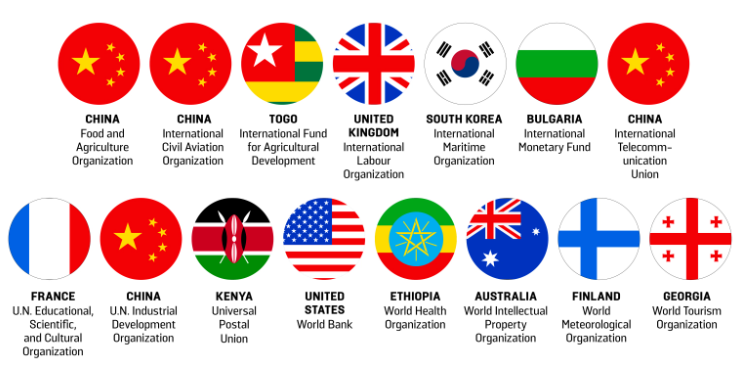
Credit: crudecompanion.com

Over time — the US will go from “towering superpower” to just “one of a set” of global players.

#5: Word War III

Since time immemorial, humans have waged war on one another. Typically — they may have aimed to gain more land, control resources, or for religious reasons.

That is, until now.

We are living in an unprecedented period of peace — with no two major powers having fought a hot war with one another since the end of World War II, 70 odd years ago.

It is so unusual, that academics have even coined a name for it: “The Long Peace”.

All things “regress to the mean” however, so it is only a matter of time until it happens again — except this time, we have nuclear weapons.

What are your thoughts? Are there any other major historical events we’ll likely bear witness to in our lifetimes?

Let me know in the comments below!

You may also like:

History
Future
Technology
Life
Space
Recommended from ReadMedium