
5 Coins Dominating the Crypto Liquidity Sector
stETH | Validator | Node operator | DAO | Innovative | Pools

We discussed AI Coin at an early stage and made a 100%-150% profit on it. The liquidity provider will be the next trend after AI.
The development of the liquidity provider token is the upcoming trend since many projects are progressively heading in the direction of Proof of Stake. Ethereum, the favorite coin among miners, is now supported by POS. The next trend at that time was towards tokens that would offer good payouts for staking. Take your time to understand this concept.
Validator
A validator is required to keep the network of any POS project secure. To become a validator, you must have a certain number of tokens. Only then can you become a validator.
An ordinary person cannot get coins in large quantities and does not have enough time to oversee the validator’s work all day. In such a case, the liquidity provider is the second option.
We go to the liquidity provider, who handles all of the work for us. The liquidity provider offers us a 12% return in exchange for a 0.5% or 1% commission. In such a case, both sides are satisfied.

Near Future
Liquidity providers are becoming much more popular in today’s world. The price of their tokens is rising as a result of the growing demand. In the near future, there will be a very good trend of liquidity providers.
The good thing is that the project I’m going to tell you about today is not currently in the spotlight. When those projects come into everyone’s eyes, the price of their tokens will skyrocket. It is possible that it will win the ‘TO THE MOON’ race.
stETH Concept
You may stake as much Ethereum as you like in LIDO, Rocket Pool, and Frax Finance, and in exchange, you will receive stETH tokens. This stETH may be used in different defi protocols such as aave, compound, and so on.
Previously, ETH was locked in staking, and nothing was left with you, but they have fixed this problem by making ETH a liquid token even if it is locked. Formerly, there was no liquidity in the market, but with stETH, liquidity has been generated.
1. Lido Dao (LDO)
♦ Market Rank — 30
It is created especially for Ethereum. This is the most trustworthy platform for slow staking. Typically, 32 ETH is required to participate in the Ethereum POS, but not everyone has that much ETH, thus LIDO has provided a solution. You may join the pool by staking half ETH or one ETH in the LIDO platform. LIDO will divide the reward based on the amount of ETH invested.
Governance
Whatever reward we obtain, 10% should be deducted as a fee. LIDO divides the 10% into three categories, but who gets how much is determined by the governance. Governance has the authority to lower or increase the percentage.
Node operator To stake, one must run the Nord of ETH2.0, which many users do. They are rewarded by LIDO Finance.
DAO Account (Treasury) A portion of the funds is used to run all of the operations of lido finance. The creator uses some money for remuneration or for himself.
Insurance Fund Money from the insurance fund may be given to individuals in the case of any platform problems or hacking.
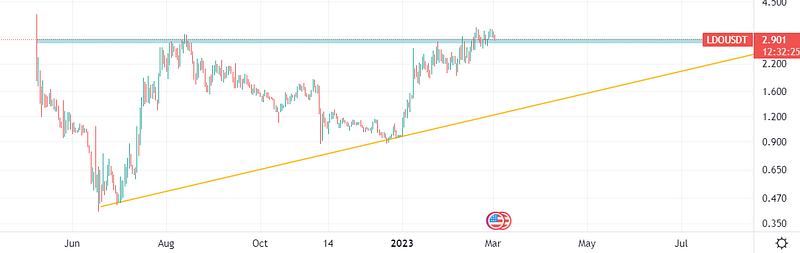
It holds 6 million Ethereum tokens (TVL) worth $9.56 billion in the network. The total number of LDO tokens available is one billion.
Lacks Use Case
The issue with LDO tokens is that 60% of the supply is owned by the company, which includes the Treasurer, Founder, and Developer. Voting, little rewards, and activity are the use cases for LDO.
Yet, because it lacks a solid use case, there has been no development in the LDO token. If someone comes up with a good use case in the future, it may become a game changer.
You may also stake Ethereum, Solana, Matic, KSM, or DOT in this.
2. Rocket Pool (RPL)
♦ Market Rank — 63
With 16 ETH, we can run our own Nord using Allnodes and Rocket Pool. Allnodes is a hosting provider where you may host Nord for $10 per month. Thus far, 16269 Nords have been launched.
Hosting
Rocket Pool works with several platforms that provide hosting services. Several more similar minipools will be built in the future, which will further decentralize Ethereum.
Validator Requirement
You’ll need 16 ETH, plus an extra ETH for the fee, and the RPL token. A minimum of 100 RPL tokens will be required, and the more RPL tokens you stake, the greater the rewards.
There is no need to be concerned if you use any hosting provider because all authority will be given to Rocket Pool.
Minipools
There is now a minipool of 16 ETH, however, minipools of 8 or 4 ETH may appear in the future. Whatever reward is given out will be in Ethereum.
Demand
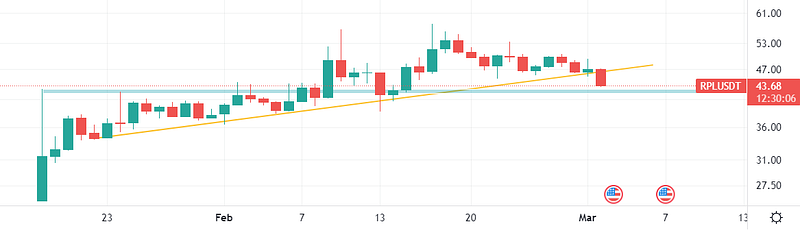
The RPL token has a really nice use case. RPL coin will be in high demand in the future as well. The idea is very unique. To be honest, rocket pool has a better use case than LIDO.
In this, around 673k Ethereum is staked in the platform. A total of $1.07 billion is locked. Just ETH stake provides an APR of 4.28%, but Nord Run offers more benefits.
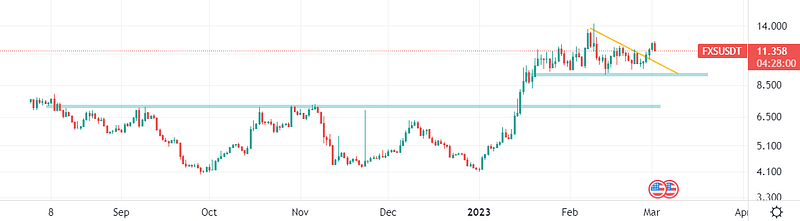
3. Frax Share (FXS)

♦ Market Rank — 59
A stablecoin is provided by the FRAX Finance project. This stablecoin will be in fractions, which means it will be generated algorithmically in small fractions, which will be backed by something.
If the supply changes, the stablecoin will automatically adjust to the $1 peg.
Algorithmically
We used to have Luna in Algorithmically stablecoins, which was bad, but stablecoins issued by FRAX Finance will not be 100% algorithmically. It will be a hybrid of collateral and algorithm. Collateral will flow in the form of USDT, and half of the mechanism will flow algorithmically.
The value of Frax will remain at $1, and the primary token of this project is FRAX Share (FXS).
frxETH
This project allows us to stake Ethereum. That gives us an 8% return. First, ETH must be minted in frxETH before it can be kept for staking. You may also exchange frxETH for any other stablecoin or token.
It is the second-highest 7.37%APR platform in liquid staking after Lido.
Cool
Numerous people have put money into this project, including crypto.com, Coinbase CTO, Robot Venture, bancor, Synthetix (SNX), and AAVE.
Keep an eye on this project because it is highly advanced. Every month, they make a net profit of half a million dollars.
4. AAVE ( Aave)

♦ Market Rank — 51
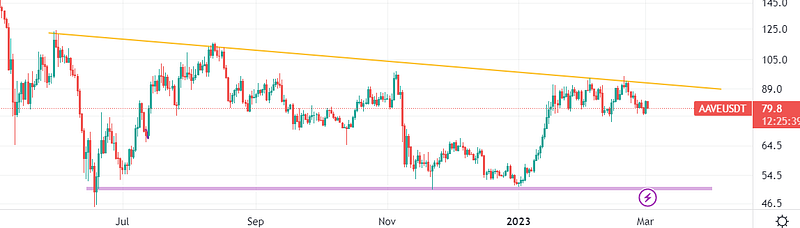
Everyone knows that this is the most successful Defi project of all time; in this, you may put other coins against the staked crypto, as well as receive monthly returns on the staked crypto.
It is possible to stake and borrow all of their platform’s coins. Large projects prefer to stake and borrow tokens solely on AAVE.
Growth
They have released V3 and are now installing zkSync on Aave so that it will be in demand in the future. JP Morgan was the first company to use DeFi, which ran on the Polygon mainnet using a modified version of the Aave protocol. DeFi is advancing slowly in traditional finance.
Lemon Cash has teamed up with Aave. DYDX has recently collaborated with Aave. Aave is also working on NFTs.
Party Club
They are now creating a ‘Phi Club Theme,’ which is similar to a virtual party club. Philand is represented by the letter phi. It was designed to search for stuff relevant to web3 and find new ideas to discuss right away.
5. Ankr Network (ANKR)

♦ Market Rank — 142
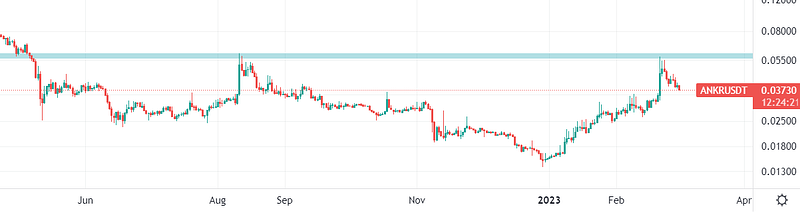
Similar to the AAVE, it uses the same working model. Several services are provided to the crypto in this, including stake, land, borrow, defi, bridge, liquidity pool, and farming. In addition, node hosting is available.
In this, a software development kit is also given to create web3 games, multi-chain, and blockchain, for which certain fees must be paid.
The majority of this TVL is in ETH and BNB. Provides staking services in Matic, Avax, Dot, and FTM.
They have collaborated with Binance, Polygon, and Optimism.
If we can predict which new trend will emerge in the market, our chance to earn profits increases significantly.
♦ Must keep these 5 coins in your watchlist ♦
Clap — Share — Comment — Happily ☺
Disclaimer
This is not Financial Advice. This article is meant only for educational purposes. I am just sharing my thoughts and analysis based on my many years of experience.