
5 Life Skills Marching Band Taught Me
There’s more to it than playing an instrument.
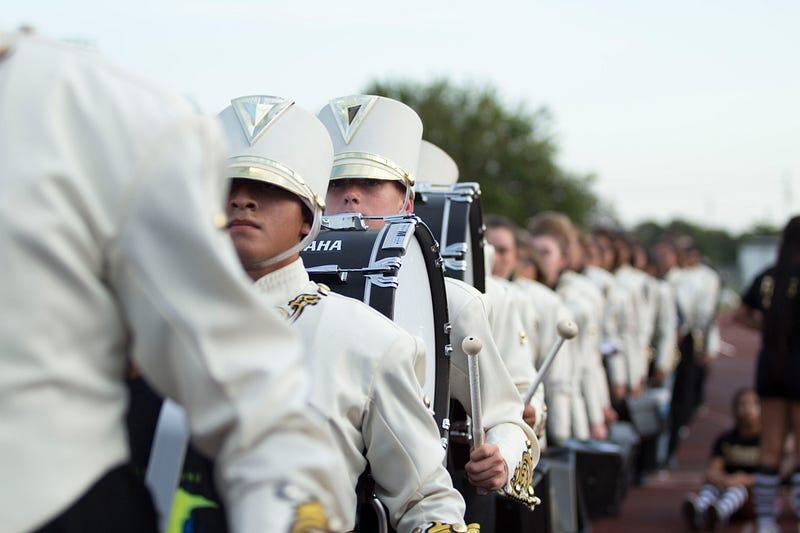
Throughout high school, I participated in the marching band. Through my experiences as a band geek, I learned important lessons I use in my career today. I learned skills that are transferable, regardless of your field, and are desirable to any employer. These are 5 skills that I learned from my time in the marching band.
1. Discipline

Marching band is a demanding activity- both physically and mentally. To master the choreography and memorize the music, you must practice a lot in addition to rehearsals. Pushing yourself to practice daily requires discipline.
Having the discipline to constantly exercise your skills will set you apart. Even if you’re not in a challenging role currently, you can still learn and grow your skills outside of work. Pushing yourself to perform at your best can be grueling, but will pay off in the long run, whether it’s through accolades, recognition, or promotions.
2. Time Management

Marching band is a serious commitment as an extracurricular activity. In addition to the school days, there are rehearsals twice a week, football games on Fridays, and competitions on Saturdays. To balance my schoolwork and marching band, I learned how to properly manage my time.
Time management allows you to organize your responsibilities and successfully achieve your goals. Properly managing your time allows you to get things done quickly and efficiently. Good time management allows you to be more productive and get more done. It leaves more time for other activities, whether that’s spending time with friends, self-care, or taking up a new hobby. Aytekin Tank wrote an incredible article on time management:
3. Leadership

I served as the trumpet section leader during my senior year. I took on additional responsibilities, such as helping freshman acclimate to the program and leading the section in rehearsals. Through these experiences, I built the foundation of my leadership skills.
With leadership, you take on more responsibilities and guide your team towards success. Leadership is a desirable quality employers look for, so it makes you more hireable. Leadership is important because a successful team needs someone to lead it, and it demonstrates to employers that you have the potential to progress and grow with the company.
4. Teamwork

A marching band cannot be successful without teamwork. Everyone has to execute their part correctly, or else you ruin the formation or a wrong note will taint the music. You learn how to work together in both small and large groups to be successful and win competitions.
Teamwork is the foundation of many professions, and knowing how to work with different personalities will help you excel in a collaborative environment. Even if you work independently, you likely work alongside coworkers. Networking helps your career, and creating positive work experiences with your coworkers can benefit you later.
5. Practice makes perfect

When I played through a 10 minute marching band show for the first time, it seemed impossible to memorize it. I received the piece at the beginning of summer and practiced every day. By the week-long band camp at the end of summer, I had the music memorized. By memorizing small chunks at a time and playing over and over to commit to muscle memory, I succeeded.
Practice is the key to mastering new skills and refining your craft. As you continually exercise a skill, not only do you learn how to do it better, but how to do it faster. It’s important to exercise your skills and constantly improve.
As a band geek, I learned a lot of transferable skills that I use today. We can all learn something from our past experiences, and we can find the most important lessons in unexpected places.


