
5 Life Lessons You Can Learn From a Toddler
#1 Clap for yourself
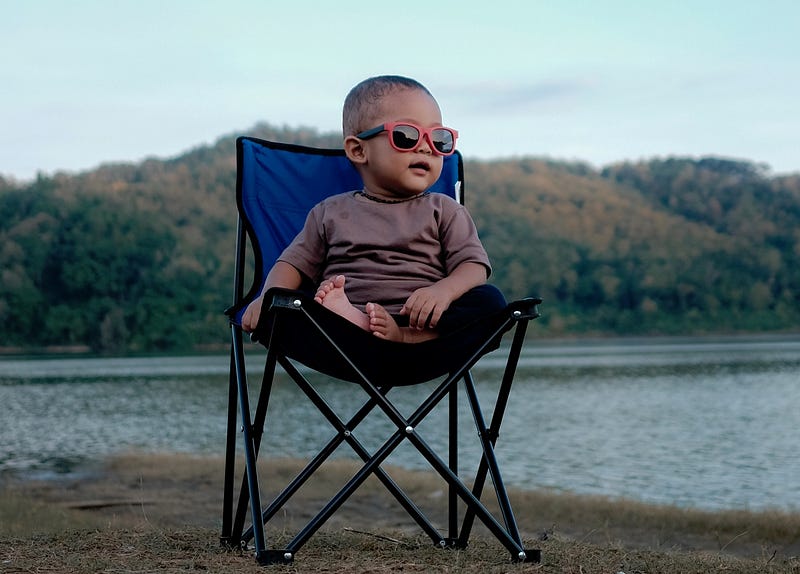
Toddlers have a bad reputation. Terrible twos, three-nagers, or as Bunmi Laditan succinctly put it, “Toddlers are a**holes.” They’re walking little ids — laughing, crying, pouting, dancing, climbing, yelling, bargaining, and running — sometimes all at the same time. I have an 18-month old daughter and she is completely in-tune with what she wants and she’s not afraid to express it — loudly. Her moods can shift wildly from moment-to-moment and it’s all I can do to prevent them from careening into a tantrum.
Contrary to popular belief, toddlers are also wonderful. They are delightfully hilarious, surprisingly affectionate, and endlessly curious. They live in the moment and see the world as a thrilling place full of new things to discover. Staying home with my daughter over these many months has given me the opportunity to experience life as she lives it. She’s taught me a lot, including the following lessons.
1. Clap for Yourself
Every time my daughter completes a task she’s especially proud of — like putting her shoes away or feeding me the half-eaten tortilla chip she found on the floor, she claps for herself. She pauses, turns away from me, and claps her hands together a few times. She doesn’t look up at me for reassurance. She takes a moment for herself and appreciates what she considers an accomplishment.
It makes me smile every time she does it. “When’s the last time I clapped for myself?” I wonder. Here’s how out of touch I am: I couldn’t think of any recent accomplishment to clap for and had to have my husband brainstorm with me. “How about your writing?” he suggested. I realized that I’ve been writing consistently for four months, which is a big milestone for me. I hadn’t even stopped to consider my success. The next time I sat down to my laptop to write, I clapped for myself. I felt pretty silly, but it also felt pretty good.
Here’s how to apply it:
- Stop and recognize your accomplishments.
- Celebrate by clapping for yourself, giving yourself a pat on the back, or treating yourself to a reward that works for you.
- Don’t turn to others for validation.
- Define your sense of accomplishment on your own terms; what you consider an accomplishment might not be what someone else considers one and that’s okay.
2. Hug a Book
My daughter and I love to read together and she loves books. She kisses her favorite characters on the page. She hugs her favorite books when we’ve finished reading them. She’s in complete gratitude for the experience books give us.
Lately, I’ve found myself feeling more distracted when I read on my own. Because I’m often on the go with my daughter, I’ve taken to reading e-books on my phone. It’s allowed me to keep reading during challenging circumstances, but I also feel like my attention span has suffered for it. Sometimes I read two or three books at a time, skipping between them if I feel bored or restless.
I realize that it’s been a few months since I really relished a book. I used to savor books, letting the good ones seep into my brain and open my heart. Now, I’m often skimming, trying to get the good bits before moving on to the next.
Reading with my daughter has helped me renew my gratitude for books and their ability to transport us to other worlds, provide us with new information, and encourage us to reflect on our personal experiences.
Here’s how to apply it:
- Read what you love.
- Set time aside to focus on reading.
- Try reading at a slower pace to give yourself time to process what you’ve read.
- When you’re done reading, take a moment to appreciate what you’ve learned and experienced.
3. See the World as Your Lab
For toddlers, everything in their world is magical and they love discovering how things work. My daughter explores objects from her sippy cup to our dog’s food bowl as if saying to herself, “What is this? What can it do? What happens if I do that?”
My daughter’s latest fascination is with ice cubes. She loves putting them into different sized cups, watching them melt, and playing with melted water. Our kitchen floor is covered in bath towels to accommodate her experiments, but we make it work! Science suggests that toddlers do in fact understand causal and probabilistic relationships; they really are experimenting.
The amazing thing about toddlers is that they don’t approach the world with preconceived notions about how it should work. They greet the world with open-mindedness and curiosity which allows them to learn at an incredible rate.
By watching my daughter play, I’ve developed a respect for her open learning approach. I’ve applied her approach to my writing, surprisingly enough. Rather than creating an outline for an article and going back to fill in the details as I usually do, I’ve been experimenting with different techniques. I’ve tried open flow writing where I write whatever comes to mind for 30–45 minutes straight without editing. I’ve also tried out concept mapping, starting with the central theme of my article and branching out and brainstorming related ideas. Instead of relying on one tried-and-true approach, I’m giving myself the freedom to consider, “What happens if I try this? Can I come up with more ideas if I do that?” Writing has become more playful and enjoyable for me as I’ve opened myself up to new possibilities.
Here’s how to apply it:
- Experiment with your daily activities.
- Withhold your preconceived ideas of how things should be done or how they’ve worked in the past.
- Ask yourself, “What am I doing?”, “How can I change what I’m doing?”, “What happens if I do that?”.
- Be open to new possibilities and new approaches.
4. Move That Body
As is common with many toddlers, when my daughter hears a good beat, she dances. She bobs her head up and down like a parrot, flaps her arms, and turns around in a circle. She clearly has my husband’s dance moves.
She’s completely unselfconscious about her body and lets it do what it wants. She dances when she wants to. She climbs when she wants to — on couches, upstairs, up my leg. She runs when she’s in an open space. She often falls down or tumbles over, but she’s quick to recover and get back to moving and grooving.
When I’m not with my daughter, most of my life is spent glued to a laptop screen. I spend so much time in my head and working that it’s easy to feel divorced from my body. I exercise when I can, but I often force myself into it. As I’ve become older, moving my body has become less appealing.
Now, when my daughter dances or runs, I follow her lead. I let my body sway to the music and move around in crazy ways. When I see an open field, I run through it with her, by choice and by necessity! It’s like that episode of Friends when Rachel finds out that Phoebe runs goofy like a kid. Rachel eventually tries running like a kid too and loves it!
Phoebe: You know, I run like I did when I was a kid because that’s the only way it’s fun. You know? I mean, didn’t you even run so fast you thought your legs were gonna fall off? You know, like when you were running towards the swings, or running away from Satan? The neighbor’s dog?
Here’s how to apply it:
- Take moments during the day to check-in with your body. Does it want to move? When it does, get up, stretch, move around, dance, let it do what it wants.
- Practice moving unselfconsciously — dancing or running and being free.
- Remember we don’t have to take ourselves, or our bodies, so seriously.
5. Watch a Caterpillar
Today, my daughter and I spent the morning playing with a caterpillar. She gathered large pieces of mulch from our backyard and we made a game out of getting the caterpillar to move from one piece to another. It was so interesting watching its tiny legs propel it forward and how its antenna would search for the next piece of mulch once it reached the end of the one before it.
Toddlers truly know how to smell the roses. My daughter has taught me the importance of living in the moment and being grateful for the little things in life. Before having her, I would have never stopped to watch a caterpillar. Now, I pause and we enjoy nature’s show together.
Here’s how to apply it:
- Practice mindfulness by pausing to appreciate something small in your environment — the birds singing in the trees or the bees pollinating a bush.
- Enjoy grounding yourself in nature. Take a moment to walk outside and feel the sun warming your hair or the wind on your skin.
- Don’t have a lot of nature around you or is the weather not cooperating? Open a window and notice what you see in your environment. You may be surprised at how interesting a falling leaf can be.
Takeaway
Whether or not you have the joy and craziness of having a toddler in your life, all of us can benefit from the lessons they teach us. Clap for yourself, hug a book, see the world as your lab, move that body, and watch a caterpillar. If we all had a toddler’s curiosity and zest for life, imagine how wonderous the world would be.


