
5 Life Lessons I Learned from Playing 500+ Hours of Chess
Strategic advice to apply both on the board and in your life
3 years ago, I started playing chess online. For about a year, I played mostly during my free time, for fun. Then, I decided to learn more about the game, to get better, and over the next 2 years, I clocked in over 500 hours of play and 6,839 games. Today I’m part of a chess club I go to every Sunday, and I’m ranked in the top 5% of online players on chess.com:
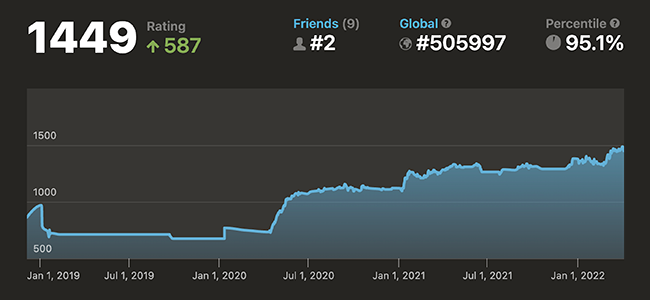
All along my chess journey, I’ve learned to love this mind-torturing game more and more, and I’ve come to find many similarities between chess and life. In this article, I want to show you what I mean by that.
You do not need to know how to play chess to understand this article. You do not need to have prior chess experience, you just need to have life experience.
1. Never resign
In chess
You’re usually expected to resign when you’re in a situation that is completely lost, where it’s obvious that there’s no point in fighting the incoming checkmate. It’s called fair play, but you don’t have to resign if you think there’s still a way to win or to at least try to get a draw.
You see, there was a point in my chess journey where I was plateauing at a rating of around 1300 (which is above average but nothing exceptional). I kept watching videos and reading about tactics to try and improve my game, but nothing worked. Day after day, I was winning some, losing some, but my rating didn’t really move. Then one day, I came across this video by Chessbrah (a popular chess streamer) where he presents a list of principles to follow to increase your rating from 1400 to 1550.
One of those principles was very simple to follow, and didn’t require any extra strategic knowledge: it was to simply never resign, to always keep pushing. From that point on, I decided to follow that advice and to always look for a way to defend my king, win back pieces, and keep up the strategy, even when all hope was gone and the situation was seemingly losing. I couldn’t believe how many games I started winning after this simple mindset switch.
Before that, I would resign early on, if I lost an important piece or made a strategic mistake. I would get frustrated and leave the game, I didn’t take a second look to realize that maybe the situation was not that bad after all. As soon as I started pushing through after making mistakes, a lot of my opponents got caught off guard and blundered too, and now I was back in the game. Or, I would start playing faster and end up winning on the clock, as my opponents expected me to resign.
In life
Like on the chessboard, the only way to make progress in life is to not surrender. If you resign at the first obstacle, you’ll never go further than where you’re standing right now. I tried a dozen different projects before starting my blog and creating my own business 3 years ago. They all failed because I never kept pushing. Then one day, I decided to commit to blogging every day, to start writing at 6:30 am every morning, and to not stop just because I could find excuses for myself:
- “I don’t have any inspiration this morning”
- “I’m sick, I didn’t sleep well so I can sleep in an extra hour”
- “I can skip one day of the week, that’s nothing right?”
Every day I showed up and worked, and this attitude changed my life. 3 years later my work has been read by over 1 million people, I’ve made more money than I ever thought possible in this industry, and I even started making videos to develop my reach more. Just showing up will take you places, all you have to do is never resign.
2. There is (almost) always a way
In chess
There is a common saying in the chess world that “computers ruined chess” because they’re infinitely better than humans at calculating various positions and outcomes, and they can show you opportunities, moves you would have never seen otherwise. It kind of takes the fun out of the game. Yet one crucial thing computers taught humans when they started using them to play chess is this: there is almost always a way to keep playing, even when it’s looking terrible.
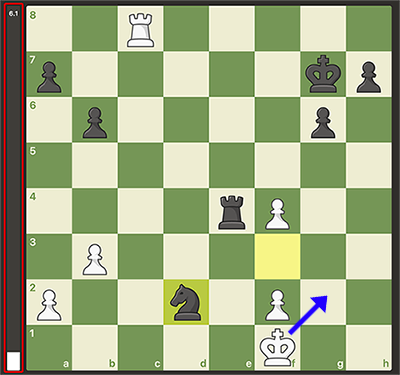
In the game above, black is better off, mainly because it has more pieces on the board, and they’re placed more strategically. Most players playing white in this situation would resign, they wouldn’t even try figuring out how to get out of this mess.
The vertical bar you see on the left side of the image (outlined in red) is called the computer eval. If black could win this game with mathematical certainty in only a few moves (and checkmate white), the bar would be completely black. White would stand no chance. Yet here, we can see the bar is “only” around 90% black, so white still has a 10% chance of winning this. The crazy thing is that this slight 10% opportunity is 99% invisible to the human eye because our brains can’t calculate the best move in a 90% losing situation. We think it’s over and we resign. But in the image above, the blue arrow indicates the best computer move for white.
In life
As much as there’s almost always a way to keep going in chess, there is always a way to keep going in life. Go ask successful people how many times they were told no, how many times people told them this couldn’t be done, how they would never succeed and should quit.
When I was a kid there was only a handful of people making money online, and then there were kids like me who wanted to do the same, with their parents telling them this couldn’t be done because they didn’t understand how the internet worked. Yet there was a way.
There is almost always a way to get what you want out of life, and having this mindset shift is a major game-changer. Like in chess, you may not see how to get there yet, you may not know the way, or even conceive what options are available to you. But once you start believing that there must be at least one way to get what you want, then you can start figuring out how to get there.
3. Play active, not reactive
In chess
One of the core concepts of playing chess is to control the center of the board. The more pieces you can get in the 4 middle squares, the more likely you’ll be to win the game.
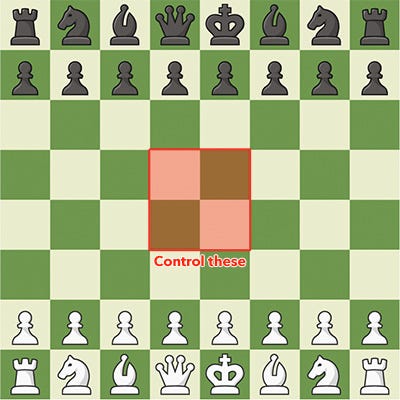
With that in mind, you need to develop your pieces faster than your opponent and play actively. If you only play by reacting to your opponent’s moves, he will overcome you sooner or later because he’ll always be one move ahead of you. Oftentimes, he/she will be able to anticipate what defensive move you will play based on what strategic attack he/she is building. Playing reactive chess is a recipe to lose the game.
In life
One of French leader Napoleon’s most famous quotes is this:
“The best defense is a good offense.”
If you live your life like you play reactive chess, you won’t be in control of anything. Once you realize that you decide how you shape your environment rather than the other way around (your environment shaping you), then you can start taking control of your life and overcome your problems.
In his book The 7 Habits of Highly Effective People, Stephen Covey calls this concept “creating your own weather”. A lot of people don’t feel like doing things when the weather is grey and depressing outside. They say “I’m feeling down because the weather is bad.”
But the truth is, it can be sunny in your heart and your mind, all you have to do is change your approach to the external “bad weather” factor. It doesn’t matter that it’s raining outside if you have a response for it, and if you decide that it’s still going to be a productive day today.
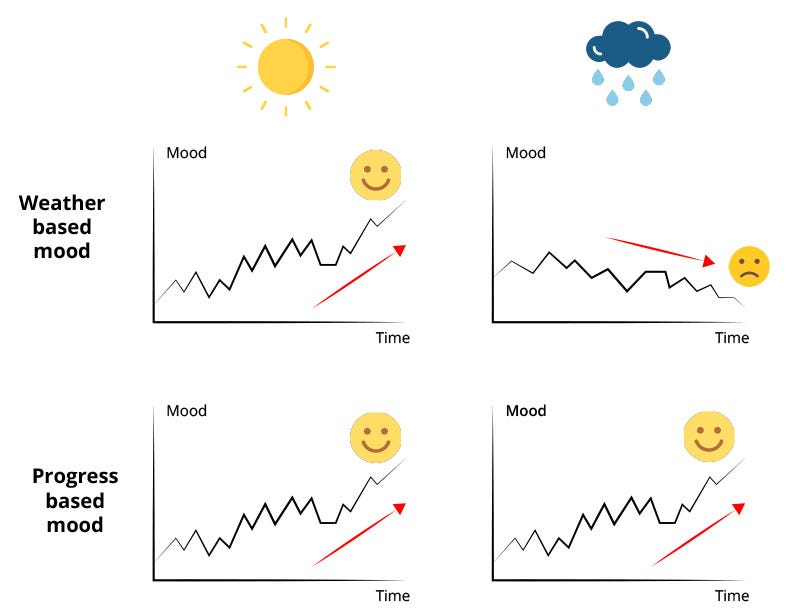
This applies to anything in life:
- If somebody at work annoys you, it’s your decision to feel annoyed
- If you feel frustrated about something, it’s your decision to feel frustrated
- If it’s gray outside and you’re feeling down, it’s your decision too
Understand that by choosing how you respond to your environment, you will go from living a passive life to an active one, and this can change everything you do.
4. Put theory into practice
In chess
Back in the day, learning chess was a lot more difficult than it is nowadays. There were no apps, no computer-generated puzzles, no artificial intelligence to show you the best moves. There were only books, written by passionate humans who tried to figure out the best way to share and instill their knowledge of the game. Then there was the chessboard, where you could put everything you learned in books into practice.
One of the big downsides of technology is that it tends to make us believe we’re learning things while we’re never putting anything into practice. If you use Duolingo to learn a language, for instance, you’ll forget everything very quickly if you never actually train your speaking. If you use your iPad to learn about guitar chords theory but never get your hands on a real instrument, you won’t learn either.
In the case of chess, you can learn all the positions, all the strategies, the openings, and the main lines. If you don’t put them into practice on the board, it will be useless. Plus, you won’t develop your ability to bring your own strategic approach to create your style of play. At some point, you have to face the chessboard and make moves.
In life
Much like an aspiring chess player would turn to an app or a website to learn the game, many aspiring entrepreneurs turn to productivity and self-improvement content to seek inspiration and advice throughout their journey. But there is a pervasive aspect to this type of approach. Many people consume content without ever putting the advice it contains into practice.
Again, you can read all the books about self-improvement and productivity, watch all the videos, listen to all the podcasts, attend all the expensive events… If you don’t put what you learn into practice, it won’t get you anywhere.
The theory is as important as practice, but the practice is what will take you to the next level. The people who consume content without putting into practice the advice it contains are stuck in a vicious circle, an illusion of progress that won’t take them anywhere until they shift gears.
5. Little pawn can become big
In chess
Pawns are the least valuable pieces on the chessboard. Yet if you manage to get one of those little guys all the way up to the other side of the board, it turns into a queen, the most valuable piece on the board.
Passing a pawn across the board without getting eaten is no simple task. A pawn is very easy to capture, so it will need to be assisted and protected by your stronger pieces, and your other little pawns too, creating a little fortress around it. Sometimes, the pawn will be isolated, on its own, vulnerable with no other piece to assist. Yet before your opponent sees it it will be too late to stop it, and you’ll rush to the end zone to get that extra queen.
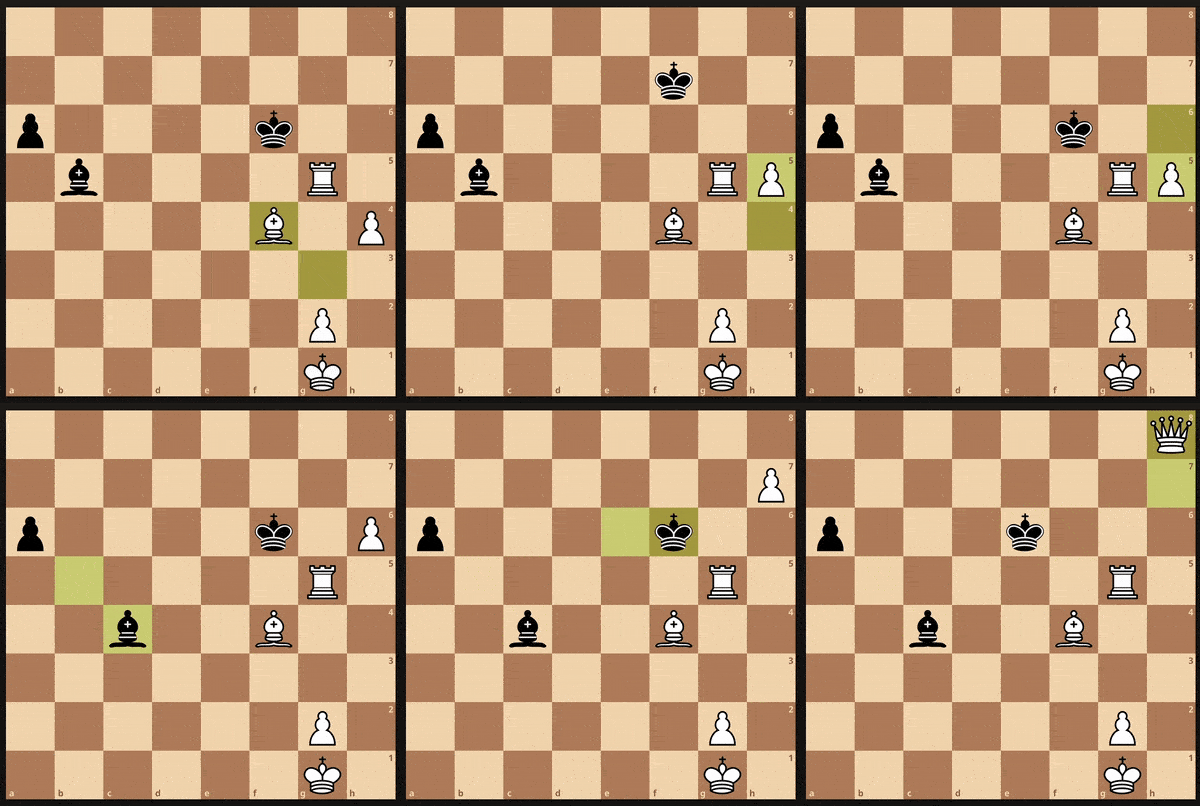
In chess, this concept is called “promoting” and is usually synonym with winning the game.
In life
I went to graphic design school, and I had a teacher who always told us to write down and draw every little stupid idea we had, for 2 main reasons:
1. Once it’s out of your brain and onto the paper, then you’re free to forget it and make more space for better ideas.
2. Most importantly, as stupid or bad as it might seem at the moment it might actually turn into something big if you look into it and brainstorm it more
In life, your ideas are your little pawns, and some of them might become a great queen one day. I use a notepad to write down every single idea I have, no matter how insignificant or stupid it might seem. I sometimes wake up at night because I had a dream I want to write down and remember or a crazy idea about something I might never actually do.
You can’t run the risk of forgetting an idea that will change your life because you assume it’s a bad idea in the first place. Write it down, maybe get back to it later, and at least try things before saying they won’t take you anywhere.
Embrace every little idea you have, and work hard to make a few come to life. You’ll be surprised how far it can take you.
Thanks a lot for reading! I interviewed 50 productivity/business experts and made a 150+ page guide out of the project. This is road-tested advice from real people who get things done. Get it for free here.