
5 Lessons from Seneca’s Letters
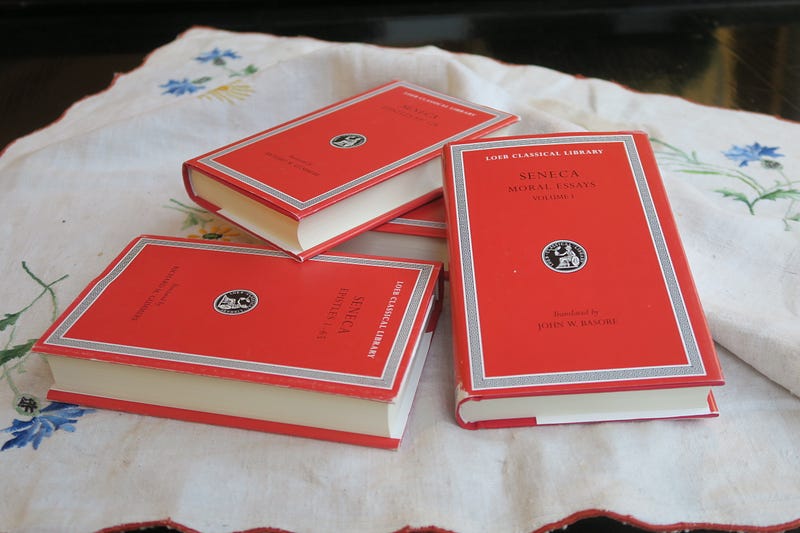
Seneca’s writings constitute a big chunk of our primary sources on Stoicism. He was one of the richest men in the Roman empire, whose emperor he both tutored and advised.
Guard your time jealously
The largest portion of ours life passes while we are doing ill, a goodly share while we are doing nothing, and the whole while we are doing that which is not to the purpose.
Seneca teaches us in his first letter to hold every hour in our grasp. He reminds us that nothing is truly ours except our time. So let’s be deliberate about how we use our time, and not have the largest portion of our life pass while we are doing ill.
Don’t be discursive in your reading
Be careful, however, lest this reading of many authors and books of every sort may tend to make you discursive and unsteady. You must linger among a limited number of masterful thinkers, and digest their works, if you would derive ideas which shall win firm hold in your mind.
Notice again the theme of being deliberate as in the first lesson. Seneca advises us to not read loads of random content, but rather to deliberately study a few authors whose genius is un-debatable. I like to try to stick to Ray Dalio’s Principles: Life & Work, Seneca’s Epistles to Lucilius, and the gospels.
Don’t casually make someone your friend
Ponder for a long time whether you shall admit a given person to your friendship; but when you have decided to admit him, welcome him with all your heart and soul.
Again: being deliberate. Seneca reminds us that it is bad to be casual in whom you consider to be your friends. Rather we should pass judgment on people before we make them our friends, but once we have, we must trust them and welcome them. Of course there are other possible relationships with people than friendship, but it’s important to distinguish them clearly.
Don’t be too weird: the philosopher’s mean
Philosophy calls for plain living, but not for penance[…]. This is the mean of which I approve; our life should observe a happy medium between the ways of a sage and the ways of the world at large; all men should admire it, but they should understand it also.
It can be tempting to act like no-one else, to shun the ways of the crowd. And of course to some degree this is correct. But Seneca teaches that outwardly, we shouldn’t look too different, but rather that we should “let men find that we are unlike the common herd, if they look closely.” He explains this by saying that the aim of philosophy is to make men better, so if we know better for having studied it we should act in a way that makes others keen to be more like us. But if we are too weird, they won’t.
Brains not brawns
Without philosophy the mind is sickly, and the body, too, though it may be very powerful, is strong only as that of a madman or a lunatic is strong. This, then is the sort of health you should primarily cultivate; the other kind of health comes second, and will involve little effort, if you wish to be well physically.
Seneca does think you should exercise, but he disapproves of excessive exercise. This is a logical continuation of our previous lessons: let’s be deliberate in pursuing what matters and will make us better people tomorrow. Spending endless hours in the gym will not. But carefully studying the great minds of the past and present might just.


