
5 Lesser-Known Benefits of Speaking Your Truth
Talking to a professional is one of the best investments you can make
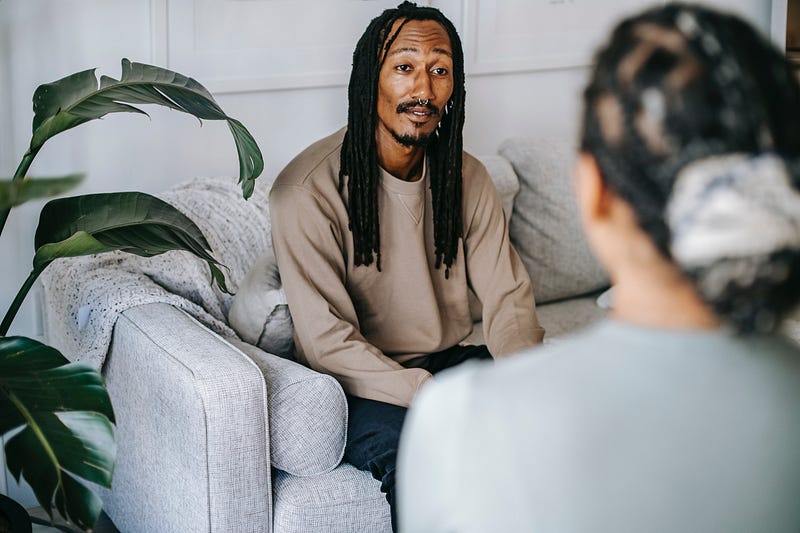
“It’s okay to feel nervous. Start whenever you’re ready.”
I breathed in the aromas and looked around the room. The softness of the furnishings. The hazy light of candles.
“I don’t know who my dad is,” I stumbled, “and I think it’s affecting my relationships.”
The words tasted uncomfortable.
She sat there, writing on her clipboard. No emotion on her face. It wasn’t unkind, though.
She looked up for me to continue.
I went on to tell her things I’d never told anyone. Not knowing my dad. Feeling discomfort in groups. Being afraid of love. Once the doors opened, I rambled on and on.
By the end of the session, I knew I’d found the therapist I wanted to work with.
We continued for twelve weeks. This was in the second half of 2019. Since then, I’ve been in touch with my biological dad and have been dating a fellow writer.
Here are five lesser-known benefits of speaking your truth, and why I believe working with a therapist is one of the best investments you can make.
#1: Spitting out poison can be painfully slow
“I don’t know who my dad is,” I stumbled, “and I think it might be affecting my relationships.”
These are the Cliffnotes. I meandered down cul-de-sacs for ten minutes before I spoke about my family.
The thing is, my therapist gave me permission. She knew how hard it would be for me to speak my truth. There was no pressure.
And here’s what I found: Once you speak your truth, it no longer has a hold on you. Shame is released.
Let’s face it. Although our friends love us, there’s only so much they want to hear. They’ve got their own sh*t going on.
Sure, they’ll listen to the headlines, but uncovering the nuances and subplots? Good luck with that. It takes energy they can’t (or may not want to) give.
With a professional, time is your friend.
Alternative to therapy: Try Julie Cameron’s Morning Pages. In effect, you open a notebook and start writing whatever pops into your head — no filter. Aim for three pages a day to clear your brain’s sludge.
#2: It’s all about you
I was reading Tatler in the waiting room when she called me in. This was our third session.
“How are you?” She asked.
“Yeah, good thank you. How are you?”
She smiled. “We don’t need these niceties. You wouldn’t be here otherwise, right?”
I smiled back. It wasn’t a trick but a reminder these sessions were about me. I didn’t need to ask about her life.
As a people-pleaser, this was difficult. My body urged me to ask questions, but she didn’t let up. For one whole hour, the conversation was all about me.
Not thinking about your conversation partner is liberating.
You find yourself opening up because the alternative is silence.
Alternative to therapy: Use a service like Samaritans. Their trained volunteers will listen to your struggles. I should know because I volunteered for three years.
#3: They can reveal your blind spots
“What’s the name of your dad?”
I paused, gently placing my glass of water. When I looked up, my therapist was staring at her clipboard.
“I don’t know...”
It shook me. I’d never thought to ask.
This is one of many blindspots she revealed. Another was planning Hollywood moments of romance.
One time, I’d made a picnic for me and my date. The problem was, ‘my date’ didn’t think we were dating. We were just hanging out.
When I leaned in to kiss, she ducked like a Spitfire.
I told my therapist about the embarrassment. About how the rest of ‘the date’ was awkward as f*ck.
“In the future, you could just ask someone you like on a date.”
“Is that allowed? I thought you had to be mysterious and all that.”
She smiled. “Well, you can, but it’s a pressure moment. Why not build scaffolding? You’ll both know where you stand going into the date, meaning the first kiss will be easier.”
“Scaffolding?”
“Think of it like support. Asking her out on a date is step one. Acknowledging any nerves you might have could be step two. You want to make the date as easy as possible.”
Scaffolding is no longer reserved for building sites.
Alternative to therapy: Experience a 360 review. As Tim Ferriss describes [1:40:53], it’s helpful for discovering strengths and blindspots.
It goes as follows: people you interact with give honest feedback about your performance. This feedback is anonymised and delivered to you — warts and all — in a document form.
This article by The Balance Careers gives further information.
#4: You’ll rediscover emotions
“I can’t remember the last time I cried. Even at my great gran’s funeral, I stopped myself from letting go.”
The more I talked, the more I realised how out of touch I was with my emotions.
It wasn’t just sadness. Joy, fear, anger — they’d all been dialed down after years of neglect.
My therapist and I dug deeper. We found my suppressing of emotions took root in my childhood.
Not expressing emotions was an act of preservation. Now, though, it was impacting my ability to make connections.
In a separate conversation, I told my therapist about Good Will Hunting, and how the final scene chokes me up. I wish I had a dad like Robin’s character.
She encouraged me to embrace my body’s reactions. If I wanted to cry, cry. She also suggested I regularly check in with my body.
Why is my heart beating faster? Am I feeling anxious? Is my skin hot?
Body language has many different accents.
Alternative to therapy: Journal every day and pay attention to your emotions. Also, do this whenever you want to check your phone. Instead of scrolling through social media, scan your body.
#5: You’re not alone
“Has someone in the history of mankind with less drive and intelligence figured this out?” — Tim Ferriss
Nine times out of ten, something has been done before. Someone has not known their dad. Someone has been neglected as a child.
As my therapist explained, this doesn’t make our experience any less important. It simply means existing frameworks can help.
In many ways, then, the role of a professional is to connect the dots. They’ve seen similar stories before.
Much like a doctor spots patterns after hundreds of patient visits, so too a therapist.
Because of this, two things can happen.
Number one: If you trust your therapist, you trust their advice may work.
And number two: You’ll realise you can get through this.
You’re not alone.
Alternative to therapy: I highly recommend the following books. They’ve all helped me alongside therapy.
- The Subtle Art of Not Giving a F*ck by Mark Manson
- The Five Love Languages by Gary Chapman
- Models by Mark Manson
Final Thoughts
I recommend therapy to everyone.
Sure, it’s uncomfortable as f*ck, and it can be expensive. However, speaking with a professional is one of the best investments I’ve made.
I’ve been able to form more meaningful connections, and I feel worthy to pursue my dreams. My past self is a shadow of who I am today.
If you’re not sure how to get started, here are my suggestions:
- Google “therapists near me”.
- Browse websites and directories.
- Look at the professional’s area of expertise. My therapist specialises in childhood trauma, so I thought we’d be a good fit.
- Take a look at their testimonials and check out their social channels. Are they male or female? Can you see yourself working with this person?
- Give them a call. Most therapists will offer a 10–15 minute free phone consultation to determine whether you’ll be a good fit.
As the great Fitzgerald once wrote,
“For what it’s worth… it’s never too late, or in my case too early, to be whoever you want to be. There’s no time limit. Start whenever you want.” — F. Scott Fitzgerald
Disclaimer: This article isn’t meant to serve as medical advice. These benefits are based on my own experiences.
Looking to increase your confidence and meet your dream partner? Check out Intentional Dating — a course I’ve teamed on with the wonderful May Pang! :)