
4 Historical Fiction Books that Taught Me More Than School
From Ancient Egypt to WW2, I learned history from some of the world’s best storytellers
History was never my strongest subject, despite the fact that I loved it.
I struggled mainly with names, dates, and retaining factual information — it just wouldn’t stick.
My ‘B’Grade in school was hard-won and I studied for months to achieve it, desperately hoping for an ‘A’ Grade so that I could take the subject at university.
After leaving college, a chance snow-induced stay at my Stepdad’s house lead to my first encounter with historical fiction. My Stepdad’s home was amazing; huge chunks of books left everywhere — by the kettle, on the kitchen table, even in the lavatory — he was never not reading.
One night, we all had to stay over unexpectedly, due to heavy snowfall (Brits don’t cope well with the snow). Without a book of my own and no internet access, I asked Dad for a recommendation. In his eccentric professor style, he babbled for a good 15 minutes, scanning shelves, rummaging…before finally handing me a book that weighed more than my dog.
Wow — am I grateful — for the snow, for my Stepdad, and for historical fiction.
That night a door opened to me; a door to a world full of heroes and villains, outlaws and pirates, Kings and Queens, Pharaohs and prostitutes; people who shaped our world forever.
Most of all, between those pages, I found life lessons, understanding, and learning that I simply hadn’t been able to access before.
By approaching history through stories, I was able to remember so much more detail than I had when learning from a textbook. The simple fact that historical figures became ‘people,’ more accurately, characters, brought them to life. Additionally, the context and setting were vital to understanding the story, thus I learned about what was happening around the characters in terms of politics, world events, and other key players of the period.
Without further ado, please come with me across the centuries and meet some of the books that really did teach me more than school.
1. Wellington & Napoleon by Simon Scarrow
Why I loved the book
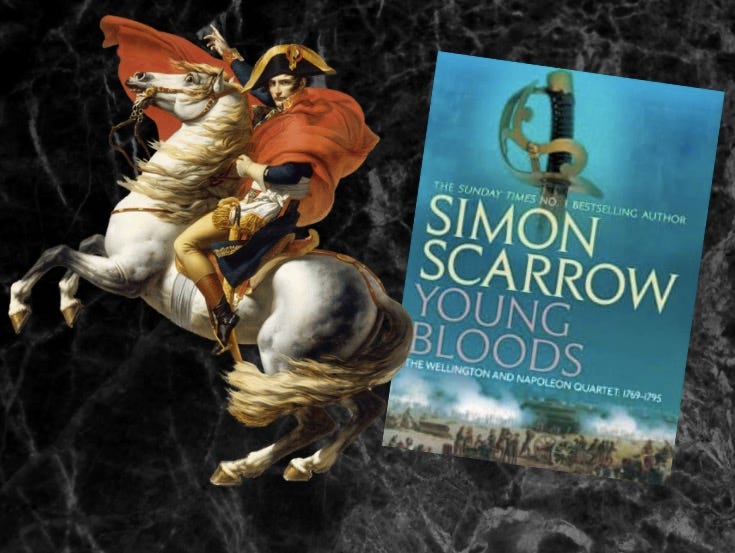
The Wellington and Napoleon quartet by Simon Scarrow is nothing short of an epic ride-along with two of the most famous historical figures.
Feel your fingers chill as Napoleon crosses the Alps, smell the rifle smoke as Wellington battles his way across France, determined to prevent the invasion of his British homeland.
With this quartet, fabulously written, you are with them from their cradle to their graves.
Not only will you learn about the men themselves, but the tactics & strategy of European forces plus the way of life of the people they encounter.
While the quartet can appear daunting in terms of size, the pace ‘feels’ fast and you read them in no time.
Just imagine the kudos the next time you hear ABBA yell Waterloo and you’re the only one at the party who gets it!
What you will learn from this book
This quartet revolves around a significant period in European history, following France’s abolishment of its monarchy (1789–1821). A leading general, Napoleon Bonaparte, rose to power and led France through years of conquest, building an enormous empire. Napoleon’s arch-rival is an Englishman by the name of Arthur Wesley, who leads an army against Napoleon at the famous battle of Waterloo.
Napoleon dominated European and global affairs for more than a decade while leading France to victory in the Napoleonic Wars. Napoleon ruled over much of continental Europe before the empire’s collapse in 1815. Napoleon is remembered as one of the greatest military commanders in history.
Field Marshal Arthur Wellesley, 1st Duke of Wellington, (1 May 1769–14 September 1852) was a soldier, politician, and two-time Prime Minister of Britain. He ended the Napoleonic Wars when he fought at the Battle of Waterloo in 1815.
2. Nefertiti by Michelle Moran
Why I loved the book
One of the least well-known and most brilliant authors in the genre, Moran remains my favorite writer of historical fiction.
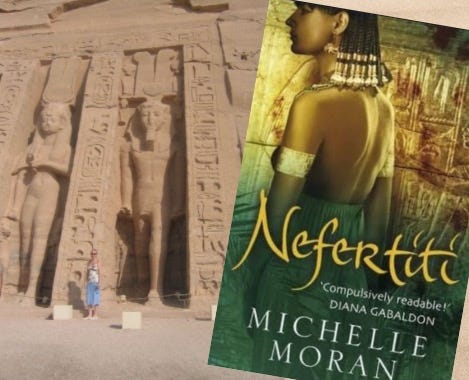
After reading her first book — Nefertiti — I booked a flight to Egypt. I kid you not…she is that good.
This book is about the beautiful Nefertiti and her sister, Mutnodjmet, who have been raised far from the court of their aunt, the Queen of Egypt. But when the Pharaoh of Egypt dies, their father’s power-play makes Nefertiti wife to the new and impetuous king.
It is hoped she will temper King Amunhotep’s desire to overturn Egypt’s religion, but the ambitious Nefertiti encourages Amunhotep’s outrageous plans instead, winning the adoration of the people while making powerful enemies at court. Younger yet more prudent, Mutnodjmet is her sister’s sole confidant, and only she knows to what lengths Nefertiti will go for a child to replace the son of Amunhotep’s first wife.
The characters are so real and vibrant, that you’re on every step of their journey with them across Egypt’s amazing lands.
What you will learn from this book
This book is set during the reign of Akenaten, the Father of Tutankamun and husband of Nefertiti. Akenaten was one of the most enigmatic, charismatic, and possibly insane, historical figures recorded. You’ll learn about his reign, beginning to end, and all of the radical changes he made to life in Ancient Egypt.
You’ll come to understand the Gods of Ancient Egypt, the geography of the country, its enemies and allies, and the way of life of everyday people — particularly women trying to survive in a man’s world.
Finally, the setting is brought to life so vibrantly that you’ll come to understand the country of Egypt itself — definite travel inspiration within these pages.
N.B. If you love Nefertiti, you should also try Moran’s book on Madame Tussaud — if you do, I’m sure you’ll be visiting London or Paris as soon as you possibly can.
3. Stonhenge by Bernard Cornwell
Why I loved this book
No conversation about historical fiction is complete without mentioning this guy — he is the top dog when it comes to this genre and I’m certainly a fan.
Since watching Sean Bean (Ned Stark with a head) play Sharpe on TV, I’ve loved Cornwell’s work. Not only is he prolific, but he’s also well-researched and well-written.
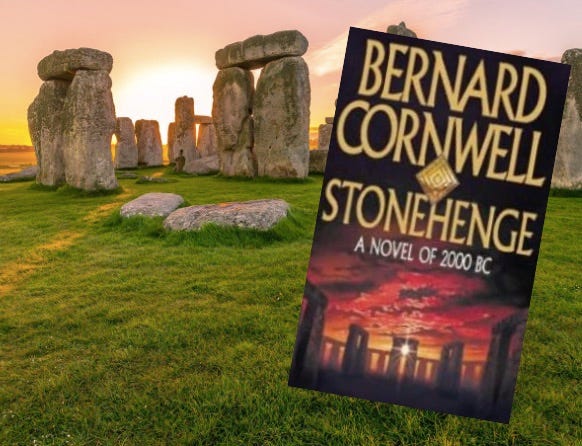
Surprisingly, Stonehenge is a fast-paced tale of patricide, betrayal, and murder. Three rival brothers lead the plot as they stop at nothing in their quest for power, wealth, and eternal life.
What you will learn from this book
Stonehenge has always been and still is, shrouded in mystery. Dating back some 4000 years, this location has been preserved across the centuries.
In the novel, you will learn all about primitive Britains, their customs and way of life, their Gods, even their medicines and languages.
Long debated, Cornwell takes us on a journey to understanding who built Stonehenge and why.
If you’ve ever visited, or been keen to visit, Great Britain, this book will have you booking your flight as it brings to life the UK’s lush, green landscape.
4. Outlander by Diana Gabaldon
Why I loved the book
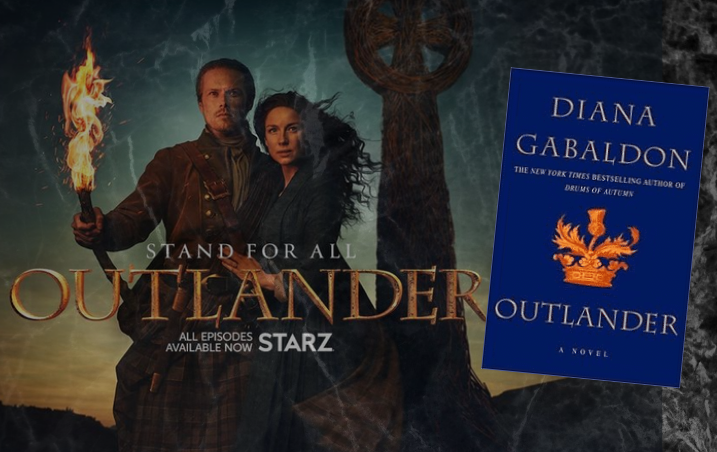
Now a major TV series, Diana Gabaldon’s Outlander series is simply outstanding in every way.
Given that my Grandmother lived in Scotland, and I was raised in the borderlands around Northumbria, Scottish history has always been of interest to me.
While I’d done a little digging in our family clan and the involvement of my family in the famous Battle of Culloden, I had very little idea about why there was a battle at all.
With textbooks failing to grip me, my Scottish history knowledge only stretched so far as to know that Mel Gibson was struggling with textbooks too (great movie all the same). So, when I came across Outlander, I was determined to give it a go and, girl am I pleased I did.
The book begins in 1945 when Claire Randall, is just back from her duties as a WW2 frontline nurse and has reunited with her husband for a second honeymoon in Scotland. One day, Claire walks through a standing stone in one of the ancient circles that dot the British Isles (read this after Bernard Cornwell). Suddenly she is a Sassenach — an “outlander” — in a Scotland torn by war and raiding border clans.
Claire emerges from the stone into 1743, into the intrigues of lairds and spies that may threaten her life, and pull at her heartstrings. Enter, James Fraser, a gallant young Scots warrior who shows her love so absolute that Claire becomes a woman torn between fidelity and desire — and between two completely different men, living in completely different times.
What you will learn from this book
1743 was a tumultuous time for Scotland as Queen Mary II nor her sister Anne had children when they died, which left their Catholic half-brother James Francis Edward as the closest natural heir. Unfortunately for James, Catholics were excluded from succession, and the son of a distant relative, George I, eventually succeeded to the throne.
Outlander is set against the time when those loyal to James Francis Edward sought to restore him to the throne. England was invaded and bloody battles ensued across Scotland, culminating in the Battle of Culloden.
Not only will you learn about the Kings and Queens of the time, but you’ll come to understand the historic tensions between England and Scotland, France and Italy.
You’ll learn about the lives of the highlanders, brave men and women who made their homes in the glens of Scotland, living tough lives in harmony with the land.
As the series progresses, you’ll travel to France, where James Francis fled before attempting to gather support for his claim to the throne. In France, you’ll learn about a huge range of historical practices, from alchemy and witchcraft to merchant trading, plague, prostitution, medicine, and even glimpse life at Versailles.
Not only are the characters completely engaging, but the love-triangle adds another dimension to the novel that works superbly and without ever feeling corny. Gabaldon’s use of time travel cleverly enables the reader’s modern perspective to be represented in Outlander, through Claire; this leaves you feeling present and even more absorbed by the book.
A truly brilliant series. I even own a Sassenach t-shirt now. Yes, really.
Book t-shirts are the best t-shirts.
Final Thoughts
If you love history give historical fiction a try — it won’t replace Antony Beevor or Howard Zinn on your bookshelf, but can certainly bring new flavors.
If you think that history sucks or is bland and boring — even more reason to test your theory with historical fiction. I bet it’ll prove the theory wrong.
For me, there’s nothing better than enjoying a great book and learning a lot simultaneously. I hope that you’ve found some inspiration in my recommendations.
Happy page-turning!
Other pieces you may enjoy: