
5 Hard Lessons I Learned About the Stock Market and Day Trading
My hard knocks approach to gaining a financial education.

These lessons are as old as the market itself. However, if you choose not to implement them, you’ll learn the hard way. Do yourself a favor and listen.
* A quick note before we begin. This is my journey of day trading and the stock market. This is not financial advice, step into the stock market at your own risk. *
You’ve Got to Have Money to Make Money
Six years ago, I was wrapping up a business venture that went south, which left me feeling distraught. I was unhappy, frustrated, a little bitter, and confused about what to do next. So, I sat down and wrote out where I was trying to go and what I wanted to achieve.
Nothing I wrote down was very original: I want to make a decent amount of money, I want a few income streams, I want to see the success of a business venture, and I want to own rental properties.
Maybe you have a few of these goals too, who doesn’t?
After some second-tier brainstorming for how to generate additional income, I ended up diving into the stock market, day trading specifically. I decided that I would try to create a new stream of income for myself by using my remaining cash from my previous failed venture. It was only a few thousand dollars. Nothing crazy.
Of course, there was a problem: I didn’t know where to start.
The solution to this problem seemed pretty straightforward: I paid to become a member of a stock group. The calls (stocks and options) they made were fairly good, with 60–70% of their calls being profitable. All the guys in the stock group posted screenshots of their profits. $600 here, $2000 there, and some of the big players showcased their $20,000 gains.
I wanted to make that kind of money, too.
The profit moves were not particularly large, but they were at least consistent. One of the main tenets, which the group’s founder stood by, was to keep taking small gains; put another way, don’t get greedy. Taking small gains is a really great strategy… If you actually follow it.
Locking in those small gains sounds pretty easy, right? Well, it is and it isn’t.
First, Let me clarify something: you need to be watching the market and their calls to be in the money (ITM). Timing is everything. If you caught the timing, that is bought and sold the stock immediately after a call was made, you usually made a profit. Otherwise, you were too late.
I had to learn that one the hard way, as I often do.
Most new traders (myself included) fall prey to dragon sickness. Dragon sickness is what happened to Thorin Oakenshield in The Hobbit; when he finally caught sight of Smaug’s dragon horde, he went mad from greed.
Dragon sickness is very typical without a risk management strategy and plan. This sounds simple enough, but, is also incredibly easy to get caught up in while you watch those green numbers rising on your screen.
I caught a few calls at the right time and saw my account jump high in the green. I was in the money; had I sold and taken the profits. Which I didn’t. It went up and up, and I was engulfed — full-on dragon sickness.
That wasn’t the strategy that the stock group promoted. They promote cutting your losses as early as possible. They were playing volume spikes with quick day trades. In fact, they regularly spoke about the need to keep one’s emotions under control while those numbers went up and down.
Then that number started to dip. “Only a loss of $100,” I told myself, “no big deal, since I’m up over $1000. I’ll just hold, for it to go up again.” But the volume disappeared, and the price tanked. So what did I do? I kept holding onto the stock, hoping that it would go up again…and it didn’t.
I was new, and I made just about every amateur’s mistake you can think of. If you happen to be thinking about diving into the stock market, with as little prior experience as I had. Here are a few lessons that might save you some time, headaches, and money. Pretty much all of the information which you’ll ever need is out there, and freely available. The big question is whether we’ll familiarize ourselves with it. Before delving into that simultaneously thrilling and boring world of stocks and options.
5 Hard Lessons I Learned About the Stock Market
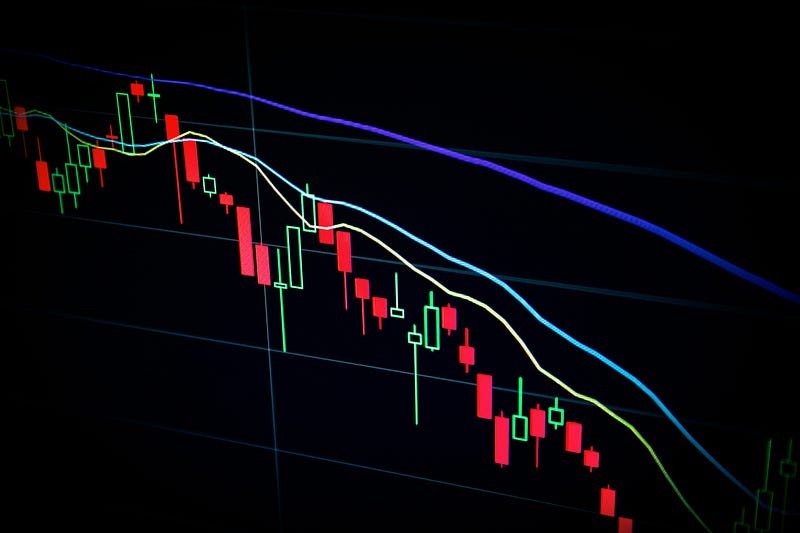
1. If Your Account is Below $25,000 — Day Trades are Limited
I bought into a stock call at the proper timing. Around $2 and the volume was primed to send this stock to the moon, at about $8-$10 per stock. At roughly the $7-$8 mark I decided I’d take my profit by selling.
Suddenly I was hit with an error message telling me that I was not allowed to sell; I exceeded my three-trade limit. What three-trade limit?!
This lesson hurt. I had to hold my pile of $2 stock until the next day. When the stock sank back down to $1.20-ish. Creating yet another loss to my account.
This three-trade rule is enforced by The Financial Industry Regulatory Authority (FINRA). FINRA is an independent, nongovernmental organization that writes and enforces the rules governing registered brokers and broker-dealer firms in the United States.
According to Finra.org the exact rule is:
Under the rules, a pattern day trader must maintain minimum equity of $25,000 on any day that the customer day trades. The required minimum equity must be in the account prior to any day-trading activities. If the account falls below the $25,000 requirement, the pattern day trader will not be permitted to day trade until the account is restored to the $25,000 minimum equity level.
The rules permit a pattern day trader to trade up to four times the maintenance margin excess in the account as of the close of business of the previous day.
Here is an example of three-day trade limits.
- You make two-day trades on a Monday and the third on Thursday.
- On the following Monday (assuming no holidays — yes, this affects your trade resets) you will NOT be able to trade. On Tuesday, you get your two-day trades back.
- Those five (5) business days are full market days.
- So, Friday you’d receive your third trade back.
The Takeaway You get three-day trades, every five (5) business days. This rule of day trading applies to any security bought and sold the same day.
2. Cut Your Losses, Quickly
Finances and emotions drive most new traders. They are looking for a quick way to make money, but trading is a long game skill. If you try to treat it like a short game, you are trying to win the lotto, which is very very rare.
For example, you get into a trade that looks really great, but, reverses and goes south quickly. Unless you see technical data on the charts that indicate it’s going to bounce on a resistance line. Cut your losses.
Set yourself up for success by setting a stop-loss order to trigger a sell order at a specific price or loss percentage. A stop-loss order is placed with a broker to buy or sell that particular security once the security reaches a certain price. A stop-loss is designed to limit an investor’s loss on a security position. (See more at Investopedia)
Unless you see technical data on the charts that indicate it’s going to bounce on a resistance line. Cut your losses.
The Takeaway Know when to cut your losses and set your stop-loss orders beforehand.
3. Take Your Profits
It feels terrific to see your account green holding (unrealized) profits in the multi-thousand dollars. Ahh, good memories. Certainly, one of my favorite short-lived moments in the market. I thought about all the stuff I was going to use that profit for.
While I was busy in La-la land, the volume on the stock dropped, and so did the price, leaving me with a whopping (realized) profit of $37.13. I didn’t move up my stop-loss as the price continued to soar — which you should do. I didn’t take my 26% profit by selling my day trade earlier. Nope, I was “waiting for it to hit its peak.” This translates to, “I’m not actually watching the charts, and I’ll just “know” when to sell.”
Unrealized profit and loss are when the security you’re holding has not been sold for its profit or loss. Realized profit/loss is when you sell your security for its profit or loss. (Investopedia)
Again, I chose to learn this wisdom the hard way. Before going into a trade, decide what percentage of profit you want to make. Yes, percentage. Set your profit order to that percent so it just triggers to sell on your behalf. If you only play in dollars, you’ll always be forfeiting the slow climb to massive wealth. By sacrificing the realized profit on the possibility of (unrealized) profit.
I didn’t take my 26% profit by selling my day trade. Nope, I was “waiting for it to hit its peak”. This translates to, I’m not actually watching the charts and I’ll just “know” when to sell.
So, if you want to start small, as I should have. Take (realized) profits at a 5% gain. No matter the volume, dollars, or cost. If you buy a $100 stock and it’s moving, when it hits $105 you sell. Even if it caps out at $140, you take your 5% profit every time. This is how you grow your account. As you learn more you can take bigger risks but start small.
The Takeaway Before going into a trade, decide what percentage of profit you want to make. Then set your profit order to trigger automatically.
4. Plan Your Success with Risk Management
I lost. Perpetually.
In my first three years of trading, I lost multiple thousands of dollars. Even though I paid to be part of a reasonably successful stock group. Why did I keep losing?
I lost because of all the mistakes I made. You’re reading about some of them, but one of the biggest was, I had no plan for risk management.
What is a risk management plan, you say? I’m so glad you asked. A risk management plan is a plan for the risk you are willing to endure versus what risk is too much.
Risk management helps cut down losses. It can also help protect traders’ accounts from losing all of their money. The risk occurs when traders suffer losses. If the risk can be managed, traders can open themselves up to making money in the market. (Investopedia)
Put another way, how much are you willing to lose before you force yourself to sell your trade? Are you fine with a 5% loss? 10%? 15%? Okay, you decided on a 10% loss for your trades, great.
Now when do you call it quits for the day or week? Are you okay if your whole account drops 5%? 10%? 15%? This might not seem like a large amount but let’s run a few examples.
If your account is worth $20,000 these are your losses
- 5% = $1,000
- 10% = $2,000
- 15% = $3,000
Let’s say you have the money to lose that. What if your account is at $100,000?
- 5% = $5,000
- 10% = $10,000
- 15% = $15,000
Percentages add up quickly, so we revisit the question. How much loss will you endure before you stop for the day or week?
A risk management plan is a plan for the risk you are willing to endure versus what risk is too much.
Until I read some books and finally took the advice, I continued to lose. This was advice I’d been hearing the whole time — create a risk management plan. I began to see my red days become much smaller. Then suddenly my monthly losses were lower. I still was not making real money, but I stopped the bleeding.
How much loss will you endure before you stop for the day or week?
The Takeaway Create a risk management plan for the risk you are willing to endure and what is too much.
5. Don’t Spend What You Can’t Lose
This one should be obvious, but frankly, I had to learn this too. You guessed it, the hard way.
If you can’t afford to lose the money, do not put it in the stock market. You need to be wise with your money. Suppose you aren’t in a place to lose whatever amount you’re putting into the market — Don’t put it on the market. Assume whatever you put into the market is lost before you start.
Remember how I took my last bit of cash from my failed business endeavor to fund this new skill of day trading? I didn’t mention that this would be the only money I had for a while until I could find new sources of income when I left the business.
Now before you jump in the comments and let me know how stupid this was, the price of foolishness is costly.
Assume whatever you put into the market is lost before you start.
The following months were lean. Very lean. Ninety-nine-cent ramen for most meals or taking up offers from others to have me over for dinner — I took every one of those. Please be wise with your money.
The Takeaway Don’t spend money you cannot afford to lose. Assume whatever you put in, is lost before you start.
Conclusion
They say there is no such thing as easy money. Whoever “they” are, they sure are right. I didn’t stop playing in the stock market just because I lost money. Instead, I shifted strategies, moving on to a more conservative — risk management — investment approach, through dividend stocks.
These lessons, thankfully, had taught me a great deal about finances, which better prepared me for my future in the market. If you too, never received much of a financial education, but want to learn more from someone who has “been there,” be sure to hit that follow button, share this with a friend, and stay tuned for more of my journey in getting a financial education.
Bonus Tidbits
- Do not jump into a trade just because someone else says it looks good. Only enter trades that you’ve put due diligence into. This means you should learn to read the market’s technical data before making any trades.
- Don’t chase a trade, if you missed an entry point, look for another. Don’t just dive in. Patience is how you make gains.
If you enjoy reading stories like these and want to support me as a writer, consider signing up to become a Medium member. It’s $5 a month, giving you unlimited access to stories on Medium. If you sign up using my link, I’ll earn a small commission. // Thanks for reading!


