

5 Habits To Cultivate Strong Self-Discipline In Your Life
If you regularly read my articles, you’ll notice that I’m more in favor of building strong habits, creating a supportive environment and knowing how to truly motivate yourself compared to focusing too heavily on self-discipline.
If you get the first three elements right, it makes hard work much easier and more enjoyable compared to just disciplining yourself.
Nevertheless, you still need self-discipline as the basis for many of your decisions. Therefore, it’s a very important part of peak performance. Those who consistently make better decisions (which, in essence, is self-discipline) are the ones who get ahead in life.
Your self-discipline influences whether you’re going to grab a hamburger or a salad. It influences whether you’re going for a workout or binge-watch Netflix instead.
In other words, self-discipline determines whether you’ll make an empowering or limiting decision within the moment — and either leads to stronger or weaker habits.
Habit #1: Cold Showers
If there’s one habit that cultivates discipline, it’s taking cold showers. When that cold water hits your skin, your mind is screaming to get out. In fact, the mental battle already starts when you’re contemplating whether or not you should take a cold shower at all.
If you override this inner voice and stay under the cold water nevertheless, you develop a strong habit out of doing something that you don’t necessarily want to do — and that’s discipline.
Not only are cold showers great for developing strong discipline, but they also have a ton of other benefits that help you improve your performance:
- Gets you in a ‘peak state’ instantly
- Improve blood circulation
- Reduce stress levels
- Higher level of alertness & improved focus
- Stronger immune system
- Stimulates weight loss
All in all, try out this habit for yourself if you want to develop stronger self-discipline. Keep in mind that the first times it may feel like hell (especially the first few seconds, which are the worst). Try to calm down your breath as that will also calm down your mind, which makes it easier to follow through.
Habit 2: Meditation
Not only is meditation an amazing habit for lowering stress levels and improving your focus, but it also helps to cultivate strong discipline.

First of all, through meditation, you learn how to focus on one thing (for example, your breath) and silence inner distractions. You learn how to override the inner voice that often talks us out of doing certain things, even though we should do them.
By being familiar with silencing the inner chatter through meditation, you’ll find it easier to overrule the inner voice when it pushes you towards procrastination or lousy decisions at other moments during the day. Instead of reacting to your impulses, you’ve got the ability to master your mind and do the things you know you should do.
Second of all, it has been proven by science that meditation ‘strengthens’ (simplified explanation) the pre-frontal cortex, which is the area in the brain responsible for many of our executive functions such as decision-making, focus and… self-discipline. In other words, on a neurological level, your brain will find it easier to be disciplined.
Habit 3: Working Out
Exercising is another great habit to cultivate strong self-discipline. When you’re in the gym and you’re pushing yourself to do another rep or increase the weight a bit more, you train yourself to push beyond resistance — and that’s literally what discipline is.
Self-discipline is all about pushing beyond the internal resistance that you have against a task or project — and execute despite not feeling like it. Even the act of getting off the comfortable couch and going to the gym already strengthens your discipline habit.
Furthermore, like meditation, exercise is proven to contribute to a stronger pre-frontal cortex, which cultivates even stronger self-discipline in your life.
Habit 4: Working Distraction Free
In today’s tech-heavy world, our productivity and self-discipline suffer heavily from the constant interruptions from our smartphone, email, social media, and messaging apps.
In fact, most people haven’t worked in a distraction-free environment for years, and that’s a real problem. Personally, I experience that I produce my best work when I work in a distraction-free environment. It’s one of the requirements for reaching ‘flow state’.
That means no smartphone, no social media, no email, no news websites, and no other tabs open than the ones necessary for my task at hand.

I make sure that I eliminate all potential distractions beforehand, so that I don’t even have to tap into my discipline to fight them off while trying to do my work (which is not a sustainable strategy).
Working in a stimuli-deprived environment, however, is very unusual for us and our brain. When you’re used to checking email or social media every 15 minutes, it’s quite boring to work in a stimuli-deprived environment.
These distractions normally release a lot of dopamine — a neurochemical that makes you feel good and saturated. However, by depriving yourself of these distractions, you also deprive yourself of the dopamine release which your brain is addicted to.
Therefore, your brain starts to crave more stimuli. It wants more dopamine hits so it can feel good and saturated again. This craving for dopamine is exactly what makes self-discipline so hard, as you’re fighting a battle on a biological level (and that’s never an easy fight).
It’s because of our craving for dopamine that we eat a hamburger instead of a salad. It’s why we binge-watch Netflix instead of reading a book. It’s why we continuously check our smartphones instead of focusing deeply on our work. And it’s why we procrastinate instead of work hard on our goals.
But, when you cultivate the habit of working at least 2 hours per day in a distraction-free environment, you slowly but surely train your brain to crave less dopamine. That makes it easier to make high-quality choices over and over again, even in other areas of your life.
On top of that, you’ll be able to produce higher quality work and finish it much faster than before as you don’t waste time and energy on mindless distractions. In fact, it has helped me reduce my average workday from 8 to 6 hours.
Habit 5: Do A Regular Dopamine ‘Fast’
As I mentioned before, the craving for dopamine is why it’s so hard to be disciplined sometimes. You see, every time you scroll through Instagram, watch something on YouTube or Netflix, receive likes on your Facebook post, play some Call of Duty, masturbate to porn or take a bite of a nice juicy hamburger, your brain produces a strong hit of the neurochemical dopamine.
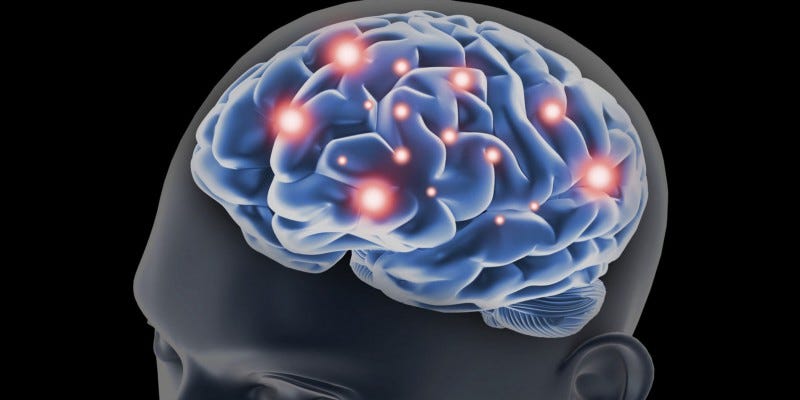
Essentially, your brain is addicted to dopamine as it feels really good whenever dopamine is produced. Therefore, your brain will try to stimulate the repetition of the behavior that produced the dopamine in the first place. And that’s where things go wrong for us nowadays.
As this is such a big problem for us in our distraction-overload society (even though most people don’t realize it), I decided to counter it by doing a crazy experiment. I decided to do a 24-Hour Dopamine ‘Fast’
For 24 hours, I had to follow these strict rules:
- No electronics (no phone, Netflix, laptop or video games, etc.)
- No reading of books or magazines
- No sex or masturbation
- No food
- No talking
- No music or podcasts
- No coffee or other stimulants
The only things I practically could do were:
- Write (with pen and paper)
- Meditate
- Go for walks
- Do deep thinking
- Visualize
- Drink water
It’s not as terrible as it sounds. In fact, it was quite peaceful. I finally created the mind-space to think, reflect and come up with new breakthroughs.
Regularly doing a dopamine fast is like pressing the mental reset button. It helps you get out of the fast-paced distraction-overload world so that you can focus on the important stuff again.
I clearly noticed that after my first dopamine fast, I became much more aware of how my craving for dopamine led me to make undisciplined decisions (such as procrastinating, eating bad foods, and skipping workouts) and I was able to override my inner resistance much easier because of this awareness.
If you’re interested in doing a dopamine fast yourself, check out this article that I wrote about my own experience with it!
Note: Dopamine is not per se something bad. It’s a highly complex neurochemical that is also responsible for motivation, our attention, and our decision making. So dopamine isn’t the bad guy here. It’s the fact that certain human-made pleasures — fast food, porn, social media, video games, entertainment — abuse dopamine in unnatural ways that is the real problem here.
Now Do It
You can only improve your self-discipline by taking action and not merely by knowing about how to do it. Therefore, I encourage you to implement at least three of these habits in your own life in order to cultivate stronger self-discipline.
To Your Personal Growth,
Jari Roomer
Founder Personal Growth Lab
Want To Upgrade Your Productivity?
Download my free guide ’27 Productivity Hacks For Superhuman Performance’ to learn how to get more results without working more hours, achieve your personal & business goals 372% faster and gain more free time.
→ Click Here To Download The 27 Productivity Hacks Guide (FREE)


