
5 Filipino Values That Spell L O V E
Distinct and unique
Humans everywhere pride themselves of their own set of core values that make them distinct. And that is all good.
Filipinos are no exemption to this. Although we have many values that makes us proud, there are 5 that truly stand out. Many of my foreigner friends are amused by these, precisely because they are so distinct. Here they are:
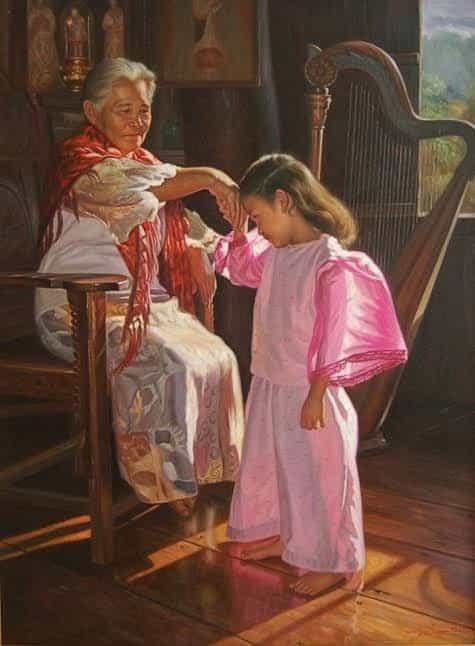
- ‘Mano Po’ — Is the gesture where this young girl reaches out for the right hand of the grandmother, presses it against her little forehead and respectfully says ‘Mano po’. This gesture is what defines the Filipino family unit. It is a gesture that is very much practiced all over our islands even up to this day. This practice has kept Filipino families together, almost always. Filipino parents will never send their adult children (above 18 years) away from the house. They can stay as long as they want. Sometimes that means even until marriage. This is the very reason why Filipino sons and daughters take care of their elderly parents until their deaths. Does that sound like a quid pro quo? The thought of sending parents packing to elderly homes is very un-Filipino.
- ‘Kain Po’ — is a gesture of sharing. When a Filipino is about to partake of a meal by himself, he first invites anyone within hearing distance with ‘kain po’ even if his meal is just enough for himself. Our parents taught us the value of sharing through this unique gesture. This is said to anyone including a complete stranger, which makes the value even more meaningful. At home, my butler who always eats by himself at a time he so chooses, first passes by me anywhere I am in the house to say ‘kain po’ before he starts eating.
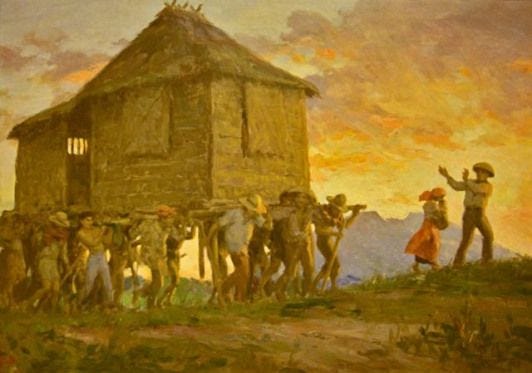
3. ‘Bayanihan’ literally means communal cooperation. This value in more prominent in the provinces than in the urban communities where everybody is busy. Fernando Amorsolo, one of the greatest Filipino painters and a National Artist depicted this value in this painting where friendly neighbors together carry a nipa hut to a new location in their community. The spirit of Bayanihan is alive in the smaller units of government called ‘barangays’ where the Barangay Captain usually calls out the members of his community to help clean their surroundings among other things. The ‘bayanihan’ spirit is also very evident during national disasters like typhoons and earthquakes. There is no lacking in a pair of hands to help out those in need.
4. ‘Utang na Loob’ literally meaning ‘debt of gratitude’. For the giver, if the recipient of his generosity returns with a payment in any form, the giver will proudly announce to the world that the recipient has a ‘debt of gratitude’. Otherwise, the opposite will be said about the recipient — if he forgets and never returns the good favor done to him, he will be condemned as a person without any ‘debt of gratitude’ or in Filipino ‘walang utang na loob’, something none of us want to be ascribed to, ever. It is one of the worst accusations a Filpino can ever receive in his life.
5. ‘Tuloy Po Kayo’ literaly means ‘please come in’. Filipinos are known the world over for being highly hospitable. We enjoy welcoming people to our homes specially during fiestas and celebrations. We go out of way to help foreigners when they are lost. We invite anyone to partake in a meal despite the condition of our modest, sometimes poor homes. This hospitality does not only happen in the Philippines. Since you will find Filipinos everywhere in the world from Scandinavia to Argentina, they will invite you to their homes to experience everything Filipino, from our food to our never-ending love affair with the karaoke.
These 5 values spell love, no matter how you look at them.
When we say ‘mano po’ to our elders as a sign of respect, it is with a hope and a prayer that they will live with us forever.
When we invite you with a ‘kain po’ we are verbalising the value of sharing even if we only have enough for ourselves.
When we run to you in the spirit of ‘bayanihan’ in order for you to accomplish a task you cannot do by yourself, our actions are telling you how much we care for you.
When we return the favor you extended to us at a time of our need, our ‘utang na loob’ shows its gratefulness to you forever.
And when we welcome you into our homes despite our modest conditions, we are simply living God’s great commandment to love your neighbors as you love yourself.
Matthew 22:37–39 “Thou shalt love the Lord thy God with all thy heart and all thy soul and with all thy mind, this is the first and great commandment. And the second is like unto it, thou shalt love thy neighbour as thy self.”
I wrote this article today after reading this one from Sabeena this morning. It inspired me to write my version. Here is Sabeena’s well written piece: