
Quotations | Self-expression | Change
5 Einstein Quotes That Could Change Your Life . . .
. . .but probably won’t.
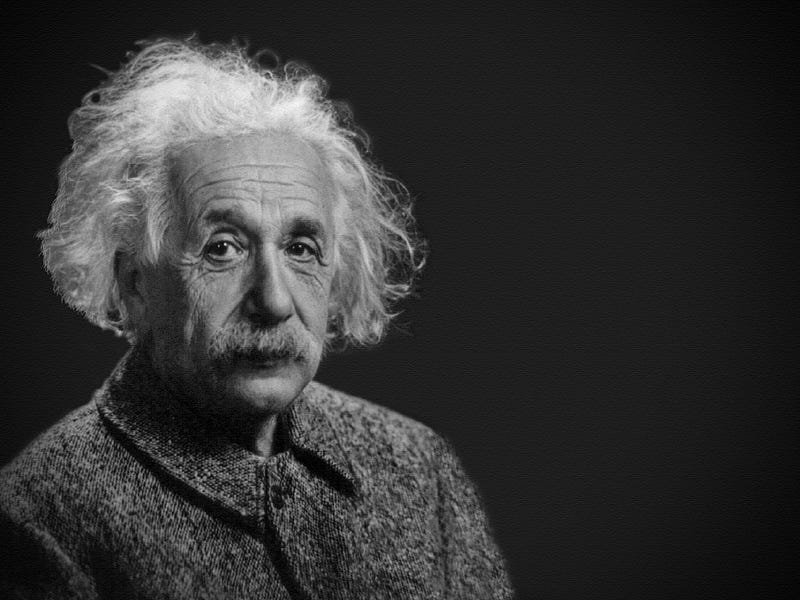
A quote is an excerpt from a person’s life.
A snapshot of the inner workings of their mind translated into a few words, that depict how, when, and why a person lives life the way they do.
And we, as the recipient of these bits of wisdom, often consume them like nourishment: a steak and potato, say, or a Big Mac. Thus, allowing them to trickle down into our collective consciousness where they’ll break down into something useful and perhaps help us become a little smarter, a little better at living life.
But it just doesn’t work that way. It’s never been that easy and probably never will.
Take this one for example.
“We cannot solve our problems with the same thinking we used when we created them.”
I think this is brilliant. And it should be because Mr. Einstein was brilliant. But he was also humble and practical and a firm believer, as far as I can discern, that shit happens, and the more we avoid making stupid mistakes, then the less shit is likely to happen to us.
But how do we apply this in real terms?
From another perspective, if we walk into a revolving door with a suitcase trailing behind us and create a godawful wreck with us at the bottom of the heap, how do we use this experience to prevent it from happening again?
Do we stop using revolving doors?
Do we stop using a suitcase on wheels and carry a satchel instead?
Do we endeavor only to exit buildings but not enter them?
The problem most humans have in doing something that becomes a problem, later on, is that we didn’t know this would be the outcome when we started.
Some external factor triggers a complex and mostly unconscious series of decisions that end with us turning left instead of right or saying I Do when I Don’t would have been a much wiser decision.
But after years of processing countless bits of information and becoming comfortable inside our own heads, we still make mistakes.
Why would a series of quotes change the whole paradigm and suddenly imbue all of us with instant knowledge ready to use?
Is this one immediately ready for us?
“The true sign of intelligence is not knowledge but imagination.”
So, scoring a perfect 1600 on the SATs is not necessarily a true sign of intelligence?
Or, perhaps giving the commencement speech at your college graduation as valedictorian, is not always a given that your intelligence will take you a long way in life.
Maybe you have a great memory. Maybe you mastered the art of test-taking but when playing Charades, and you need to exercise your imagination to win, you always stumble on giving clues for titles like The Lone Ranger or To Kill a Mockingbird.

Maybe what Einstein is actually saying is that smart gets things done and built, that is, for the most part, already there to be built. Smart will build you a bridge over a small river. Smart will build you a skyscraper in the middle of New York City like others already there.
But will smart get you past the sights of children getting Polio, all the way to a vaccine?
Will smart get the two warring sides to a table and actually give peace a chance?
We all like getting something that clicks and makes us feel good about ourselves and life in general.
Look before you leap — a practical datum if there ever was one. But beyond peering over the edge of the abyss, how does one deconstruct this little darling and incorporate it into our lives in a meaningful and lasting way?
Now this one will surely metabolize instantly and become food for thought, right?
“Great spirits have always encountered violent opposition from mediocre minds.”
First off, I think we can safely assume that the term ‘great spirits’ is not referring to our ancestors or Gods that we pray to, but individuals with a great capacity to understand and feel and envision a changing reality, that goes beyond the norm.
But what does it actually mean and how do we take it off the page, slip it neatly into our lives and start using it, like a screwdriver or an iPad?
Would we know it, if we, the reader of the quote, were one of the mediocre minds Einstein is referring to and not the great spirit? Would that be a disappointment?
Maybe, Albert is relating to all of us, the challenges he faced in his life. The rejection he experienced because he was not the right type to be offering up such ideas. Or that he didn’t have the right background or education or that he was a Jew and that erected obstacles, just because.
Quotes are entertaining and to some degree informative, but mostly about what’s happening within the quoter’s life.
Can quotes simply transfer their wisdom and perspective to the reader automatically or do we, in an effort to gain insights quickly, assume that they do and move on to the next one?
“I believe in standardizing automobiles. I do not believe in standardizing human beings.”

So, having the directional signal lever on the same side of the steering wheel in all automobiles is a good thing — lest we forget and click on the wiper blades instead when turning.
But requiring all human beings to come off the assembly line looking and acting alike would be a bad thing.
But does this even make sense?
People are not cars, so why worry about it. We all look and act differently. We all speak different languages, over 6000 of them across the globe. Is there any real danger of people becoming standardized, like say, American Sign Language or the Off-side rule in English soccer?
Or is Einstein, taking a close look at his life, not inside his head, but around the world in the 1920s, 30s, and 40s leading up to World War II and the atom bomb?
How true industrialization made the replication of anything easy and got everyone into the mode that perhaps being the same was more efficient to see and fix, so why not apply it to humans as well?
Maybe he saw that replication or similarity in education and worldview was a bad thing because it created sameness and limited innovation in a time when thinking outside the box (even if that phrase hadn’t yet come into being) was a very, very good thing to do.
Again, quotes are seldom fully digestible in their current form. Watch what you wish for, sounds instantly appealing and catchy, but how does it slot into our lives and help us navigate through work and marriage, as an example?
It probably doesn’t, but it might if and when we process it through our own minds, adding in our own perspective and worldview and turning it into something we can wield effectively.
And number 5:
It is, in fact, a miracle that the modern methods of instruction have not yet entirely strangled the holy curiosity of inquiry.
Hmm, so what is our takeaway from this one? That education and by extension educators are really good at choking innovation and exploration? Cutting off intelligent inquiry and force-feeding students dogma instead?
Sounds right enough, I suppose. I am old enough to know that many educational methods used during my student days were as rigid and stiff as the desks we sat on.
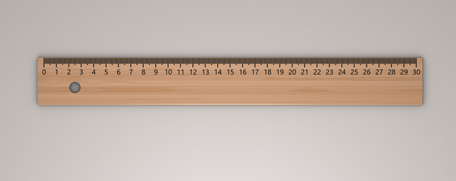
That rulers always had two functions: to measure and to punish.
That repetition, though needed at times, was easier and less demanding and thus made teaching easier, than trying to get behind the glazed expressions of the students and find the real being behind them.
But apart from being true or not, does this quote gives us leverage in our own lives? Can you take and assimilate it and use it tomorrow at work, at college, or in the bedroom when conversing with your significant other about child-rearing or finances?
Quotes are a glimpse into a person’s life — like sitting by the window of a train as it passes cities and farms and children waving by the side of the tracks.
If we’re lucky we see something memorable. But most likely we’ll only get something that we’ll have to discard or set aside later because it’s too small by itself to be meaningful.
Takeaways
I love quotes. Not all of them, but a few breach my defenses and get inside me, creating havoc when they’re in conflict with how I’ve been thinking.
But at the same time, I don’t trust quotes. They’re too pretty, too neat and brief. Too willing to appease, thus perhaps insincere. But they can be useful to stir things up. Like adding a pinch of cayenne to vanilla ice cream — not what was expected.
I suggest caution though when using quotes and accepting their limitations. They are not our thoughts but at times, other people’s that can stimulate our own. In that way they’re good. But they can also get us to look the other way — the less daunting view of life. In that way they’re bad.
I’ll end this article with two more quotes. Opposites in a way and you decide which one seems more relevant.
Thanks for reading.
Inspirational quotes are so effective because they are isolated pieces of information, not muddied or diluted by surrounding words or sentences. There is no context to the quote, other than the context of your life. Joe Tichio
“When one begins to live by habit and by quotation, one has begun to stop living.” James Baldwin
Dr Mehmet Yildiz Tree Langdon J.D. Harms Esther George James Knight George J. Ziogas Paul Myers MBA Stuart Englander Desiree Driesenaar The Secret Aspirant Rebecca Romanelli Linda Caroll Jenine Bsharah Baines Adelia Ritchie Claire Kelly Salvatore Cagliari Caroline de Braganza Amy Marley Alison Tennent P.G. Barnett


