
5 Effective Eating Habits to Finally Get Rid of Sugar Addiction
We are not only what we eat, but also how we eat
Glucose is our body’s main source of energy.
But if our glucose levels are out of balance, alarms go off in our body. We put on weight, our hormones get out of whack, we feel tired, we crave sugar, our skin breaks out, our hearts suffer.
We were supposed to consume glucose in a specific way: in plants. Wherever there was starch or sugar, there was fibre as well. This is important, because the fibre helps to slow our body’s absorption of glucose.
Today, however, the vast majority of supermarket shelves are packed with products that contain mostly starch and sugar. From white bread to ice cream, sweets, fruit juices and sweetened yogurts, fibre is nowhere to be seen.
Because of this, ninety percent of us suffer from too much glucose in our system — and most of us don’t know it.
Glucose Spikes Are The Enemy
We get most of the glucose from the food we eat, and it’s then carried in our bloodstream to our cells. Its concentration can fluctuate greatly throughout the day, and sharp increases in concentration are called glucose spikes.
These glucose spikes are usually followed by glucose crushes. That sluggish feeling we have after we eat a lot. Which leads to the cravings of having more glucose and making us addicted to sugar.
These glucose spikes and crushes affect everything, from our energy, mood, sleep, weight, and skin to the health of our immune system, risk for heart disease, and chance of conception.
If you were to plot your glucose level every minute of every day on a graph, the line between the points would have peaks and valleys. That graph would show your glucose curve. When we make lifestyle changes to avoid spikes, we flatten our glucose curves.
The flatter our glucose curves, the better for our health.
Excess glucose in our body and the spikes and dips it causes change us on a cellular level. Weight gain is just one of the symptoms we can see; there are many more. But for each, flattening our glucose curves can bring relief.
Glucose spikes create from short-term side effects to long-term illnesses. From wrinkles and acne to cravings, hunger, migraine and depression, to poor sleep, infertility and type 2 diabetes, these symptoms are messages from your body.
In the book Glucose Revolution by Jessie Inchauspe I learned ten habits that help us flatten the glucose curves, reconnect with our body and reverse our symptoms — while still eating what we love.
Below I share the five I have incorporated in my daily life, have been effective and have made the biggest difference in my health.
Eat Foods In The Right Order
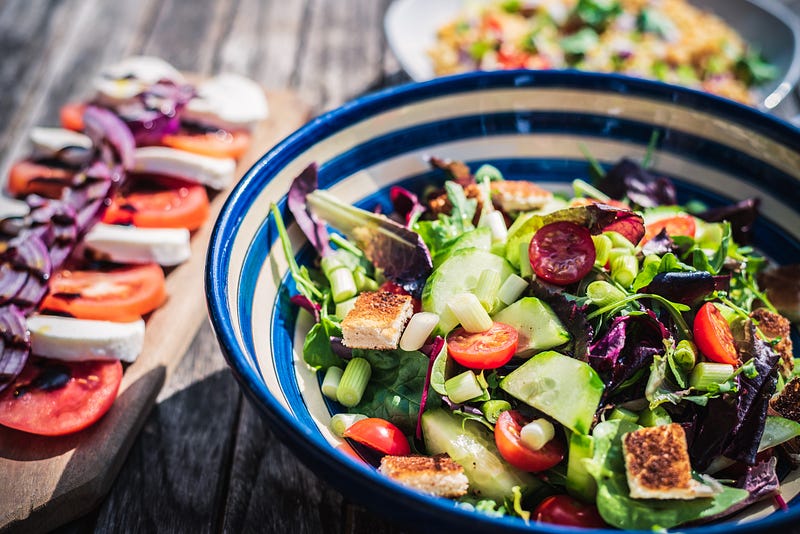
What is the right order? It’s fibre first, protein and fat second, starches and sugars last.
According to the researchers, the effect of this sequencing is comparable to the effects of diabetes medications that are prescribed to lower glucose spikes.
If starches or sugars are the first thing to hit your stomach, they get to your small intestine very quickly. There, they are broken down into glucose molecules, which then make it through to the bloodstream very quickly. That creates a glucose spike.
On the other side, fibre isn’t broken down into glucose by our digestive system, but it goes through slowly and unchanged. But that’s not all.
Fibre has three superpowers: first, it reduces the action of the enzyme that breaks starch down into glucose molecules. Second, it slows down gastric emptying. Finally, it creates a viscous mesh in the small intestine; this mesh makes it harder for glucose to make it through to the bloodstream.
Through these mechanisms, fibre slows down the breakdown and absorption of any glucose that lands in the stomach after it; the result is that fibre flattens our glucose curves.
Any starch or sugar that we eat after fibre will have a reduced effect on our body. We’ll get the same pleasure from eating it but with fewer consequences.
Flatten Your Breakfast Curve
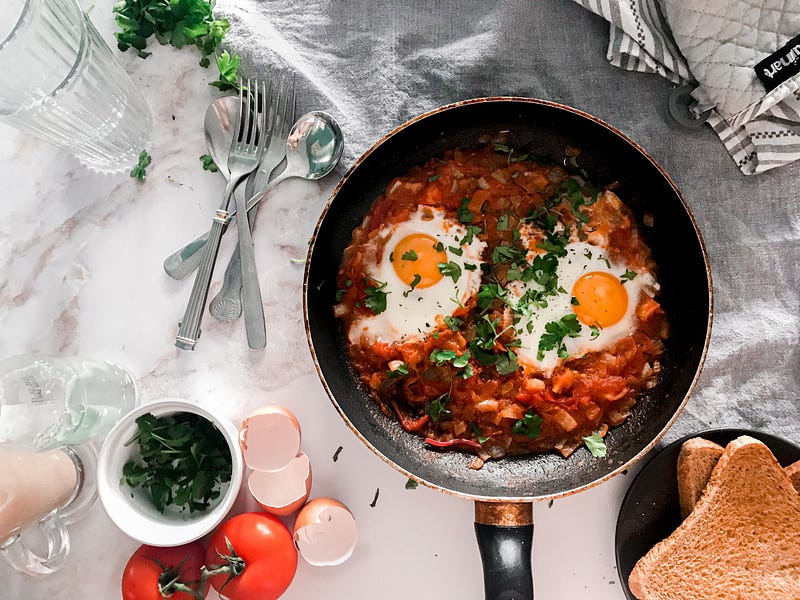
The best thing you can do to flatten your glucose curves is to eat a savoury breakfast.
A breakfast that creates a big glucose spike will make us hungry again sooner. What’s more, that breakfast will deregulate our glucose levels for the rest of the day, so our lunch and dinner will also create big spikes.
On top of that, first thing in the morning, when we are in our fasted state, our bodies are the most sensitive to glucose. Our stomach is empty, so anything that lands in it will be digested extremely quickly. That’s why eating sugars and starches at breakfast often leads to the biggest spike of the day.
Choose your breakfast well, and you’ll feel better throughout the day — more energy, curbed cravings, better mood, clearer skin and on and on.
An ideal breakfast for steady glucose levels contains a good amount of protein, fibre, fat and optional starch and fruit (ideally, eaten last).
Eating a savoury one will help curb hunger, banish cravings, boost energy, sharpen mental clarity and more for the next 12 hours.
Pick Dessert Over A Sweet Snack
When we’re done eating, our organs are just getting started – and they keep working for four hours on average after our last bite.
This busy time is the ‘post-eating,’ or postprandial, state.
The postprandial state is the period of our day when the largest hormonal and inflammatory changes take place. To digest, sort and store the molecules from the food we just consumed, blood rushes to our digestive system and our hormones rise like a tide.
When our body is not in the postprandial state, things are a little easier. Our organs are on clean-up duty, replacing damaged cells with new ones and clearing our systems.
When we forgo snacks, we keep our system out of the postprandial state for longer. That means there’s time for the clean-up described above.
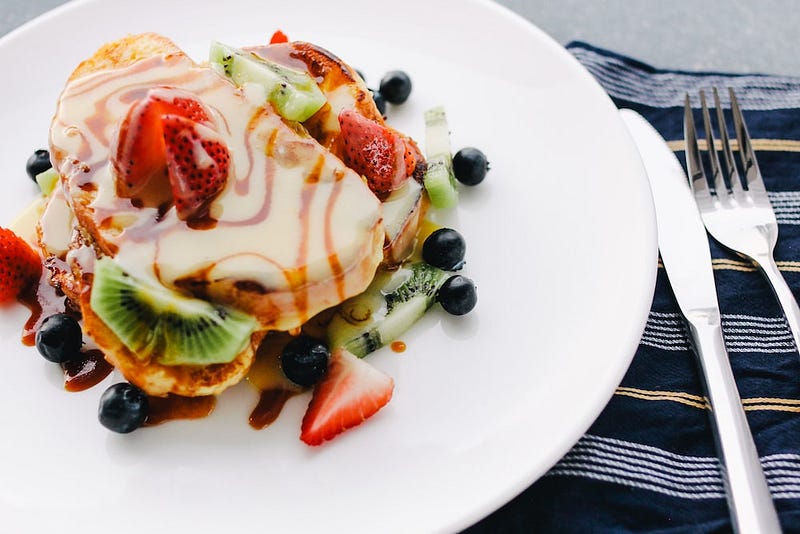
The best time to eat something sweet is after you’ve already eaten a meal with fat, protein and fibre. When we eat sugar on an empty stomach, we’re throwing our system into a postprandial spin, riding on a big glucose spike.
So whether it’s a piece of fruit, a smoothie, a toffee, or a cookie, if you’re going to eat it, do it at the end of a meal.
Reach For Vinegar Before You Eat

This one is a bit of a shocker, but it actually has worked the best for me. Adding vinegar to our diet, a few minutes before eating something sweet, flattens the glucose spike.
Vinegar does so in two ways: it slows the arrival of glucose in the bloodstream, then increases the speed at which our muscles soak it up and turn it into glycogen.
Because of vinegar, sugar cravings are curbed, hunger is tamed and more fat is burned.
The best approach to implement this is by adding a green starter to all your meals, which helps to create the habit of starting with fibre. And add some vinegar to your dressing, to get the benefits of vinegar as well.
This is a very cheap trick, too: a standard bottle of vinegar costs under £2 at your corner store and contains over 60 one-tablespoon servings. You’re welcome.
Put Some Clothes On Your Carbs
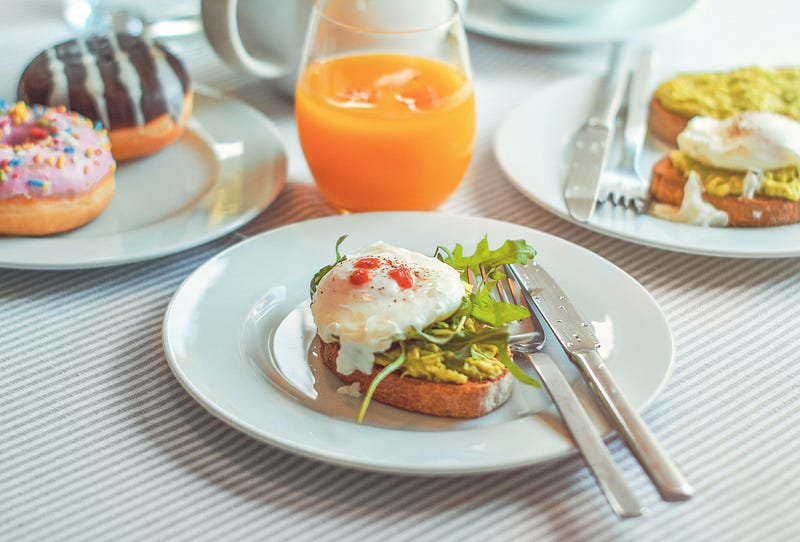
When you do enjoy carbs (and you will and should and must), make it a habit to add fibre, protein or fat and, if you can, to eat those first.
Even savoury snacks — which are already better for your glucose curves but may still contain starch — should have clothes on: add avocado and cheese to toast, spread nut butter on rice cakes and eat some almonds before your croissant.
Eating carbohydrates alone isn’t just bad for our glucose levels, it also plays havoc with our hunger hormones. So we go from feeling full to being hungry again very quickly.
By putting clothes on our carbs, we avoid hunger pangs, or what we call being hangry. This is because when we eat carbohydrates on their own, ghrelin, a hormone that tells us to eat, fluctuates rapidly, then makes us hungrier than we were before eating.
If you’re eating something sweet, make it a habit to put some clothes on it; fibre, fat or protein.
I have been implementing these habits whenever I could for the past three months and I have seen a significant impact on my overall health. Sugar cravings have lowered, my energy has increased, and I look and feel healthier.
I highly recommend trying them out and also checking the book who goes more in depth on each and has even more suggestions.


