
5 Easy Ways to Lose Fat Without Giving Up Your Favorite Foods
Losing Fat Doesn’t Mean Limiting Yourself to Bland, Boring Meals
When it comes to losing fat, most people struggle with the nutritional aspect of the process.
The idea of starting a diet stops most people in their tracks. The thought of eating salads and bland meals deters even the most desperate. Having to fully change the way you eat and drink sometimes works in the short term, but almost always falters after a few weeks or months.
This is part of a vicious cycle that often leads to regaining lost weight, gaining additional weight, and developing disordered eating patterns and a poor relationship with food. Each attempt at a diet overhaul often ends in disappointment.
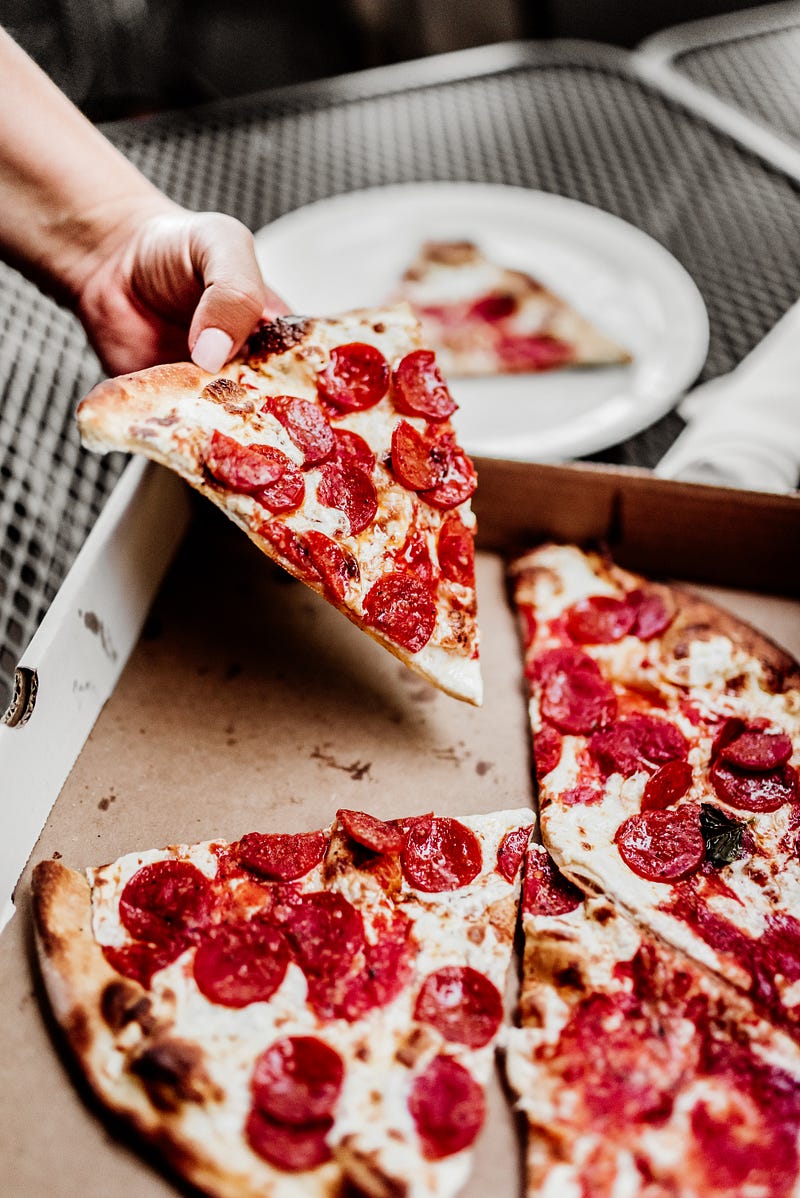
Fortunately, the idea that you have to give up sweets, savory snacks, and other guilty pleasures in order to achieve fat loss goals is outdated. It’s absolutely possible to lose body fat without giving up your favorite foods. In fact, I encourage you not to undertake any fat loss program that involves giving up the things you love completely.
Instead of giving up your favorite foods altogether, the key is determining how to make those favorite foods fit into your lifestyle along with other healthy habits necessary for fat loss. As long as you are in a caloric deficit (burning more calories than you’re consuming), you’re going to lose fat gradually over time. While consuming calorie-dense foods does make it more challenging to be in a deficit, it’s still possible.
Here are five easy ideas you can incorporate into your lifestyle to aid your fat loss journey without giving up your favorite foods:
- Strength Training
The most beneficial exercise you can do to lose fat is strength training. The most common type is weightlifting; however, bodyweight strength training, calisthenics, and various class-based exercise are also sufficient.
While strength training doesn’t directly burn the same number of calories as cardio training, it triggers fat loss in other ways. Strength training increases your total lean muscle mass, which results in a lower body fat percentage relative to total body mass. Increasing lean muscle mass also results in a higher resting metabolic rate (RMR), which increases the number of calories burned while not exercising. Finally, more lean muscle mass is the only way to obtain the lean, sculpted, toned physique that most fat-loss chasers strive for.
Especially for newbie and amateur strength trainers, the muscle gains obtained during the first 6–12 months of strength training are so significant that they are apparent even without a change in nutritional habits. This doesn’t mean it’s a good idea to have a food free-for-all, but it does mean you can get one step closer to your fat loss goals just by going to the gym and hitting the weights regularly. 2–3 days a week of strength training is sufficient for most people; however, 4–5 is also acceptable for more advanced trainers and for those who require consistency to build better habits.
2. Add More Protein and Vegetables To Your Diet
Rather than take away the things you enjoy eating, try incorporating them into a routine along with the types of foods that are most beneficial for fat loss.
Protein is the most important macronutrient for fat loss. Eating enough protein increases feelings of fullness, curbs appetite, and repairs muscles after strength training. Incorporating high-protein foods such as chicken, eggs, turkey, fish, and lentils will help ensure you stay full longer, consume fewer calories, and reduce body fat levels.
Vegetables aid in fat loss in other ways. Most vegetables are very nutrient-dense, low in calories, and satiating. This means you can consume a large amount of vegetables, feel full, and still have consumed very few calories.
Most people jump to the conclusion that vegetables have to replace their favorite foods. This isn’t the case (in fact, I discourage this, because you’re less likely to stick to a nutrition plan consistently if you replace things you enjoy a lot with things you enjoy much less). Instead, incorporate vegetables in addition to your favorite foods.
For example, one of my favorite foods that I refuse to eliminate from my diet is french fries. Rather than eliminate them completely from my diet, I will either (1) mix together a half serving each of traditional french fries and sweet potato fries, or (2) include a side of baby carrots in addition to my french fries and eat the carrots first. These strategies work because they allow me to enjoy the food I love, while also increasing how full I am. By having baby carrots in addition to fries, I’m increasing my volume of food considerably while only increasing calories consumed marginally. By mixing sweet potato fries, I’m keeping my calorie count stable while enjoying the nutritional benefits of sweet potato fries.
These strategies can be applied with any “unhealthy” food and vegetable. By adding veggies in addition to some more calorie-dense favorites, you reduce the likelihood of overeating and gaining extra body fat.
3. Walk More
Walking is by far the easiest habit to pick up to promote fat loss. The average American walks an average of 4,000 steps per day, which, quite frankly, is not enough. Walking for even 20–30 minutes per day is enough to bring that step count up to 6–7k steps per day. Over the course of a month, with no other changes in activity or nutrition, 20–30 minutes of walking per day is enough to create a deficit of 1–2 pounds for men, and slightly less for women.
How can you add 20–30 minutes of walking per day? The easiest answer is “go for a 20–30 minute walk.” For good weather days, this is probably one of the most enjoyable activities one can do. For bad weather days, a treadmill is an easy way to achieve this, and can be partnered with a book or a TV show.
Other ideas include parking further away from your destination and adding the 2–3 minute walk to and from a few times a day. Taking the stairs instead of the elevator also works. Walking your dog, or volunteering/getting hired to walk someone else’s dog works. Anything to get you out the door and on your feet will help boost your activity levels, increase your calories burned, and reduce your body fat levels.
4. Track Your Meals
Keeping a log of all of your meals and snacks is a great way to stick to your fat loss goals habitually.
This could mean counting calories in MyFitnessPal, but it doesn’t have to be that (tracking calories can lead to disordered eating behaviors if done too obsessively). Even keeping a written or photo journal of your meals is enough to drive mindful eating habits.
By tracking your meals daily, you’re more likely to stick to healthier choices. This doesn’t mean you shouldn’t log your less healthy choices; in fact, you absolutely should log those too. This gives you a way to monitor your eating habits. If you notice you’re undergoing periods of frequent fast food or calorie-dense favorites, this can be a cue to moderate how often you’re straying from your goals.
A good goal to aim for is the 80:20 rule: aim for 80% nutrient-dense, healthier options, and 20% calorie-dense, treat foods. This allows you to incorporate more of the foods required to help you lose fat, while still giving plenty of wiggle room to include your favorites.
5. Have a Plan
Calorie-dense favorite foods have their place in any nutrition plan, and there are times where it’s healthier to splurge on a favorite than it is to resort to chicken and veggies.
Everyone will experience moments on their fat loss journey where they’ll want to give up and splurge on “junk food.” This is normal, and it doesn’t have to be the next step on the vicious cycle of trying and failing to stick to a proper diet or fat loss plan.
One day of splurging is fine, and not going to set you back on your fat loss journey, so long as you don’t let it become a habit. Those who reach their fat loss goals do so over time as a result of consistently incorporating good habits, just as those who successfully gain fat do so over time as a result of consistently incorporating bad habits.
If you can plan ahead for days where life gets in the way of your fat loss goals, you can adjust so that you don’t fall off the wagon completely. When you have a high-stress day ahead (a day where you’d normally resort to fast food or sweets), you can plan that into your routine. Use that as the day where you incorporate the 20% of treat foods. For major holidays or birthday celebrations where most of the food choices are higher in calories and fat, use that day as the 20%, and let the other 80% of the week be more nutrient-dense, healthier choices. By doing this, you’re allowing yourself to enjoy the more pleasurable foods without the guilt or the risk of falling off the wagon completely.
If it’s impossible to plan ahead for periods of stress- say, your kid gets sick, you’re stuck in traffic an extra hour, you have an emergency to attend to- allow yourself a treat meal if that’s what it takes to get through the stressful time. Acknowledge it happened, remind yourself it’s okay, then return to healthier habits the next time possible.
Key Takeaways
While some form of nutritional modification is necessary to reach your fat loss goals, giving up your favorite foods altogether is absolutely not necessary. Not only is it possible to keep your favorite foods in the rotation while trying to lose fat, it’s actually beneficial to keep those favorites around. You’re more likely to stick to your plan consistently if you actually enjoy it. Being able to enjoy your favorite foods during your fat loss program increases the likelihood you’ll stick to your program, rather than fall off the wagon completely.
Incorporate healthy habits like strength training, walking, protein, and vegetables, and you give yourself so much more freedom to enjoy the foods you love while still adhering to your fat loss goals. Enjoying your favorite foods is, in my professional opinion, just as much of a key to long-term fat-loss success as any other diet or exercise recommendation.
Want more specifics about how to include your favorite foods in a fat-loss program? I do online fitness and athletics coaching through Strength and Intent, learn more here.
Check out my other articles on Medium here to learn more about all things exercise, fitness, sports performance, and injury rehab.