avatarThe Mars Girl

Free AI web copilot to create summaries, insights and extended knowledge, download it at here

4193

Abstract

am_Lake#/media/File:Abraham_Lake_-_bubbles.jpg">Wiki</a></figcaption></figure><p id="1ede">The minute reduction of <b>methane</b> released into the atmosphere is advantageous for the environment despite being dangerous. Unfortunately, as climate change advances, the amount of methane remaining trapped reduces drastically. This wonder can also be spotted in <b>Lake Baikal, Siberia.</b></p><h1 id="34bd">3- Bloody lake that never freezes</h1><p id="03ef">If you are not a fan of gore, this one is hard to stomach. Bloodfalls are a phenomenon that occurs in the<b> Dry Valleys</b> in <b>Antarctica</b> that spurt crimson-colored water into the flowing river.</p><p id="5810">As poetic as it may seem, the actual cause of the bloody water is the complex networks of lakes beneath the glaciers that are rich in <b>brine iron</b> <i>(the iron tints the water, also called nanospheres now by scientists).</i></p><figure id="f22e"><img src="https://cdn-images-1.readmedium.com/v2/resize:fit:800/0*5z3nk7AuliwP5NX0.jpg"><figcaption>Blood falls in Antarctica. It might not be the easiest natural event to experience due to its remote location. But one can still catch a glimpse of it from either a helicopter ride over the continent or a cruise ship across the Ross Sea. Source: <a href="https://upload.wikimedia.org/wikipedia/commons/f/f5/Blood_Falls_by_Peter_Rejcek.jpg">Wiki</a></figcaption></figure><p id="f53c">The existence of the metal, along with a very high salt concentration is also what stops the water from freezing over. Scientifically, salt lowers the freezing point of water and the heat release is stronger as the frosting takes place.</p><p id="9b92">This turns it into an endless cycle of melting and freezing, causing the river to have a flow current. The unusual temperatures of the water have deemed this to be the coldest glacier on Earth.</p><h1 id="94d6">4- A crystal shower of light</h1><figure id="89ec"><img src="https://cdn-images-1.readmedium.com/v2/resize:fit:800/0*EkSu3ac9kedOlScW.jpg"><figcaption>North Bay, Ontario. Source: <a href="https://en.wikipedia.org/wiki/Light_pillar#/media/File:Highexposure01.jpg">Wiki</a></figcaption></figure><p id="eace">Everyone knows about the <b>Northern Lights </b>in the<b> Arctic</b>, but not many might have heard of the light beams that look like lasers falling out of the sky called <b>light pillars.</b></p><p id="f785">This occurs in places of<b> extreme cold</b> as it requires the cold air to <i>crystallize moisture.</i></p><p id="9074">As these crystals then gravitate downwards, the surrounding light sources fall on the <b>crystals</b>, dispersing into various colors of <i>thin beams.</i></p><figure id="82c8"><img src="https://cdn-images-1.readmedium.com/v2/resize:fit:800/1*DSiK8BbxfPJEa5WMk0LzPw.png"><figcaption>It may apparently look as if the light beams are artificially generated in the background. But this scene shows a very chilly winter night in Raubichi, Belarus. Source: <a href="https://en.wikipedia.org/wiki/Light_pillar#/media/File:Light_Pillar_Raubichi_Belarus.jpg">Wiki</a></figcaption></figure><p id="6321">This event can only take place in calm, stable weather, with surrounding light available, therefore this is an experience for the winter crowd <i>(ones who don’t mind being nearly frozen to death just to experience the beauty of nature).</i></p><h1 id="fd93">5- Snowy sculptures of forgiveness</h1><figure id="8692"><img src="https://cdn-images-1.readmedium.com/v2/resize:fit:800/0*fh-yf0TsKsKpYstK.jpg"><figcaption>Penitentes in The Atacama Desert, in Chile, South America. Charles Darwin was the one who described them in scientific literature back in 1839. Source: <a href="https://en.wikipedia.org/wiki/Penitente_(snow_formation)#/media/File:Planetary_Analogue.jpg">Wiki</a></figcaption></figure><p id="2ce1">Penitentes are <i>natural</i> snow sculptures that usually exist in <i>high-altitude</i> places. They are shaped as <b>elongated, thin blades </b>of stiff snow, packed together with minimal distance between them and facing the general direction of the sun. These blades can be measured up to<b> 5 meters long.</b></p><figure id="d9f9"><img src="https://cdn-images-1.readmedium.

Options

com/v2/resize:fit:800/0*QwqoZa-kvgAxm6PF.JPG"><figcaption>As found on the border of Argentina and Chile. Source: <a href="https://en.wikipedia.org/wiki/Penitente_(snow_formation)#/media/File:Penitentes_Agua_Negra.JPG">Wiki</a></figcaption></figure><p id="284b">The reason they have been dubbed as penitentes <i>(Spanish for remorseful)</i> is due to their appearance — they look like they are <b>kneeling</b> on the sand, begging for forgiveness.</p><p id="979d">They can mainly be found in the <b>Atacama Desert</b> and are said to be spiky due to the intensity of the sun. The heat turns them directly into water vapors from snow, and the release of <i>heat</i> in the process would create the spaces between these penitentes.</p><p id="1cf0">You may be able to visit the penitentes on Earth, but this art of nature is also present on Pluto and on Jupiter’s moon, Europa <i>(that might be a little hard to tick off the bucket list).</i></p><h1 id="db88">Lessons Embedded</h1><p id="0c06">Nature is a wonderful blessing, and even though not everyone can experience all of these in life, it is still very intriguing to learn and be aware of such scientific phenomena occurring around us.</p><p id="cba3">To be fair, if anything, we should use these experiences as more reason to protect our environment from the increasingly destructive climate change occurring.</p><p id="875a"><i>Want to follow up more from me and other amazing writers on Medium?</i></p><p id="e70f"><i>Hop on the chance to join:</i></p><div id="8ca2" class="link-block"> <a href="https://medium.com/@themarsgirl80/membership"> <div> <div> <h2>Join Medium with my referral link - The Mars Girl</h2> <div><h3>As a Medium member, a portion of your membership fee goes to writers you read, and you get full access to every story…</h3></div> <div><p>medium.com</p></div> </div> <div> <div style="background-image: url(https://miro.readmedium.com/v2/resize:fit:320/0*9sNSDoBH-8XS_a-f)"></div> </div> </div> </a> </div><h1 id="4be7">More From Author:</h1><div id="f68f" class="link-block"> <a href="https://readmedium.com/5-critical-events-after-the-famous-coca-cola-controversy-df0277c90189"> <div> <div> <h2>5 Critical Events After the Famous Coca-Cola Controversy</h2> <div><h3>Coca-Cola’s biggest mistake nearly bankrupted its image.</h3></div> <div><p>medium.com</p></div> </div> <div> <div style="background-image: url(https://miro.readmedium.com/v2/resize:fit:320/1*bcwxT2Smz8qV4WoHVB90QQ.png)"></div> </div> </div> </a> </div><div id="bf9c" class="link-block"> <a href="https://readmedium.com/5-shocking-discriminations-against-left-handed-you-wont-believe-existed-1d0ecb8865d4"> <div> <div> <h2>5 Shocking Discriminations Against Left-Handed You Won’t Believe Existed</h2> <div><h3>Revealing the Hidden Battles Faced by Lefties In History.</h3></div> <div><p>medium.com</p></div> </div> <div> <div style="background-image: url(https://miro.readmedium.com/v2/resize:fit:320/1*SJqs6jyQW97aljoVuUDvPQ.png)"></div> </div> </div> </a> </div><div id="32cd" class="link-block"> <a href="https://readmedium.com/7-unbelievable-clues-confirming-alien-landing-in-roswell-c2214dd7677"> <div> <div> <h2>7 Unbelievable Clues Confirming Alien Landing in Roswell</h2> <div><h3>Traces revealing aliens did touch down the Earth in 1947.</h3></div> <div><p>medium.com</p></div> </div> <div> <div style="background-image: url(https://miro.readmedium.com/v2/resize:fit:320/1*E_-9mV1dBE1bOEfwCkaW-A.png)"></div> </div> </div> </a> </div></article></body>

5 Dazzling Phenomena of Nature You never heard of

Nature can put on a stunning show.
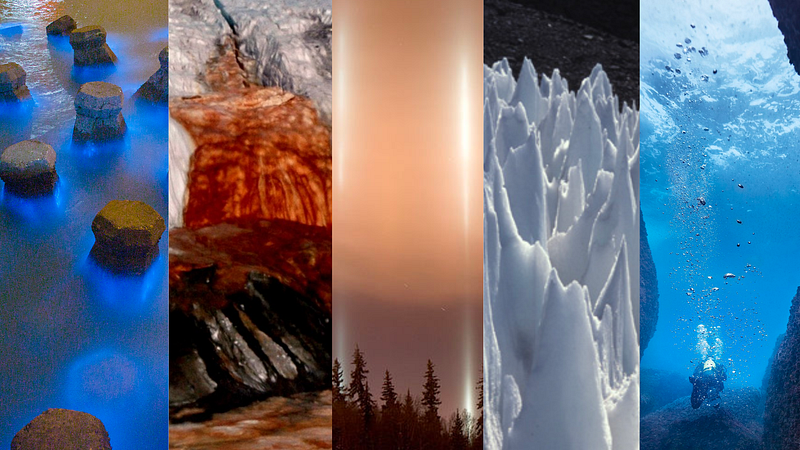
Image curated by the author.

Nature has always been a treat, whether it be painted skies or eruptive earth springs; it’s never fully predictable.

No traveler will ever have their list empty with the amount of strange occurrences nature throws out every once in a while. These are some of the most unusual, unique natural phenomenons to take place up to date, and a sure entry for your bucket list.

1- Marvel of Gliterring Ocean
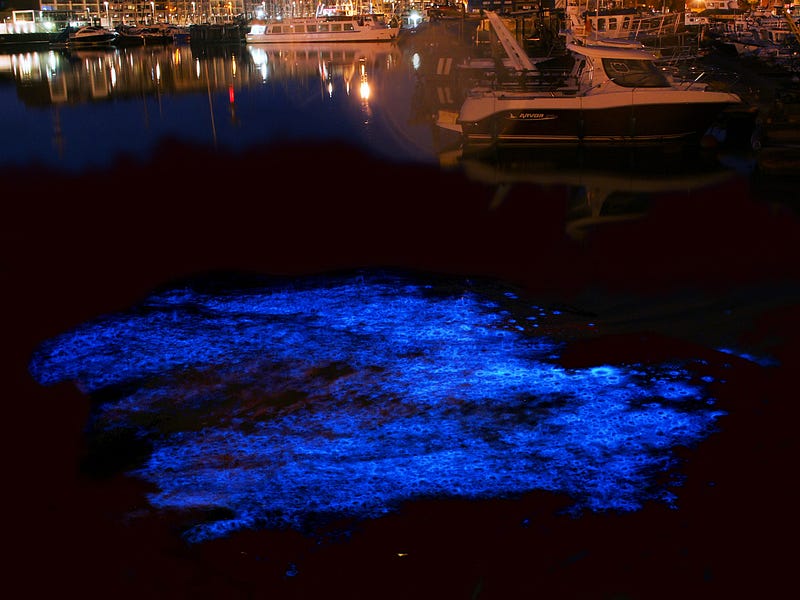
Yacht port of Zeebrugge, Belgium sparkling blue neon because of the same phenomena. These sparkly creatures have become more common in the coastal areas in recent years. Source: Wiki

Have you ever seen a mixture of stars and glitters shimmer so violently on Earth? The oceanic wonders of bioluminescence allow the sea to shine shades of neon blue, green, or red thanks to its chemical process.

It is caused by the presence of algae blooms of plankton in warm and calm bodies of water. The glowy effect of the waters occurs when there is movement, such as a wave or splash suddenly piercing the stillness of the sea.

The most famous place to visit if you want to experience swimming in the stars would be Sam Mun Tsai Beach in Hong Kong.

This phenomenon is not restricted to just the waters, some sea creatures such as squids and fish are also capable of producing bioluminescence which in turn helps them acquire food (or confuse their predators).
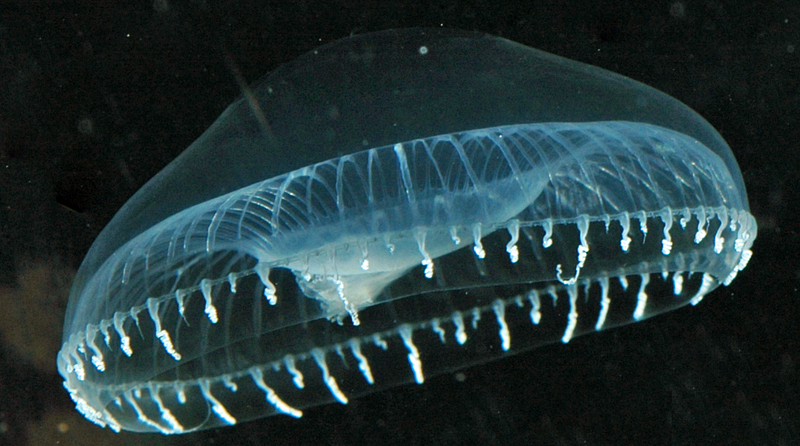
The light emitting molecules have complex chemical reactions which can be summed up by this: Luciferin + O2>→Oxyluciferin + light energy

Fireflies also light up due to this very chemical reaction and it helps them fend off bat attacks.

2- Tiny bubbles of lethal explosives

Popping bubbles is always a delight, however, if one were to pop these particular frozen bubbles with any sort of current or spark present near them, they would most likely get torn into pieces.

This occurs at Abraham Lake in Canada where the methane gas gets trapped underwater, and due to extreme temperatures, freezes into tiny bubbles.

As wonderful as it is to stare at, one should be very cautious around it as it is extremely inflammable.
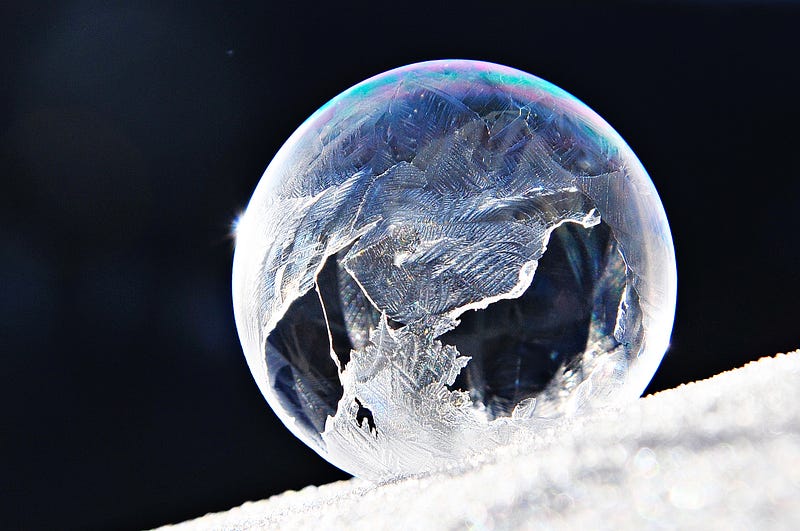
The frozen bubbles are a good visualization provided by nature as to how much methane is emitted into the atmosphere daily that we humans are simply unaware of. Frozen bubble in snow at -7'F Source: Wiki

The methane is released from decomposing vegetation at the bed of the lake, which tries to escape to the surface in the form of bubbles.

Unfortunately, before they can fully escape, the surrounding temperatures cause the bubbles to freeze in place, creating a wonderful imagery of the frozen lake.
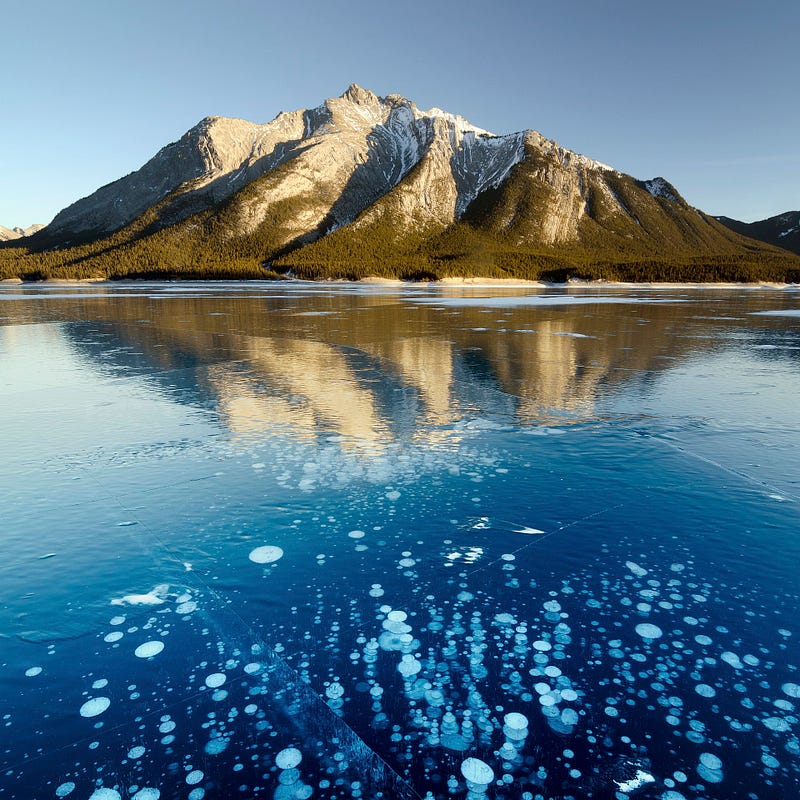
Abraham Lake in Canada. As seen in the image the decaying plants on the lake release methane. It starts to freeze in December, hence the ideal time for photographers and nature lovers is between January to mid of Feb. Source: Wiki

The minute reduction of methane released into the atmosphere is advantageous for the environment despite being dangerous. Unfortunately, as climate change advances, the amount of methane remaining trapped reduces drastically. This wonder can also be spotted in Lake Baikal, Siberia.

3- Bloody lake that never freezes

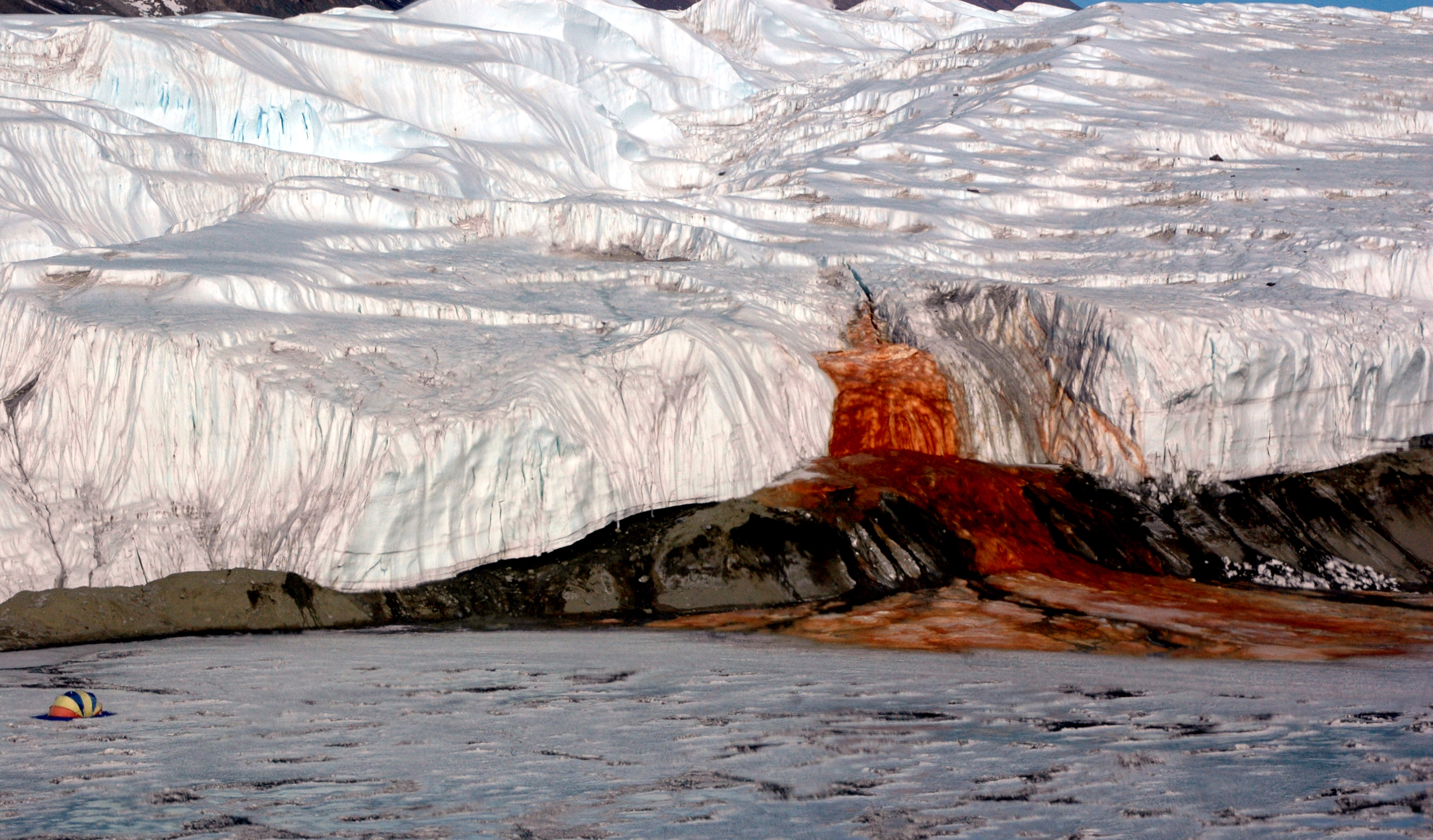
If you are not a fan of gore, this one is hard to stomach. Bloodfalls are a phenomenon that occurs in the Dry Valleys in Antarctica that spurt crimson-colored water into the flowing river.

As poetic as it may seem, the actual cause of the bloody water is the complex networks of lakes beneath the glaciers that are rich in brine iron (the iron tints the water, also called nanospheres now by scientists).
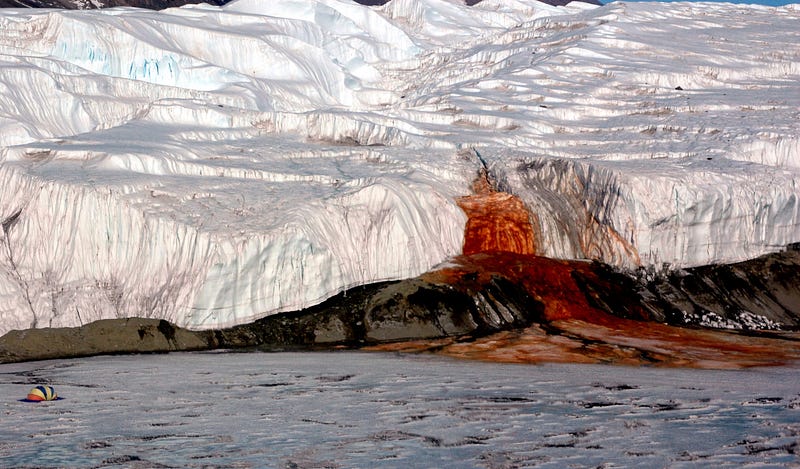
Blood falls in Antarctica. It might not be the easiest natural event to experience due to its remote location. But one can still catch a glimpse of it from either a helicopter ride over the continent or a cruise ship across the Ross Sea. Source: Wiki

The existence of the metal, along with a very high salt concentration is also what stops the water from freezing over. Scientifically, salt lowers the freezing point of water and the heat release is stronger as the frosting takes place.

This turns it into an endless cycle of melting and freezing, causing the river to have a flow current. The unusual temperatures of the water have deemed this to be the coldest glacier on Earth.

4- A crystal shower of light
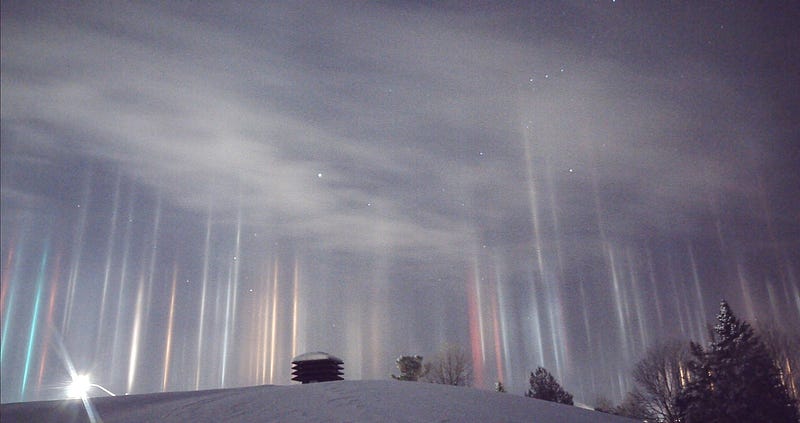
North Bay, Ontario. Source: Wiki

Everyone knows about the Northern Lights in the Arctic, but not many might have heard of the light beams that look like lasers falling out of the sky called light pillars.

This occurs in places of extreme cold as it requires the cold air to crystallize moisture.

As these crystals then gravitate downwards, the surrounding light sources fall on the crystals, dispersing into various colors of thin beams.
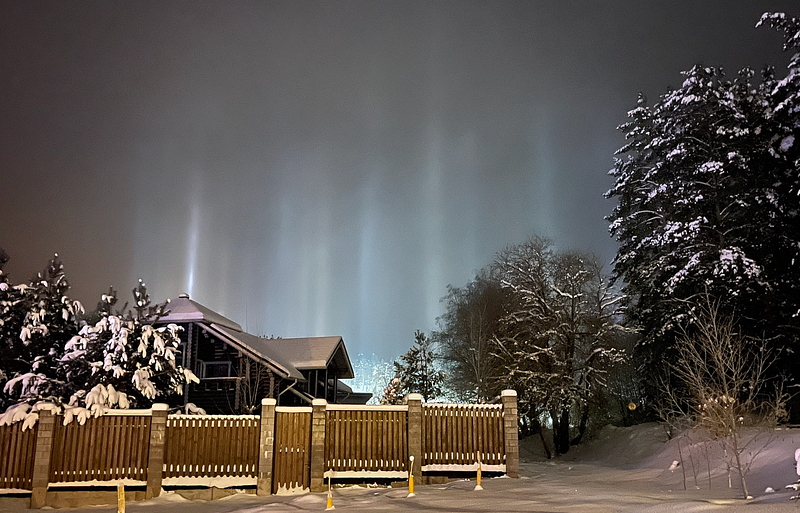
It may apparently look as if the light beams are artificially generated in the background. But this scene shows a very chilly winter night in Raubichi, Belarus. Source: Wiki

This event can only take place in calm, stable weather, with surrounding light available, therefore this is an experience for the winter crowd (ones who don’t mind being nearly frozen to death just to experience the beauty of nature).

5- Snowy sculptures of forgiveness
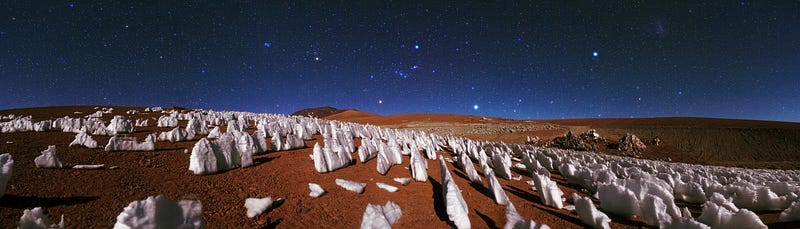
Penitentes in The Atacama Desert, in Chile, South America. Charles Darwin was the one who described them in scientific literature back in 1839. Source: Wiki

Penitentes are natural snow sculptures that usually exist in high-altitude places. They are shaped as elongated, thin blades of stiff snow, packed together with minimal distance between them and facing the general direction of the sun. These blades can be measured up to 5 meters long.
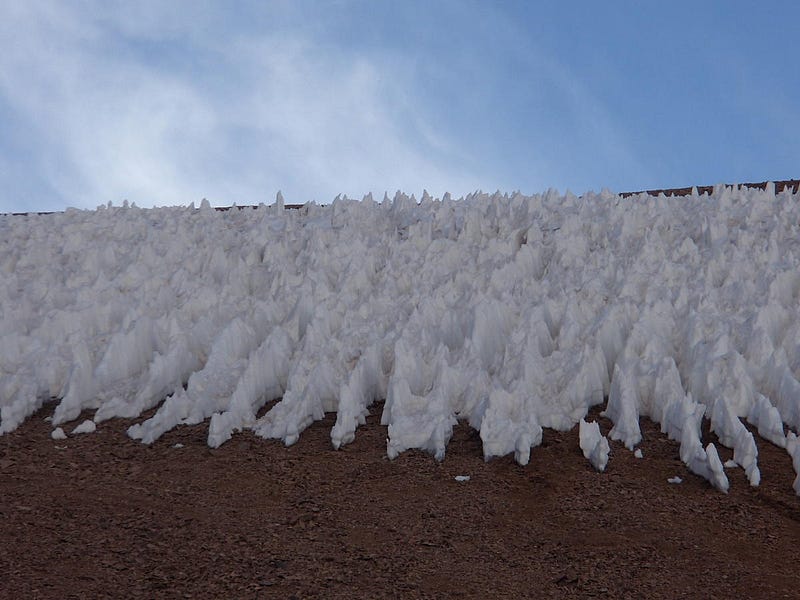
As found on the border of Argentina and Chile. Source: Wiki

The reason they have been dubbed as penitentes (Spanish for remorseful) is due to their appearance — they look like they are kneeling on the sand, begging for forgiveness.

They can mainly be found in the Atacama Desert and are said to be spiky due to the intensity of the sun. The heat turns them directly into water vapors from snow, and the release of heat in the process would create the spaces between these penitentes.

You may be able to visit the penitentes on Earth, but this art of nature is also present on Pluto and on Jupiter’s moon, Europa (that might be a little hard to tick off the bucket list).

Lessons Embedded

Nature is a wonderful blessing, and even though not everyone can experience all of these in life, it is still very intriguing to learn and be aware of such scientific phenomena occurring around us.

To be fair, if anything, we should use these experiences as more reason to protect our environment from the increasingly destructive climate change occurring.

Want to follow up more from me and other amazing writers on Medium?

Hop on the chance to join:

More From Author:

History
Culture
Life
Education
Nature
Recommended from ReadMedium