
5 Dalai Lama Books That Improved My Daily Life
Words of wisdom for meaningful self-improvement
2012 was a year of changes for me.
I was fire from my first job after four years and ended up in front of the union to settle down with my employer. Looking back at the situation, I’m glad it went that way because I was having a hard time at work. It was a nightmare!
My boyfriend left me, and it was my first serious and long term relationship.
I was experiencing nocturnal panic attacks, and I was freaking out with everyone.
My doctor gave me a homeopathic medicine to calm down my nerves but nothing more.
I also went to see a therapist, only to realize I already knew what to do: embrace the change, calm down, and rebuild myself.
So, instead of feeling sorry for myself, I decided to take action and work on being a better version of myself to get out of the bad situation I was living.
I took a break from my friends to focus on myself, and with the little money I had, I bought a lot of books about self-improvement, stress managing, and finding peace.
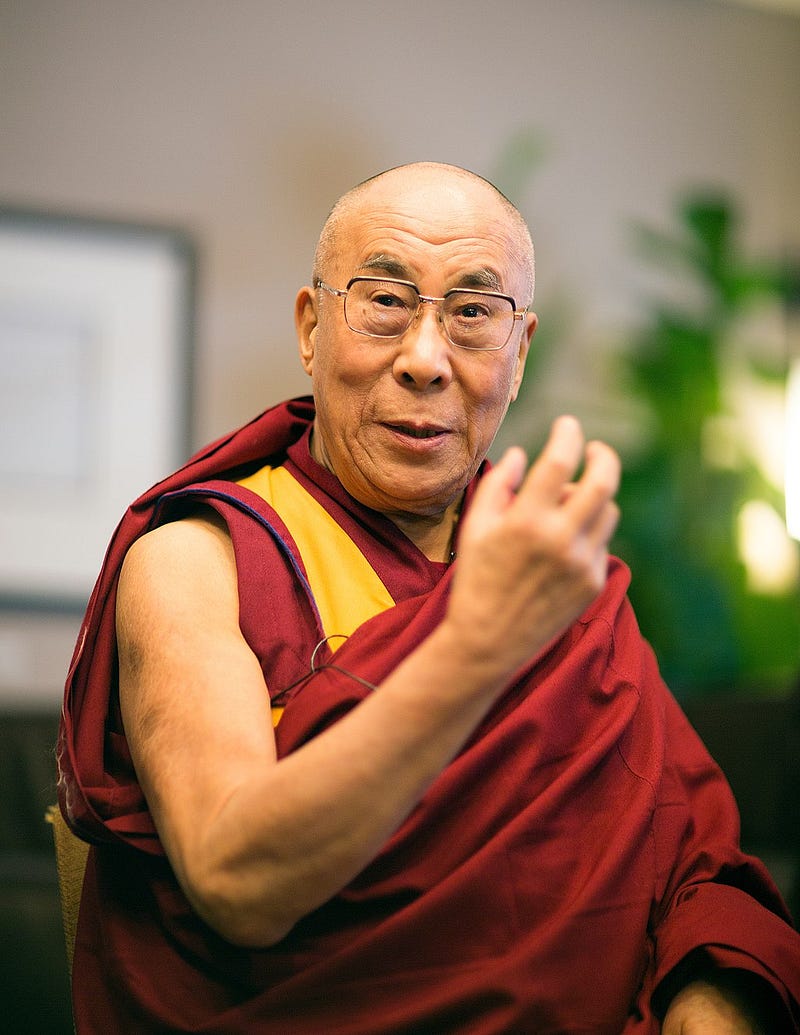
I was scrolling down the library bookshelves when I came across the Dalai Lama’s books. The Dalai Lama is the spiritual leader of Tibet; he has a Lharampa degree, the equivalent to a doctorate in Buddhist philosophy. In 1989, he received the Nobel Peace Prize for his effort and non-violent fight for Tibet’s freedom.
I find the words of the Dalai Lama inspirational. I truly believe they helped me a lot in that moment of crisis. I’ve also decided to add to this list two more books I had the chance to come across later.
Thanks to these books, I’ve discovered a new way to look at my life, its events, and the people around me.
Overcoming Anger, Hatred, and Selfishness
How to Be Compassionate: A Handbook for Creating Inner Peace and a Happier World helped me find a way to overcome anger, hatred, and selfishness through a simple step-by-step guide to positive changes.
By putting in practice simple advice about exercising compassion, I started feeling better within myself and others.
The book is written by Jeffrey Hopkins, an Emeritus of Tibetan and Buddhist Studies at the University of Virginia and the Dalai Lama’s main interpreter for over ten years.
Hopkins created an easy and accessible to anyone book where he collects His Holiness’s insights and practices to find the road to inner peace through compassion and empathy.
The book consists of short chapters where the Dalai Lama covers some of the most common mistakes. For every error examined in the book, there is a reflection or meditation session on how to overcome it. Thinking of living forever and spending time accumulating physical goods is an error; instead, we should meditate on how we can live a happy life, helping others and letting go totalitarianism to focus on our ability to create a positive future.
It goes from handling the rage and challenging situations to seeing the right perspective in things and appreciating life’s gift.
The last chapter consists of a recap of all the previous sections with handy exercises to do daily or whenever feeling lost.
For example, the first exercise is about anger. If you react to someone else’s anger getting mad, the outcome will be a disaster. You should show love, compassion, tolerance, and patience so that peace will remain within you, and the other person’s anger will slowly reduce.
This exercise aims to remind you that compassion is the key to helping an angry person calm down. Sometimes doing it firmly but always reminding you that you are dealing with another human being who deserves to be happy.
I find the last part of the book advantageous to revise concepts without reading the whole related chapter all over again.
“If a person shows anger to you, and you show anger in return, the result is disaster. If you nurse hatred, you will never be happy, even in the lap of luxury. By contrast, if you control your anger and show its opposite — love, compassion, tolerance, and patience — then not only do you remain in peace, but gradually the anger of others also will diminish.” ― Dalai Lama XIV, How to Be Compassionate: a Handbook for Creating Inner Peace and a Happier World
Better Self-Knowledge for Personal Development
How to See Yourself As You Really Are is another book written by Jeffrey Hopkins. He is translating the Dalai Lama’s words into a book that combines explanations, practical exercises, and meditation.
Thanks to this book, I’ve learned to apply Buddhism’s fundamental concept to reach illumination through the combination of love and intuition. Better and deeper self-knowledge for personal development and positive relationship with others.
I had the chance to get to know the real me and have a clearer and more pragmatic view of the people and things around me. I also managed to overcome negative feelings and learn how to prepare my mind for meditation.
His Holiness explains how to move away from a skewed perception of ours and others’ minds and bodies to get free from errors and suffering.
He says that, like for medicine and diseases, the same practice to cure greed doesn’t work for hate. To eliminate these emotions, you need to remove ignorance from your life. Ignorance isn’t the lack of knowledge but the mistaken idea you associate with people and objects. To do so, you must cultivate the gift of intuition.
The book begins putting the base to develop intuition, eliminating ignorance to see things how things really are, and learning the Buddhist concept of “paticca-samuppada” or dependent arising. Everything arises and is dependent on something else to exist; therefore, things appear and yet lack any intrinsic existence. The understanding of emptiness is the only way to eliminate ignorance and painful emotions.
It is essential to start meditating on yourself first to abandon self-deception while focusing on a more realistic and loving perspective.
The last part covers all the topics previously embraced to help reflect on ignorance and train everyone’s mind to see reality and create love.
There are exercises to find out the source of problems, focusing the mind, and cultivating empathy.
How to See Yourself As You Really Are is probably the most challenging book of this list. I had to read it a few times before making mine some of the concepts like the lack of intrinsic existence.
“When our minds are clouded by hatred, selfishness, jealousy, and anger, we lose not only control but also our judgment.” ― Dalai Lama XIV, How to See Yourself As You Really Are
The Expert in the Science of Human Happiness Meets the Dalai Lama
Through the stories gathered in The Art of Happiness, I could learn how western psychology and Buddhist philosophy see and handle in different ways daily matters like relationships, loss, and seeking of wealth.
This book helped me deal with death, pain, and hate. It also taught me how to produce changes in my life to overcome daily obstacles and find a lasting inner peace source.
Thanks to The Art of Happiness, I’ve learned to quit overthinking about the same painful situation over and over again and stop creating an ideal image of someone I know only to feel disappointed when it didn’t match with the real one.
The Art of Happiness combines the knowledge of two authorities in the field of happiness. Dr. Howard C. Cutler, an American writer, and psychiatrist and the Dalai Lama, respectively, represent the eastern and western conceptions of joy.
Dr. Cutler explores topics like the purpose of life, training the mind to happiness, the relationship with others, and suffering.
Despite being similar to other books of the Dalai Lama, in this one, the writer doesn’t offer practice exercises; instead, he describes conversations that occurred over the years with His Holiness.
Once, while visiting the Dalai Lama in Dharamsala, he asked His Holiness about the best technique to deal with others productively and reduce conflicts. The Dalai Lama admitted that there isn’t a unique way to approach others; many factors need to be considered, and saying to be compassionate and full of love for our neighbor isn’t enough.
To improve relationships with other people, we all need to cultivate empathy and try to identify ourselves with others. It’s easier to approach everyone focusing on what we have in common instead of what makes us different.
Dr. Cutler enriches the book with stories from his professional life as a therapist and scientific research about happiness and compassion.
Like the story about an elegantly dressed man who visits him for a first time session, the man was angry at his wife cheating on him. When Dr. Cutler asked him how long they were divorced, the man replied: “17 years in May”.
“Although you may not always be able to avoid difficult situations,you can modify the extent to which you can suffer by how you choose to respond to the situation.” ― Dalai Lama XIV, The Art of Happiness
Bits of Wisdom and Inspiration
I use The Dalai Lama’s Book of Wisdom as a reminder. Whenever I feel lost or need inspiration, I check what the Dalai Lama has to say regarding a specific topic.
This book contains drops of knowledge to read each day to understand better joy, death, pain, empathy, and other human feelings.
It always helps me consider aspects of my daily life from a different perspective.
The Book of Wisdom is an extract from the book Power of Compassion and each page has short paragraphs with Dalai Lama’s reflections about Contentment, Joy And Living Well (Part One), Facing Death And Dying (Part Two), Dealing With Anger And Emotion (Part Three), and Giving And Receiving (Part Four).
“As the great Indian scholar Shantideva has said: ‘If there is a way to overcome the suffering, then there is no need to worry; if there is no way to overcome the suffering, then there is no use in worrying.” ― Dalai Lama XIV, The Dalai Lama’s Book of Wisdom
A Lasting Sense of Happiness
The Book of Joy is a guide to reaching a lasting sense of happiness that helped me go beyond the definition of joy itself. Thanks to the “Joy Practices” I’ve learned useful and actionable tips to exercise daily to be happier.
It also taught me the abilities to handle daily challenges and turn them into growth opportunities. For example, instead of being mad at the person driving slow in the car in front of me, I use the extra time to enjoy some music or look around and see if a new shop opened recently.
Or, if one of my articles gets rejected, I have another chance to turn it into a masterpiece.
This book results from what happens when two winners of the Nobel Peace Prize sit down in front of a birthday cake and start talking about joy.
It is the Dalai Lama’s 80th birthday, and his old friend, Desmond Mpilo Tutu, Archbishop Emeritus of Southern Africa, visits him. Douglas Abrams, author, editor, and literary agent, is invited to moderate the two men’s debate.
They spent five days talking about their idea of joy. What is joy? What are the obstacles everyone has to face to reach it? What are the “bad” feelings that sometimes overcome all of us? Eventually, they developed the mind and heart’s qualities needed to cultivate a lasting sense of happiness (the eight pillars of joy).
“One of my practices comes from an ancient Indian teacher. He taught that when you experience some tragic situation, think about it. If there’s no way to overcome the tragedy, then there is no use worrying too much. So I practice that.” ― Dalai Lama XIV, The Book of Joy
Every time I read a Dalai Lama book or listen to one of his speeches, I’m astonished about modesty and humanity despite the importance of his role.
I remember how he admitted he didn’t have the answer to a question instead of giving a nonsense reply to prove something he wasn’t.
I’m glad I came across his books during a difficult time. I had to face my weaknesses and admit some of my behaviors were ruining my life.
Trying to make the relationship with my ex-boyfriend work again instead of enjoying my freedom was one. I let him go and started appreciating the time with myself and the many things I was free to do without him holding me back.
By putting in practice his teachings, I’ve learned how to let go of negative feelings and cultivate positive ones. Instead of being mad at my friend who lied to me because she was afraid of my reaction, I made peace with her and spent some valuable time having fun together.
Now, every time I face a challenging situation, I try to change my perspective and see what I can get from a tough circumstance instead of blaming the world and commiserating with myself.


