
5 Circus Performers Who Defied the Odds: Stories Behind the Photos (Part 1)
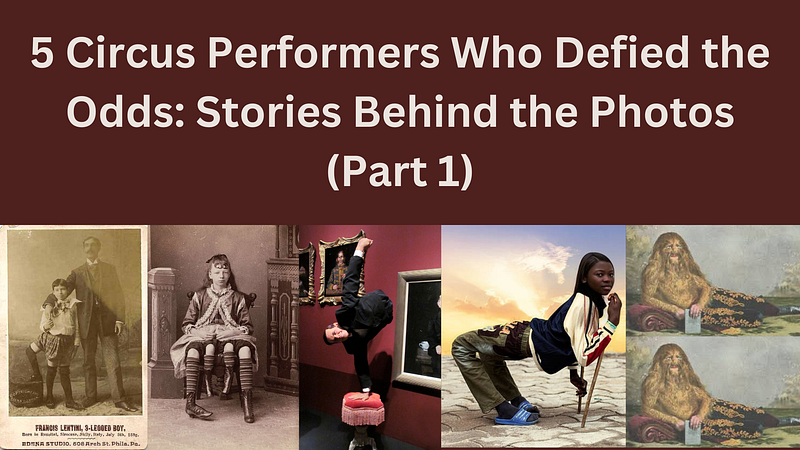
Circuses have long been a source of wonder and amazement, captivating audiences with daring acrobats, exotic animals, and larger-than-life personalities. However, during the 19th and early 20th centuries, one of the most controversial yet popular elements of the circus was the “freak show.” These sideshows showcased individuals with extraordinary physical traits or medical conditions, transforming their differences into public spectacles.
But behind the banners and bright lights were real people with real lives. These performers were more than just curiosities — they were individuals who displayed immense resilience, talent, and humanity in the face of a society that often saw them as little more than oddities.
In this first part of the series, we explore the lives of five unforgettable sideshow performers whose unique stories deserve to be told with compassion and respect.
1. Myrtle Corbin — The Four-Legged Girl
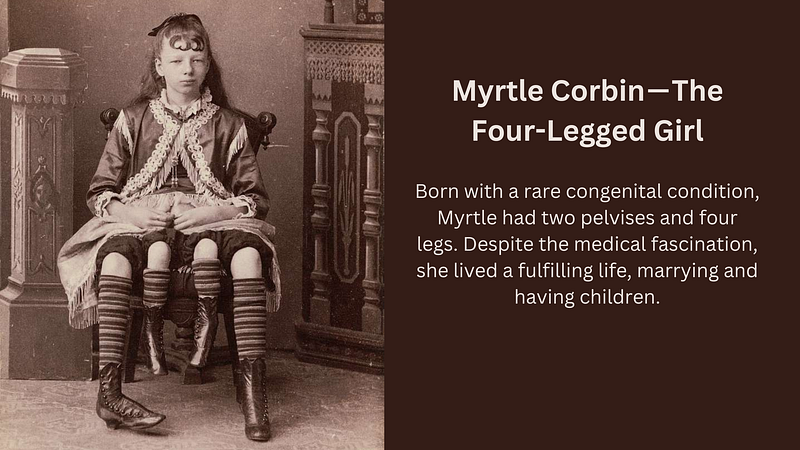
- Born: May 12, 1868, in Lincoln County, Tennessee, USA Myrtle Corbin was born with a rare congenital condition called dipygus, which caused her to have two separate pelvises and four legs, two of which were smaller and non-functional. Despite her unusual appearance, Myrtle’s health was generally good, and she lived a remarkable life.
- Life: Myrtle began performing in sideshows at the age of 13, becoming a popular attraction due to her cheerful demeanor and ability to openly discuss her condition. Audiences marveled at her uniqueness, but her charm and wit often left a lasting impression beyond her physical appearance.
- Family: At 19, Myrtle married a doctor, Clinton Bicknell, and together they had five children. Her story challenged the notion that individuals with disabilities or physical differences could not lead fulfilling, “normal” lives.
- Legacy: Myrtle’s life serves as a reminder of the humanity behind the sideshow banner. She broke barriers and lived with dignity, showing that physical differences do not define one’s worth.
2. Johnny Eck — The Half-Boy
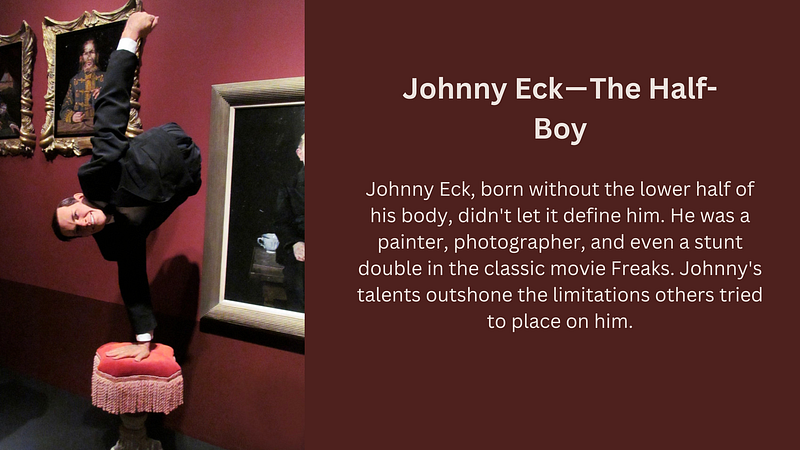
- Born: August 27, 1911, in Baltimore, Maryland, USA Johnny Eck was born without the lower half of his body due to a condition known as caudal regression syndrome. However, his spirit, charisma, and incredible talents made him a legend in the circus world.
- Life and Work: Johnny was far more than his physical condition. He became an accomplished artist, carving intricate models of circus wagons, and a talented musician. He also acted in the classic 1932 film Freaks, where his performance earned critical acclaim. Johnny even worked as a stunt double for roles requiring his unique physique.
- Struggles and Triumphs: Though he faced prejudice, Johnny refused to let his condition define him. He pursued every opportunity, turning his differences into a platform for creative expression.
- Legacy: Johnny’s life is a testament to the power of perseverance. He remains an inspiration for those facing physical challenges, proving that determination can transcend limitations.
3. Lionel the Lion-Faced Man
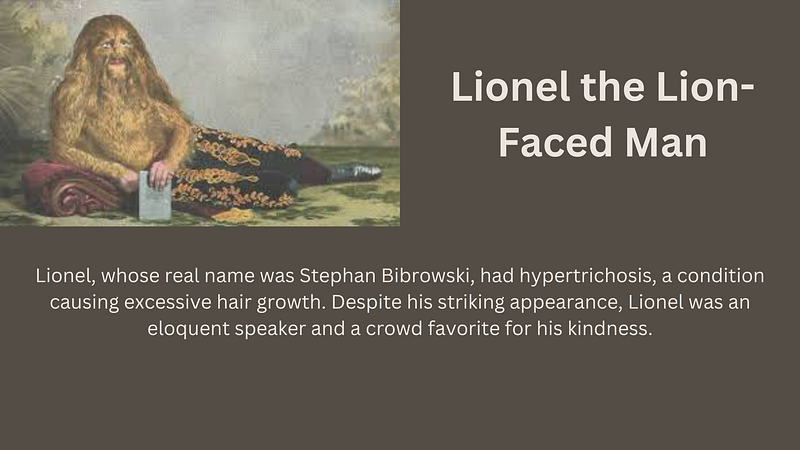
- Born: 1890 in Poland Stephan Bibrowski, better known as Lionel the Lion-Faced Man, was born with hypertrichosis, a rare condition causing excessive hair growth over his body. His face was covered in hair resembling a lion’s mane, giving him his stage name.
- Life: Despite his appearance, Lionel was far from ferocious. He was soft-spoken, highly intelligent, and fluent in several languages. Audiences were often struck by the contrast between his appearance and his kind, eloquent demeanor.
- Work and Achievements: Lionel became a global sensation, performing in some of the world’s most famous circuses, including Barnum & Bailey. Beyond his performances, Lionel educated audiences about his condition and emphasized his humanity.
- Legacy: Lionel’s story highlights how performers of the sideshow era could use their platform to challenge stereotypes and foster understanding.
4. Ella Harper — The Camel Girl
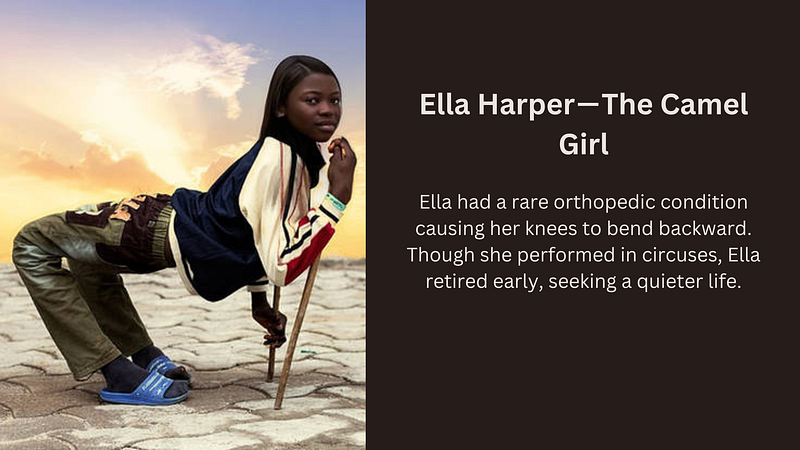
- Born: January 5, 1870, in Hendersonville, Tennessee, USA Ella Harper was born with a rare orthopedic condition called congenital genu recurvatum, which caused her knees to bend backward. This unique physical trait earned her the nickname “The Camel Girl.”
- Life and Work: Ella began performing in circuses as a teenager, captivating audiences with her unusual gait. Despite her success in the sideshow world, Ella chose to leave the spotlight early, seeking a quieter life.
- Struggles: Ella faced constant public scrutiny and likely dealt with physical pain due to her condition. Yet she carried herself with grace and determination.
- Legacy: By retiring from the circus, Ella demonstrated her agency in a world that often sought to exploit individuals like her. Her story underscores the importance of choice and dignity in the lives of sideshow performers.
5. Francesco Lentini — The Three-Legged Man
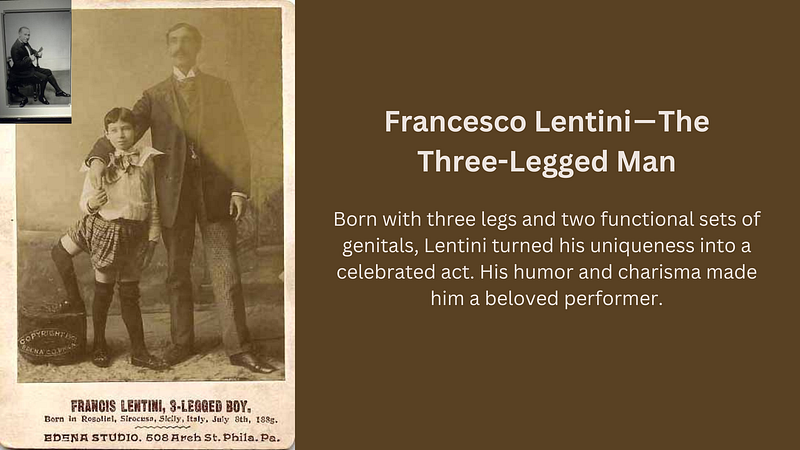
- Born: May 18, 1889, in Rosolini, Sicily, Italy Francesco Lentini was born with a parasitic twin, resulting in him having three legs, four feet, and two sets of functioning genitals. Despite his unusual anatomy, Francesco lived a life full of humor, charm, and success.
- Life and Work: Lentini joined the circus as a young man and quickly became one of the most popular performers of his time. His act often included jokes about his condition, which endeared him to audiences worldwide. He also performed alongside other well-known sideshow stars, creating a sense of community within the circus world.
- Achievements: Francesco married and had four children, proving that he could balance a public career with a fulfilling personal life. His resilience and charisma left a lasting impact on those who met him.
- Legacy: Lentini’s story is a powerful example of how embracing one’s uniqueness can lead to success and acceptance.
Looking Back with Compassion
The stories of these performers are not just tales of physical differences; they are stories of perseverance, talent, and humanity. Each individual faced unique challenges yet managed to carve out meaningful lives in a world that often misunderstood them.
As we reflect on their stories, let us celebrate their strength and individuality while advocating for a world where differences are met with empathy, respect, and inclusion.
Article Audio Podcast Link:
Stay tuned for Part 2 — — — — — — — — — — — — — — — — — — — — — — — — — — — — — — — — — — — — —


