
5 Books To Make You a Better Writer, Whether You’re Already Good or Not
Not the usual picks.

There’s a naked man at the front of the room. He’s overweight. Almost obese. He’s sweating, because of the lights. They’re positioned oddly, the lights casting strange shadows across parts of his face and rotund body.
Everyone is staring, but he’s not looking at them. Just gazing off into space like there’s not a roomful of people staring at his naked flesh.
A woman walks up and down the rows smiling. Good, good, she says. Excellent. I love the play of light and shadow there.
It’s an art class.
They’re learning light and shadow on the human body. Most of us don’t pay much attention to how light falls across the body. Unless you’re an artist. Then you sort of need to. Unless you want to suck forever.
The day before, it was muscle structure, featuring the ripped ballerina with killer legs. Another day, nothing but hands. Hands and more hands.
More Isn’t Better
No one hands an artist a paint box and tells them to just slap paint on canvas every day with the promise that they’ll get better.
More of a bad thing doesn’t magically turn into a good thing. Skill is like that. You don’t develop it by chance.
But somehow, people think it works that way for writers.
Write more, they tell you. Nope.
Doesn’t work that way for art, and it doesn’t work that way for writing either. More writing is just repeating your bad habits. So they’re more ingrained.
You need to learn technique. No different than art students.
And you can’t learn them all at once. Doesn’t work that way. You take one technique and work on it until it becomes part of your toolbox. Which is to say, it becomes habit. Something you do without thinking about it.
Then you move on to another bad habit and unlearn it. Because learning to write is less about what “to” do and more about what not to do.
No one tells writers that.
You don’t need grammar books anymore.
Look up the best books for writers and you know what you find? The lists are full of grammar books. You can buy those if you want, but are you really going to use them? Like, keep them open while you write as a reference?
Is this helpful to you?
In a series of three or more terms with a single conjuntion, use a comma after each term except the last. [Struck and White, Elements of Style)
No? I didn’t think so. You can just as easily use grammarly or a similar tool.
Look, if you’re an editor — as in a book editor — you better know that stuff. But for writing decent stories, meh. Use software.
Know what else? Your reader probably has no clue what a conjunction is. Let’s be honest — half of Americans can’t read above Harry Potter reading level.
But writing well?
Writing in a compelling way that makes people devour your words and actually get to the end of the piece? That’s a different story, and it’s not about grammar. It’s about skill, and skill can be learned.
Here’s 5 books that will make you a better writer. Even if you’re already pretty darn good. And especially if you’re not. Yet.
1. On Writing Well, William Zinsser
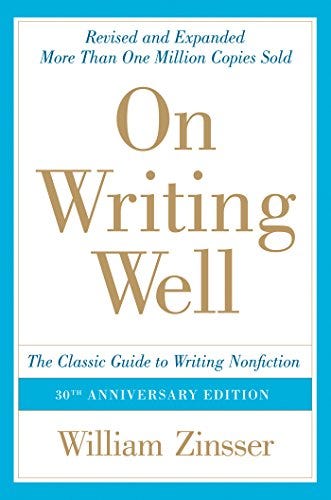
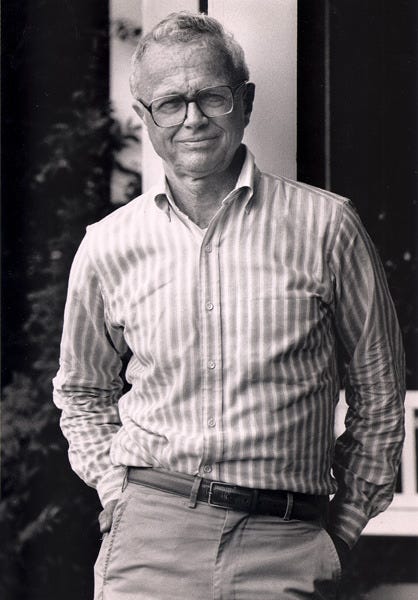
Zinsser started as a journalist for the New York Herald Tribune, and ended up teaching writing at Yale.
As a newspaper man, he lived the life many writers dream of, hopping flights to Hollywood to critique a movie preview or interview a celebrity.
When he launched his writing class at Yale, 170 students applied for the course based on his reputation alone. The class had room for 20 students.
He taught that class so many times, and it was so lauded that he turned it into a book. It’s been revised 30 times and sold 1.5 million copies — one of the best selling books on writing of all time.
Clutter is the disease of American writing…
That’s where he begins. It’s not a new concept. Every writing coach, editor, and publisher sings the same song. Cut the fluff. Eliminate excess words. Or the much hated, kill your darlings.
The difference is that he teaches you how to do that in a way that’s clear and easy to learn. End result? Writing that’s concise and compelling to read.
The book is separated into four sections and honestly, section one alone is more than your money’s worth.
If you only ever read one book about writing, make it this one.
“Clutter is the disease of American writing. We are a society strangling in unnecessary words, circular constructions, pompous frills and meaningless jargon.” ― William Zinsser, On Writing Well
2. On Writing, Stephen King
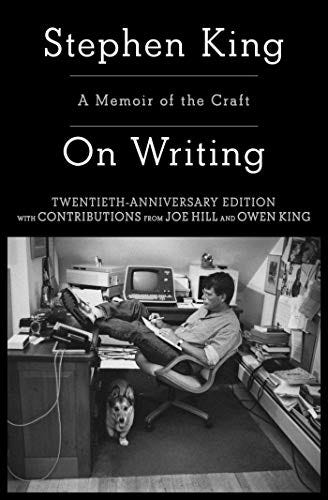

Every Stephen King book is a worldwide bestseller. Every. Single. Book. And while he’ll be the first to laugh and say he’s not exactly writing literature, anyone who has sold 350 million books is worth listening to.
On writing is not written in the style of Zinsser’s book. It’s more of a bizarre memoir peppered and seasoned with writing tips and instructions woven through the stories.
You don’t have to be a Stephen King fan to appreciate the wisdom packed into this book. Nor do you have to be a novelist. It’s about writing. All writing.
He says some pretty harsh things about bad writing that may be hard for some writers to read, but he has some advice that many would benefit from. Here’s an example…
“Writing isn’t about making money, getting famous, getting dates, getting laid, or making friends. In the end, it’s about enriching the lives of those who will read your work…”
Haven’t we all read writing that’s so rambling and self indulgent that it fails to consider what the reader is getting out of it? Like children, gleefully sharing their diary with no thought for the reader or what they take away from it.
“In many cases when a reader puts a story aside because it ‘got boring,’ the boredom arose because the writer grew enchanted with his powers of description and lost sight of his priority, which is to keep the ball rolling.” ― Stephen King, On Writing: A Memoir of the Craft
3. Wild Mind, Natalie Goldberg
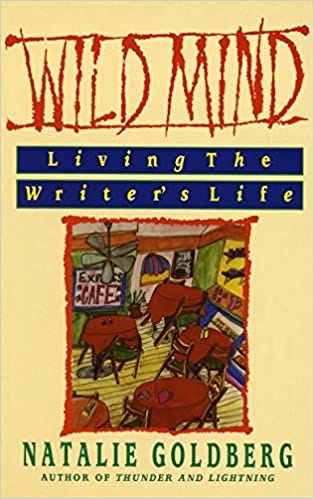
Natalie Goldberg has 4 rules for writing. Except they’re not just for writing. They’re for life. They apply to everything. Even sex.
But especially writing.
If you know her name at all, it’s probably from her bestselling book, Writing Down the Bones. Which is also excellent, I might add.
So why did I select this one, instead of the bestseller? Simple. Because the bestseller is about the technique of writing, which you can learn from numerous other books on writing. Zinsser, for example.
But this one? This one starts where the first one left off. It goes beyond technique and teaches you to tap into what makes you unique as a writer.
Much like Stephen King’s book, it’s a series of stories and essays that will rattle your brain in a very delightful way.
The difference between this and King’s book is that she talks you through free writing exercises that begin with nonsense and lead you to personal realizations that will make your voice more — you.
Paired with the “try this” sections, which are interesting writing prompts, this book is less about technique and more about honing your ability to see the unique angle in the first place.
“Let yourself live in something that is already rightfully yours — your own wild mind.” — Natalie Goldberg, Wild Mind
4. The First 5 Pages, Noah Lukeman
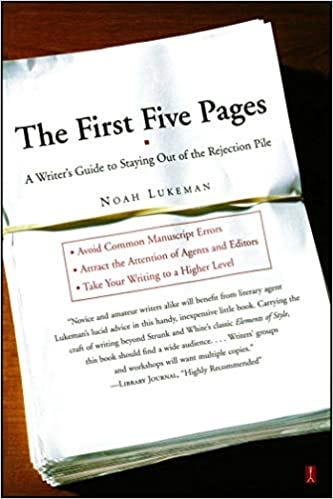
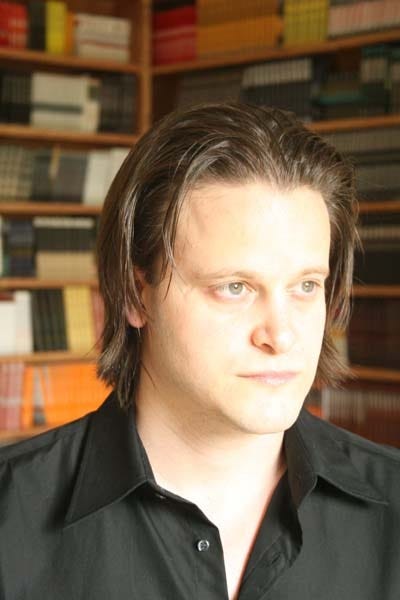
Noah Lukeman is the New York editor who rejects books in under 5 pages. He doesn’t need to read more than that. Bad writing habits show up instantly, he says. Sometimes, it doesn’t even take 5 pages.
He’s worked with Pulitzer Prize winner Tom Hallman, Academy Award Winning actor Gene Hackman, and His Holiness the Dalai Lama.
His best-selling book, The First Five Pages: A Writer’s Guide to Staying out of the Rejection Pile, is part of the curriculum in many universities.
Honestly? This guy has credentials out the wahoo, speaking at Harvard, Columbia, Stanford, Juilliard, and the list is longer than my arm.
This is not an easy read. Not because of complexity, because it’s not complex. It’s dense. So packed with information you need to digest it in bits.
He covers many of the most common writing mistakes, including — A weak opening — Overuse of adjectives and adverbs — Flat or forced metaphors or similes — Melodramatic, commonplace or confusing dialogue — Undeveloped characterizations and lifeless settings — Uneven pacing and lack of progression
And more. In detail. Such depth and detail you cannot help but learn.
If not for the density of the book, I would have listed this as the #2 selection, right behind Zinser’s. I dropped it to #4 simply because this one isn’t for a casual writer.
But if you’re dead serious about writing?
If you ever have any hope of publishing a book — get this one. And devour it. Take notes. It’s that powerful.
“Unfortunately, these days, ‘literary’ writing seems to have become synonymous with ‘showy’ writing, writing that is beautiful but doesn’t tell a story. This is a misguided trend.” — Noah Lukeman, The First Five Pages
5. The Kick Ass Writer, Chuck Wendig
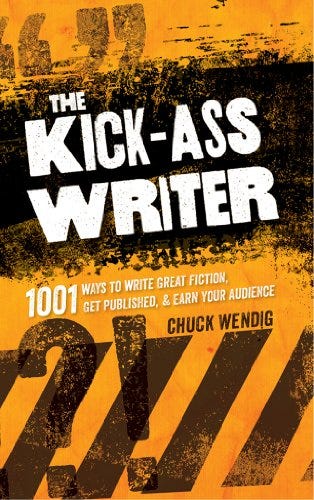
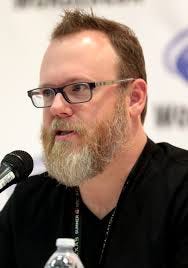
Trigger warning. If you have delicate sensibilities and can’t abide by someone calling most of the books on Amazon dogsh*t, don’t buy this book. It’s minces no words, if you understand what I’m saying.
Otherwise? Buy it.
Chuck Wendig is the bestselling author of Star Wars: Aftermath, which debuted at #4 on The New York Times Best Seller list and #4 on USA Today’s best seller list.
He’s also an author, comic book writer, screenwriter, and probably best known for his Terribleminds blog. Which is — incidentally — NSFW.
This book covers everything from technique to the baggage too many writers haul around with them. It seems that writers are strange beasts stitched together of words, stories and a heaping helping of head-trash and head in the sand. He hits all of those. Hard.
To be a writer isn’t just technique. It’s also about a whole lot of other stuff, like developing thick skin, understanding the crap that happens in the publishing industry and learning that hawking like a carnival barker doesn’t sell books.
He covers all of that, in short vignettes that are quick and easy to read.
It’s the strangest book on this list, but I wouldn’t have added it if I didn’t think there’s a lot of points many writers need to hear.
“Writers are made — forged, really, in a kiln of their own madness and insecurities — over the course of many, many moons. The writer you are when you begin is not the same as the writer you become.” ― Chuck Wendig, The Kick-Ass Writer
There’s a glut of bad advice for writers
Most of it is bad because it’s incomplete and misunderstood.
Write how you talk, for example.
People take that literally. It’s not meant literally. It’s meant to tell writers not to write in the academic style they learned in school. It’s boring. Not fun to read. But, if you actually write the way you talk, it’s going to be filled with fluff and rambling. Most people take 5 sentences to say what they could in two. That’s not fun to read, either.
Write what you know. That’s another one.
Good thing Neil Gaiman knows about dragons and gods and ghosts, then, right? Good thing Stephen King knows murder and mayhem. It wasn’t meant to be taken literally, either.
So where do you learn? From those who walked the path before you.
“If I have seen further it is by standing on the shoulders of Giants.” — Isaac Newton
More on writing skills…
Struggling on Medium?
Get my top 25 tips to grow on Medium at: https://lindac.substack.com/


