
5 Best Cyber Security Books to Read in Summer 2023 to Never Get Hacked!
5 Must Read cyber security books so you can improve your cyber awareness which means that you will never get hacked!
In an era where technology heavily influences our lives, understanding the fundamentals of cybersecurity becomes increasingly vital. Cybersecurity is all about safeguarding computer systems, networks, and devices from unauthorized intrusion, theft, or damage. The escalating frequency of cyberattacks makes it absolutely essential to learn how to defend our personal and professional data against hackers and cybercriminals.
For those new to cybersecurity and keen to learn, a wealth of resources are available, with books being one of the most accessible and comprehensive. This article outlines the Top 5 Must-Read Cybersecurity Books for Summer 2023. These books lay the groundwork for cybersecurity knowledge, focusing on key aspects like the nature of cyber threats and protective measures to safeguard your information. They serve as an ideal stepping stone for anyone drawn to cybersecurity, providing a solid starting point for a potential career in the field.

1 — Permanent Record
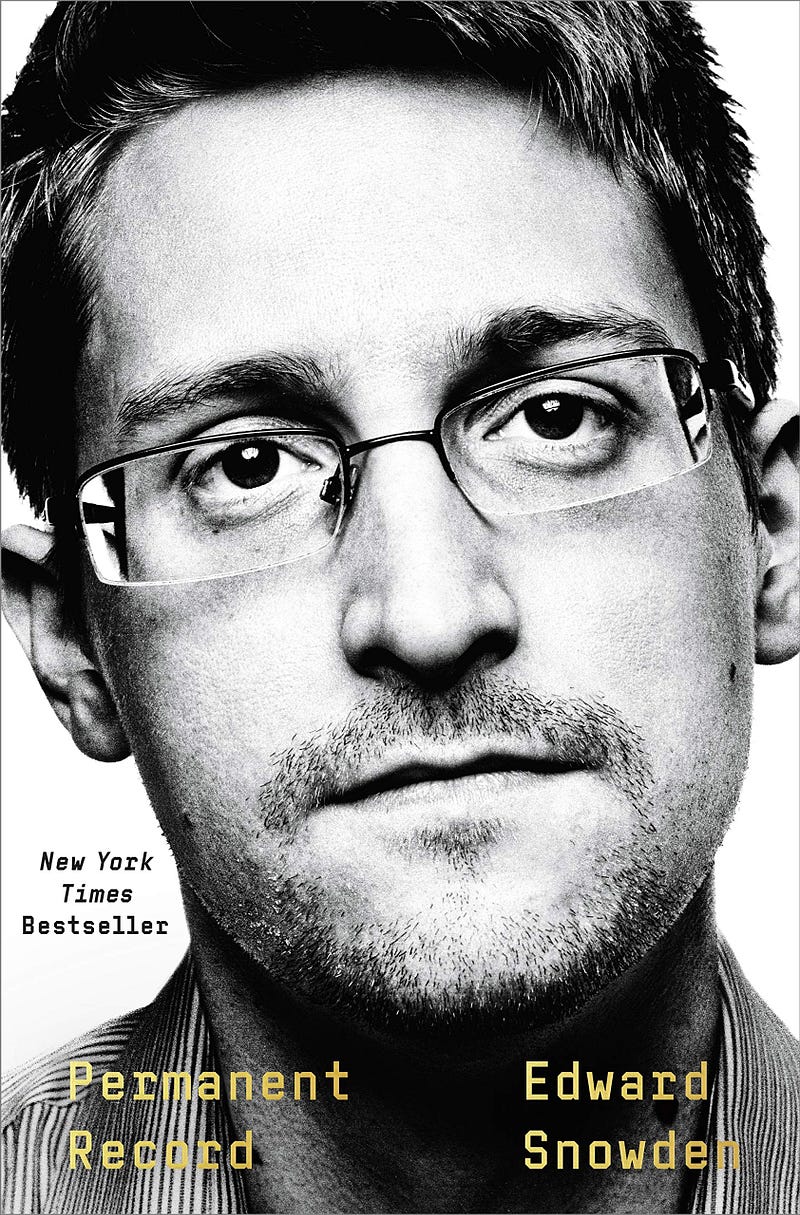
“Permanent Record” is an autobiography by Edward Snowden, a former contractor for the United States government, who leaked highly classified information from the National Security Agency (NSA) in 2013.
The book provides a detailed account of Snowden’s life, beginning with his upbringing in a family with a long history of federal service, his early interest in computers, and his career in the intelligence community. Snowden initially believed in the U.S. government’s mission to protect American citizens and its democratic values. However, as he rose through the ranks of the intelligence community, he became increasingly disturbed by the surveillance state’s vast and intrusive reach he saw being built.
The narrative’s crux is Snowden’s decision to leak classified documents revealing the extent of the global surveillance programs run by the NSA and its Five Eyes Alliance. Snowden meticulously planned and executed the data extraction and subsequent leak, knowing that it could lead to severe personal and legal repercussions.
After releasing the documents to journalists, Snowden was forced to seek asylum and eventually found himself in Russia, where he remains at the time of the book’s publication.
“Permanent Record” is as much a personal narrative as it is a critique of government overreach and a call to arms for privacy rights and digital freedom. Snowden’s actions continue to be the subject of controversy, painting him as a traitor to some and a hero to others. This book gives Snowden a chance to explain his actions in his own words.
This was already sold out twice, so hurry up to get your copy (Amazon) before it is too late!
2 — Hacking: The Art of Exploitation
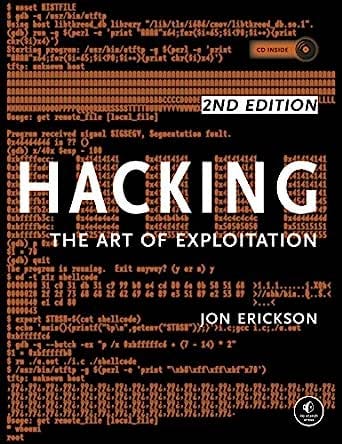
“Hacking: The Art of Exploitation” is an influential book written by Jon Erickson that provides a comprehensive overview of the hacking universe from a practical standpoint. The book’s key concept is that the best way to prevent hacking is to understand how hackers think and operate.
Erickson starts by defining what hacking is, dispelling common misconceptions, and showing that hacking is much more than merely breaking into computers. The author argues that it’s an art and mindset, a way of leveraging systems’ vulnerabilities for both malicious purposes and finding creative solutions.
The book further dissects hacking into key areas, including networking, coding, cryptology, and exploits. It explains networking concepts in detail, covering protocols like TCP/IP and how they can be exploited. It also provides an in-depth introduction to programming, primarily using C language, emphasizing how buffer overflows and memory corruption can lead to system exploits.
Cryptology and its role in hacking are presented as well. The reader learns about different types of encryption, how they work, and the strategies to crack them. Similarly, the book discusses various types of exploits (like shellcode exploits and format string exploits), demonstrating how they can be used to gain unauthorized access to systems.
What makes “Hacking: The Art of Exploitation” stand out is its hands-on approach. It comes with a LiveCD providing a Linux programming and debugging environment. This ensures that readers can practice the techniques and concepts discussed without causing harm to their systems or breaking the law.
Erickson’s book is not intended to encourage illegal activities, but rather to educate individuals about the intricacies of hacking. By understanding how hacking works, people can better secure their systems and develop more robust software.
Get your copy (Amazon) before that it’s too late!
3 — Social Engineering: The Science of Human Hacking
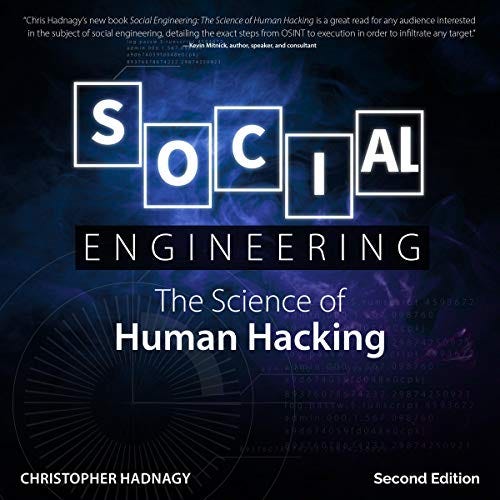
“Social Engineering: The Science of Human Hacking” is a comprehensive guide by Christopher Hadnagy that delves into the psychological aspects of social engineering.
Hadnagy explains that social engineering isn’t merely about understanding technology but requires a deep understanding of human psychology to manipulate individuals into divulging sensitive information or performing actions that compromise security.
The book is divided into distinct sections, each dedicated to a different facet of social engineering. It begins by discussing the fundamentals of social engineering, followed by a detailed breakdown of different human behaviors and cognitive biases that can be exploited. It also explores various manipulation techniques and the influence principles that allow social engineers to effectively deceive their targets.
Hadnagy uses real-life case studies to illustrate these concepts, making the information tangible and applicable. He provides practical advice on how to identify and prevent social engineering attacks and discusses professional applications of these techniques in fields like sales, marketing, and negotiation.
Despite its focus on manipulation, the book emphasizes the importance of using these skills ethically, both for defense and in professional contexts. It serves as a reminder that the human element is often the weakest link in security, advocating for education and awareness to minimize the risk of social engineering attacks.
Get your copy (Amazon) before it is sold out!
4 — Cracking the Coding Interview: 189 Programming Questions and Solutions
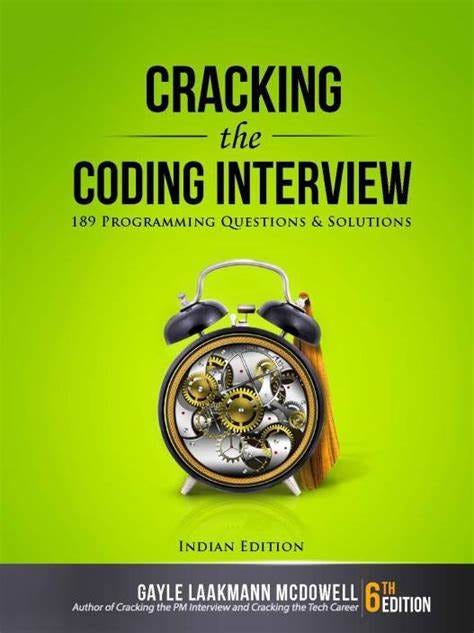
“Cracking the Coding Interview: 189 Programming Questions and Solutions” by Gayle Laakmann McDowell is a comprehensive guidebook aimed at software engineers preparing for technical interviews, especially at major tech companies.
The book features 189 programming interview questions, along with detailed solutions and strategies to tackle them effectively. It is divided into two major parts. The first part focuses on the interview process, covering topics such as how to prepare for behavioral and technical questions, how to conduct oneself in an interview, and negotiation tips.
The second part delves into specific technical content. It includes data structures, algorithms, system design, databases, and more. Each section includes a brief review of key concepts, followed by an array of problems that range in difficulty, each with a thorough solution.
Additionally, McDowell includes anecdotes from her own experience as a software engineer at Google, Microsoft, and Apple, giving readers insight into how these major tech companies operate and what they look for in prospective employees.
The book emphasizes the importance of problem-solving skills, rather than merely rote memorization of algorithms. It is designed to be a self-contained tool for learning and refining coding and interview skills, helping readers land their dream jobs in the tech industry.
Get your copy (Amazon) before it is sold out!
5 — CompTIA A+ Certification All-in-One Exam Guide
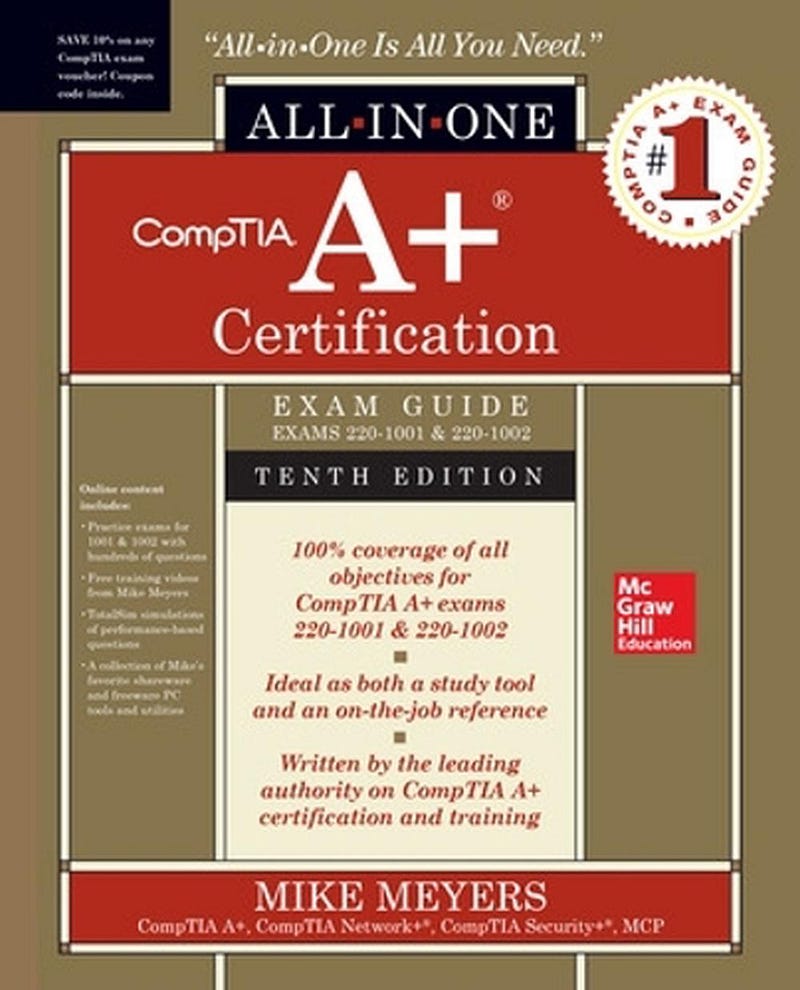
The “CompTIA A+ Certification All-in-One Exam Guide” (Tenth Edition) by Mike Meyers is an essential resource for those aspiring to obtain the CompTIA A+ certification, a widely recognized and respected credential in the field of information technology (IT).
The book is designed to be a comprehensive and user-friendly self-study tool, providing everything a reader would need to pass both the Core 1 (220–1001) and Core 2 (220–1002) A+ exams. It is structured around the exam objectives and covers all the required topics in detail. These topics include mobile devices, networking technology, hardware, virtualization, cloud computing, network troubleshooting, installing and configuring operating systems, expanded security, software troubleshooting, and operational procedures.
One of the book’s unique features is Meyers’ engaging and accessible writing style. He explains complex topics in a straightforward and easy-to-understand manner, making it easier for beginners to grasp the content. The book includes helpful learning features such as practice exam questions, step-by-step exercises, exam tips, and end-of-chapter reviews.
Moreover, the book comes with online resources like performance-based simulations and video training to better prepare readers for the real-world problems they might face in their IT careers.
By offering both a theoretical understanding and practical skills, “CompTIA A+ Certification All-in-One Exam Guide” (Tenth Edition) is a valuable resource for anyone aspiring to break into the field of IT.
Hurry up, and get your copy (Amazon) before it is too late!
Get 1 Month FREE of Audible, and enjoy bestselling audiobooks, Originals, podcasts, and more: Amazon Audible (30 days FREE !)
To support me as a writer, I may get a commission from the sales made through the Amazon-affiliated links in this article.


