
5 Alarming Signs Your Sleep Quality Needs to Get Better
If you are concerned with your sleep quality, recall whether you do any of these things.

Feeling tired in the morning that even coffee can’t save your day? What’s more, falling asleep in front of your boss in a meeting? (Ouch, it must be painful.)
How poor sleep messes with the brain results in bad physical condition, exercise performance, mood, and mental health.
Unfortunately, getting a healthy night’s sleep isn’t always easy in our modern, fast, and stressful world. Chances are you know when you did not sleep well. However, discovering why it happens is way more challenging.
If you are concerned with your sleep quality, recall whether you regularly do any of these things.
You Can’t Sleep Without Your Phone
Nowadays, people are obsessed with their digital devices.
Researchers revealed that, on average, smartphones are checked every 9 minutes in the waking time. Otherwise, people get anxious.
It could be a reason why 90% of youth admit to sleeping with their phones. Are you one of them? I am, unfortunately. My phone is the last thing I see in the evening and the first one I take in the morning. Whenever I put it away, I experience discomfort. My mind is afraid of missing notifications and the latest messages.
Frequent phone usage does not only lead to addiction; it can also cause sleep deprivation. It turns out that the blue light emitted by most digital devices suppresses the secretion of melatonin. One of the main functions of this hormone is to make you sleepy. The longer you stare at a bright screen, the less melatonin is produced by your body. As a result, you are no longer sleepy!
“Light at night is part of the reason so many people don’t get enough sleep. While short sleep is linked to a higher risk for depression, diabetes, and cardiovascular problems.“ — says Stephen Lockley, a Harvard sleep researcher.
If you, too, experience evening phone addiction, it is an alarming sign to start changing your habits.
What you can do
Device addiction leads to anxiety, while anxiety does not let your body relax and fall asleep quickly.
Scientists suggest refraining from mobile phone usage at least an hour before sleeping. It is a great but highly unwelcome tip for many avid phone users. Here is what I do to minimize the adverse phone impact before sleeping:
- I turn on the night mode in the evening.
- I reduce the screen brightness to a minimum.
- I read calm and relaxing literature instead of scrolling my social media feed.
- I wear blue light blocking glasses whenever I stare at my laptop or mobile phone for a long time.
You Often Dream About Your Job
My boyfriend is a software engineer who loves coding late in the evening. He says, “when a muse comes, you have to catch it.”
Later, however, he told me he often dreams about the job. His mind continues creating imaginative lines of code while he is sleeping.
That’s not a sign of a healthy sleep.
If you, too, dream about your job, it’s time to make some changes to your daily routine.
What you can do
When your brain is engaged in deep work, it cannot immediately stop. Even if you finish working in the evening, your brain will continue processing information while you sleep.
Give your brain some time to rest after a long day at work. Help yourself to prepare your mind before you get to sleep.
Here is what I do to stop dreaming about my work that might help you too:
I aim not to work after 7 pm under any circumstances. I still have a few hours to do something before I go to my bed. I tend to spend this time talking to my family, playing Monopoly with my boyfriend, watching short comedy sketches, reading, cooking, or writing.
I help my brain to relax by switching from energy-consuming tasks to shallow work.
It Is a Challenge to Fall Asleep
It’s 11 pm. You scroll through your social media feed because you are not sleepy yet. Suddenly, you realize it’s already half past midnight, and you have to get up in 6 hours.
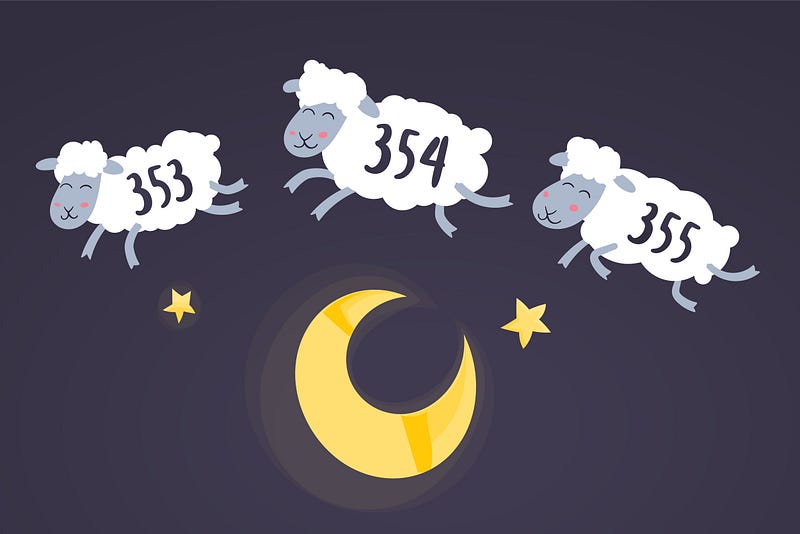
You put your phone aside, close your eyes, hoping to fall asleep shortly. You count sheep, change your position in bed, but it does not help.
You are in despair. You whisper:
“Dear 3am, we have got to stop meeting this way… I’d much rather sleep with you.”
However, you are still awake!
Does it sound familiar? I bet you’ve gone through it at least once in your life. Various research studies state over 50% of people suffer from insomnia every day due to multiple reasons.
It can be very annoying if you often can’t fall asleep easily. However, it is an early sign that something needs to change.
What you can do
Consider your body as a programmed machine. It can not function without fuel (food). It also requires rest and maintenance to serve you well. If its biological rhythm is broken, your body will not understand when it should rest or be active.
In other words, if you regularly go to sleep at a different time of the day, your body cannot develop a stable sleeping routine.
Try to define and stick to a particular wake-up and fall asleep time. It will help your body understand when it is the right time to produce hormones responsible for falling asleep.
You See Nightmares
Dreams are the result of your brain’s active processing of the recent events in your life. This is how your brain decides what information will go to short-, and long-term memory.
Your mood and mental state affect the quality of your sleep. Scientists believe nightmares occur to those people who often struggle from depression and stress.
It’s challenging for people to get rid of negative thinking. Therefore our brains continue to reflect on that while we sleep.
I discovered a surprising pattern myself. Whenever I watch horror movies, deep philosophical movies, thrillers, I often dream nightmares. Consequently, the quality of my sleep significantly deteriorates.
No, I am not a weirdo (at least I hope so). This is how Sally Winston, a psychologist explains this phenomena:
“[When watching horror films], your heart pumps and the adrenaline flows, and your attention narrows in, even as you know you are at home or in the theatre and there is no real danger.”
What you can do
Ventilate your room before you get to sleep. Make sure it’s not too cold or too hot for you. It is believed that the room temperature directly impacts the quality and the depth of your sleep.
Try to opt-out from watching violent and dramatic content right before going to bed.
And remember this:
The freakiest nightmares you’ve ever seen are made up by your brain. They are not real.
You Wake Up Several Times At Night
If you happen to wake up one to two times at night, it’s an alarming sign your body can’t relax and fall asleep.
Scientists say that people who consume alcohol late in the evening, drink caffeine, have a poor sleep environment or specific health issues are most likely to have interrupted sleep.
If you can’t get back to sleep easily, you won’t get enough sleep to feel fresh and full of energy the next day.
What you can do
It’s essential to figure out what makes you wake up in the middle of the night and how you can eliminate distractions.
Perhaps your partner snores next to you, or your phone vibrates at night. It can be anything.
No one will protect your sleep unless you decide to help yourself.
Try to close your bedroom door and windows tightly. It should help you to minimize the external noise and preserve the silence needed for a healthy sleep.
In case you sleep with your phone, consider turning the “Night Mode” on. This way, your phone will not bother you with notifications at night.
If you can’t easily get rid of external noise, try earplugs. I’ve experimented with them a few times, and it indeed helped to block noise. However, keep in mind that earplugs have to be carefully selected. Otherwise, you might feel uncomfortable.
Your Body Is a Magnificent Gift Granted by God. Respect It. Love It
We are all given one body to live with. It's our responsibility to take care of this precious gift because it is so brittle and irreplaceable.
Sleep is essential for our bodies; we cannot live without it. Our wellbeing, memory, learning abilities heavily depend on sleep quality.
Puffy eyes, drowsiness, distraction are outer consequences of sleep deprivation. The inner ones can do much more harm to your brain.
Young people often compromise sleeping to do whatever they like. What they probably don’t know yet, is the detrimental effects of sleep deprivation. I wish I knew these things when I was in my early 20s, working night shifts several days a week.
When your physical body is healthy, you are full of life energy; you get a desire to live and create. You shine. You are happy!
Mind Cafe’s Reset Your Mind: A Free 10-Day Email Course
We’re offering a free course to all of our new subscribers as a thank you for your continued support. When you sign up using this link, we’ll send you tips on how to boost mental clarity and focus every two days.