
5 AI applications now possible thanks to GPT3.5 and Large Language Models.
There are a few applications that used to be hard to tackle programmatically. The main reason was computers’ limited ability to semantically analyze text and extract, from that text, actionable information.
With #gpt3 and its variants (#gpt3.5 & #chatgpt), we can now envision new revolutions in almost all domains. Here are five disruptive applications that will change user’s experience dramatically!
The limit is your imagination.
Note: those are real-world applications I’m currently working on with clients. If you cant to know more feel free to ping me 😉
(1) AI Generated Newspapers: A Future of Objectivity?
Context: The concept of an AI generated newspaper may seem like a far-fetched idea, but with the rapid advancement of technology such as #gpt3 (that you might know about more through #chatGPT), it may not be as far off as we think.
Today’s newspapers, and news in general, sound often more as politicized opinions than actual news.
Scenario: Now, imagine a newspaper that is completely objective, presenting only the facts without any bias or personal opinions. This could potentially revolutionize the way we consume news and information, as it would eliminate the subjectivity that is often present in traditional journalism.
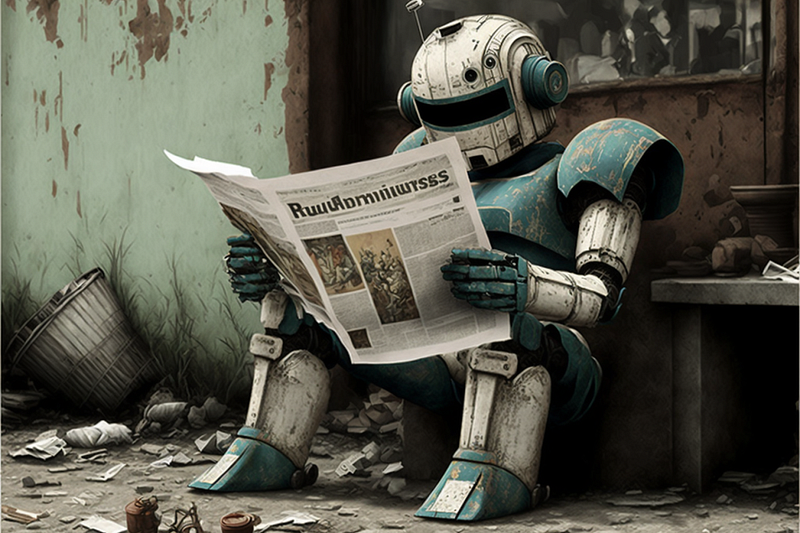
One major advantage of an AI generated newspaper is that it would be able to provide a comprehensive overview of a particular event or topic. By gathering information from a wide range of sources, the AI could present a balanced perspective that takes into account multiple viewpoints. This would allow readers to make informed decisions and form their own opinions based on the facts rather than being swayed by biased reporting.
Note that I could also be misused to spread fake news; we’ll still need to use our critical mind to find and stick with the trustworthy newspaper.
(2) E-commerce: let a AI assistant shop for you?
Context: E-commerce remains a cumbersome experience. You have to know what you are looking or hope that your taste matches the general audience of the platform (#bestof recommendation).
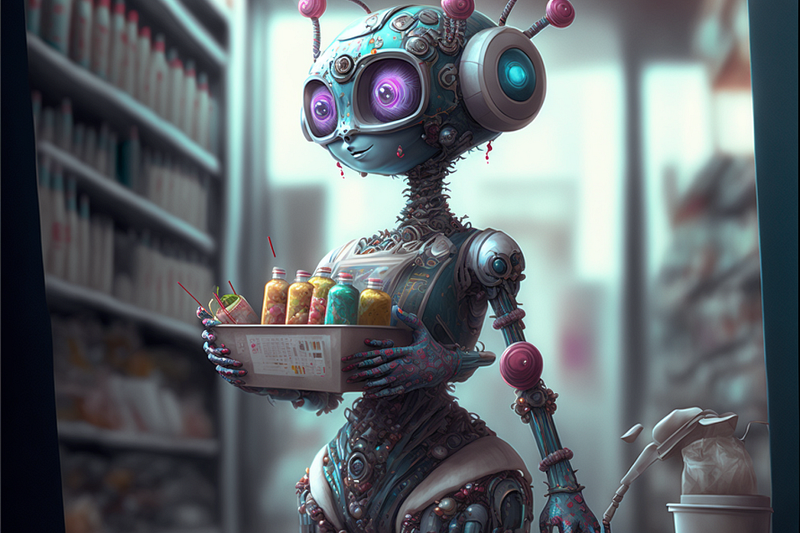
Scenario: Now imagine this scenario: you open your fridge, and you find a few ingredients. You’re not inspired and would like to go shopping for more. Now,
- You get your phone
- Ask the following: “hello, I have these ingredients [fill in the blank with your ingredients], can you recommend a recipe for 6 people ?”
- The AI suggests a few recipes.
- You like one and reply: “great, can you add the missing ingredients to my cart please?”
- And it does exactly that!
- Now, we’re not done yet ; it knows that your chosen recipe could benefit from some white wine, and it automatically suggest a few matching bottles. You add a couple of them to your cart, hit buy, and it’s delivered home.
Just magic!
Of course, you can imagine this scenario while shopping for decorations for your home, or shopping to complete an outfit, and so on!
That used to require a human assistant; now it doesn’t anymore. We should start seeing such features appear in e-commerce in the coming months.
(3) Customer support assistant, multi-lingual and versatile by design
Context: We’ve all experienced the frustrating interacting with a chatbot. You’ll ask it a couple of questions trying to find the right keywords to get what you need, fail, and try to find a direct contact with a human.
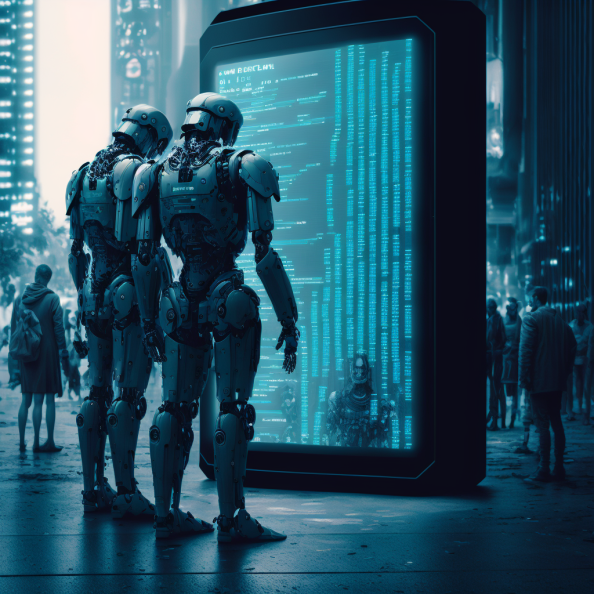
Scenario: Let’s imagine you are running an accounting startup. Part of the job is to answer users about their specific taxation and accounting questions. That’s a hard problem that usually requires and expert. Unless… you have a knowledge base you can feed to a large language model. Now that model can draft an answer, provide sources backing up the answer, and either reply to the client directly, or send it to a human support agent for validation first. No need to bother your expensive experts anymore; they focus on difficult problems and let the AI customer support service handle the rest!
(4) Coding partner, fix, expand, translate, explain, everything you need to supercharge your productivity.
Context: This isn’t a model I’m working on per say; I’m rather helping clients integrate these new tools into their process. Whether it’s via gpt3 or copilot, these new coding assistants are very valuable for a wide range of tasks.
Scenarios: To name a few,
- Q&A, Inject a documentation into GPT3 to be able to summarize it and ask it specific questions (parameters, apis, boilerplate, etc.)
- Analyze legacy code and refactor it quickly based on a new framework or version
- Expand code to include additional parameters and features.
- Document automatically code
- Generate unit tests based on existing code
And the list goes on. The limit is your imagination.
(5) Personalized comics: the unique gift that tells a story!
Context: In 2022, we saw a tipping point in two main areas. Text generation models, and text to image generation models. Combining both opens the way to very powerful applications.
Scenarios: You like the classics, but you’d love to adapt them to your kids or friends. Now you can.
- Ask GPT to rewrite part of the story based on a custom plot. You’ll have to provide the language model with some bullet points
- Now generate prompts for the story and feed them to Dalle, Midjourney or Stable diffusion.
- You’ll probably need some editing and a few iterations to get things right. But imagine how unique and beautiful that book would be. Best gift ever!
Note that these models can be used for professional purpose as well. Canva already integrated stable diffusion for instance. Making text to image generation available to everyone in one of the most popular platform.
2023 will be fascinating with AI applications booming on all areas!
If you liked this post, please consider supporting us: 🔔 clap & follow 🔔


