
Brexit Has Made Inflation Worse for Britain
Everyone is feeling pain, but the UK is unique in its suffering
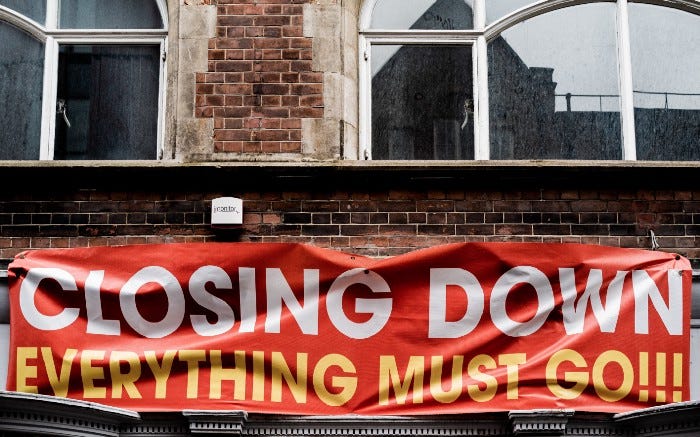
From the start, the United Kingdom’s exit from the European Union has been a financial and political disaster. And now, inflation has increased more there than in the United States and the European Union. Boris Johnson, who rode the Brexit wave into power, was forced from office as Prime Minister. But the mess he left behind continues to fester.
Inflation is a global phenomenon. COVID-19 has broken supply chains around the world. Petroleum is a global commodity. Disruptions in the supply of oil and gas have been a particular problem for the nations near the war in Ukraine which have grown to depend on Russian supplies. None of this has helped the British economy. But the UK has suffered disproportionately. That is because of its divorce from the European Union.
The United Kingdom in Context
Across the EU, energy prices have pushed inflation across the Eurozone to a new high of 8.6% in June, up from 8.1% in May. Energy imports have had a 41.9 percent annual price increase, making inflation especially high for the Baltic States of Estonia (22%), Lithuania (20.5%), and Latvia (19%). Baltic problems have raised prices across Europe as a whole. But they are an exception. Finland has long pursued energy independence from Russia. As a result, it has an inflation rate on par with the European average. Germany (8.2%) is already showing a small decrease in inflation. France (6.5%), which has long emphasized nuclear power, has only suffered the problems with supply chains during the pandemic.
Britain is less dependent on Russian oil. Yet consumer prices have risen 9.4% over the last year, a new forty-year high, much more than Europe as a whole. The Bank of England is projecting inflation to peak at 11% this year. To make things worse, the Pound is falling.
In the United States, a surging Dollar abroad has reduced inflation pressure on imports. In the UK, the Pound has fallen 11% against the Dollar this year (it was a bit under $1.20 last week). Good for American tourists and imports, bad for Britain. The Pound has also retreated against the Euro since the spring. These exchange rates reflect a lack of global confidence in the British economy.
Brexit and British Economic Failures
This is because of how Britain is still dealing with its unique supply chain problems after Brexit. Brexit already complicated longstanding trade arrangements. Trade barriers introduced after leaving the Union led to a 6% increase in UK food prices between December 2019 and September 2021. This is before the more recent war-related difficulties and besides the issues related to COVID-19. U.K. households are on their way to suffering the worst living standards squeeze since the 1950s.
The UK also risks the next wave of US investment unless it irons out its post-Brexit trading relationship with the EU. Heightened political and regulatory risk has slowed the expansion plans of American companies based in the UK. Businesses want stability. But because of its international trade implications, the UK government has threatened to tear up the Northern Ireland protocol, the foundation for peace in Northern Ireland. This raises the risk of any post-Brexit trade deal with the EU collapsing. And that casts doubts over how British firms and American corporations with operations in Britain will trade with the Continent.
Also, the EU and UK have yet to reach a deal to recognize each other’s financial services regulatory regime. These arrangements are necessary for continued success in the important British financial sector. And corporate tax rates will rise from 19 percent to 25 percent next April. Employers already have to pay a 1.25 percentage point national insurance rate. The UK tax burden will hit the highest level since the late 1940s, to finance greater healthcare spending for an aging population. Skilled workers have grown rare, due to the UK’s more restrictive post-Brexit immigration system. Given all these factors, the transatlantic confidence index has dropped half a point, from 7.8 to 7.3, in the past year.
Financial Policy
While financial policy has a limited and lagging effect on the rate of inflation, this is another area where the UK is at a disadvantage. When it left the EU and the Eurozone, Britain also removed itself from the European Central Bank (ECB). Like the Federal Reserve in the United States, the ECB will raise its interest rates for the first time in over a decade in response to inflation. Until this week, the ECB looked like it would raise interest rates a quarter-point. Now, many sources report officials are considering a half-percentage point move. The smaller option would keep key interest rates negative, while the larger one would take them to zero. The ECB deposit rate has been negative since 2014. A shift to zero percent removes the motivation to make loans and reduces money in circulation, which should affect inflation. But they must balance it against the risk of recession. It’s a difficult balancing act, and Britain has no say in what the policy will be.
The Bank of England’s monetary policy committee meets in two weeks. It has also signaled it may be ready to join the global trend of aggressive interest rate increases. The bank’s governor said this week that a half-percentage-point rise is on the table. Whether England will have the political nerve to pull that trigger remains to be seen. Conservatives thinking about the next election may be unwilling to do it.
The Price of Maintaining a Fantasy
Factors unique to Britain make the fight against inflation there more difficult than it is in America or the European Union. A fixation on the illusion of economic sovereignty hampers moves to reconcile Britain to the realities of the economies of Europe and the world. Now, even if Britain were to attempt to rejoin the European Union and improve its economy, it seems unlikely the EU would want it back. Britain petitioned the European Communities for admission in 1963 and 1967, only to have that petition blocked by France. When it finally got in, in 1973, deep nostalgia for the Empire helped push Britain to become the only nation to leave the EU, in 2020. The EU now considers British membership more trouble than it’s worth, and since unanimity among current members is necessary to allow it back in, it will not happen.
Britain is the victim of its own illusions. Nobody wants to hear they are a second-class economy. But in economics, as in so many other areas, when the numbers disagree with your feelings, it is time to put away your feelings and go with the numbers. Reality doesn’t care about your feelings. If you ignore realities, you will pay a price. And the longer the British put off accepting reality, the higher the price will be.