
My Selection — “The World is Too Much With Us”
A poem by William Wordsworth
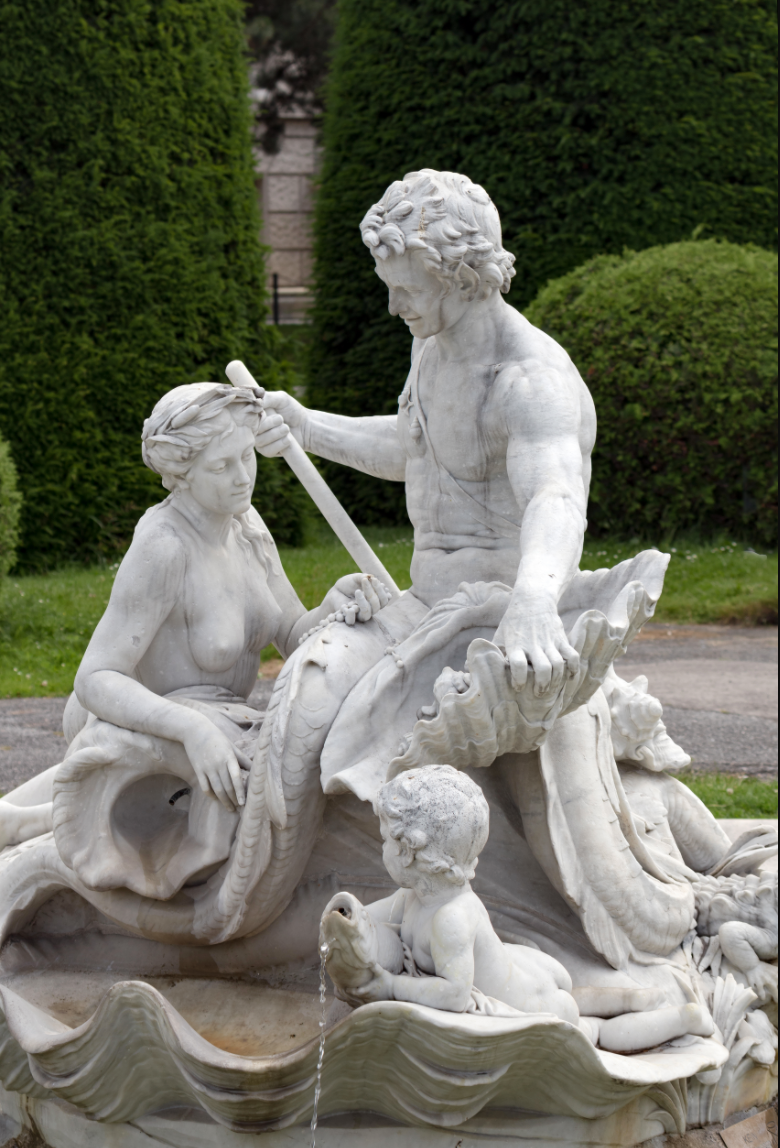
I do not teach British literature, but to understand the American Romantic period, we need to understand the influence of European writers like Wordsworth, Goethe, Shelley, and Keats on Thoreau, Emerson, Whitman, Hawthorne, and Emily Dickinson.
“The World is Too Much With Us” by William Wordsworth (1802) is a poem I use in class to show the anti-materialism that we see proselytized in Emerson and Thoreau. We also see an echo back to the ancient gods and Nature and away from the corrupting conformity of modern society and consumerism.
Once, many years ago, I was Christmas shopping in Deptford, New Jersey. The stores and the streets were packed with people “getting and spending.” Instead of driving from Barnes and Noble to Target and then a walk through the mall, I decided to walk. I discovered a stream I never knew existed. I was cursed for trying to walk. And I also moved faster while on foot than in a machine. I always recall that walk. If I drove, nothing about that day would stand out.
What did I even buy?
But that stream I still hear and see — thriving in the most unlikeliest of places — suburban New Jersey.
Let’s talk iambic pentameter — meaning syllables that are written as unstressed/stressed. As in my name “Walter” the stress is on the second syllable. Walter Thomas, is two iambs. But the Bowne would look like this (U/) (U/) / — with Bowne stressed after another stressed syllable.
This ain’t easy, peoples!
The rhyme scheme, for those who care, is: ABBAABBAA/CDCDCD. It’s an Italian sonnet, commonly known as the Petrarchan sonnet, after the poet Italian poet Francesco Petrarch. A sonetto means “little song” from the Latin word sonus, which means “sound.”
Wordsworth mixes iambic pentameter (10 syllables) with the Italian hendecasyllabic — (11 syllables.) It’s easier to rhyme in Italian owing to the nature of its beautiful language and vowels. Try rhyming America or orange. In Italian, every vowel is stressed. In “American” Italian, mozzarella, usually, and unfortunately pronounced, “mozzarel.”
For those wishing to know the “harder” version to use — the Elizabethan Sonnet — here is a link.
So enough context and structure, let’s dive into this lovely poem.
The world is too much with us; late and soon, Getting and spending, we lay waste our powers; — Little we see in Nature that is ours; We have given our hearts away, a sordid boon!
If this was true in the time of Wordsworth, think about how much time we spend shopping on Amazon or having heart attacks about our credit card debt. Wordsworth would have a heart attack!
Wordsworth is like: God has given us powers, but we waste out talent and our precious time on earth “getting and spending.” We are too caught up in the world — the media, politics, gossip, watching the lives of other people on TV — up too late, and our lives over much too soon, and why?
What is in this world that is “ours?” We see “little” of ourselves in “Nature.” We are rarely outside and we rarely visit our “inner nature.”
As Wordsworth writes, we have given out hearts away — something so precious, but why? Why is this so sordid — foul and dirty? Why have we “sold our store of precious valuables?”
Well, perhaps we can blame society to making us want to consume to feel “successful.”
This Sea that bares her bosom to the moon; The winds that will be howling at all hours, And are up-gathered now like sleeping flowers; For this, for everything, we are out of tune;
Wordsworth now moves from the contemporary — the expository and the didactic — to mythical descriptions of pagans past. Sexual imagery has the “sea” baring “her bosom to the moon.” The winds are howling — perhaps to vex us or to awaken us and the flower petals have folded, as many do at night, as if sleeping. Nature does not act against its own nature. Birds and flowers will not act in ways that defile their own “powers.”
Unlike the flower, the moon, and the winds, we humans are out of tune.
It moves us not. Great God! I’d rather be A Pagan suckled in a creed outworn; So might I, standing on this pleasant lea, Have glimpses that would make me less forlorn; Have sight of Proteus rising from the sea; Or hear old Triton blow his wreathèd horn.
Wordsworth says that the moon and winds and flowers do not move us. Why? Too busy with modern life. Then Wordsworth the Poet enters and declares that he would rather give up being a Christian if this is the way most Christians act, against God’s intentions, and be “pagan suckled in a creed (belief) outworn.”
Then we see the Poet — like an Emerson as a Transparent Eyeball or Thoreau on Walden Pond — standing on a “pleasant lea” — an open or grassy area. The Poet gets only to “glimpse,” as that’s all that may be needed, of the Natural World, and this will make him less sad, less “forlorn.”
Perhaps he may even see Proteus “rising from the sea” or even hear “old Triton” blowing “his wreathed horn.”
Proteus was the old man of the sea — like a sea Shepard. And Triton, of course, is simply a demigod, a merman of the sea.
Why not the “higher gods,” like Poseidon? Well, we don’t need to be that high to see that high. We just need to understand what really matters in life.
When the end comes, after all, we will not utter, “It’s time to buy more stuff that I need to will away.”


