48 hrs in Xi’an — The Birthplace of Chinese Civilisation
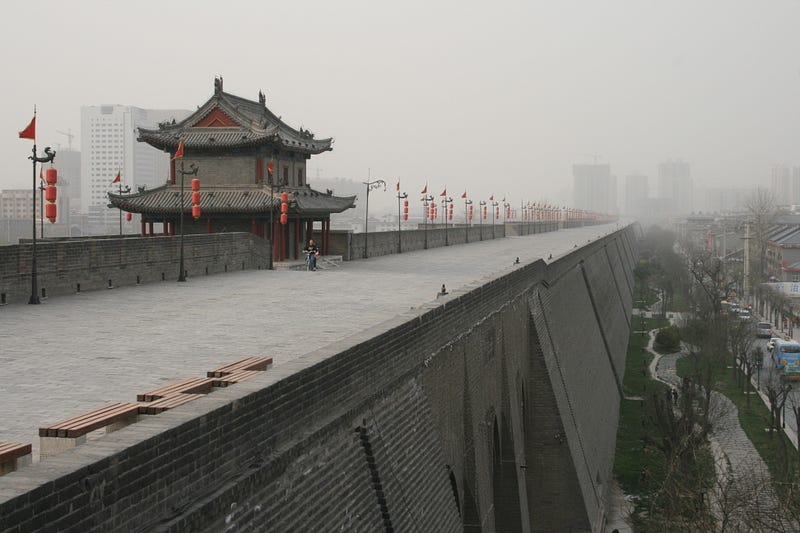
Look at any half-serious planned tour of China and the city of Xi’an will be on the list of destinations, and for good reason. It’s a city that has a depth of historical attractions rivaling that of Beijing, with more to come with Imperial tombs that remain unopened to this day.
When I arrived I stepped straight of the airport shuttle bus and more or less straight in the door of the Melody Hotel, when I got up to the room and took a look out the window I realized I was in a special place. Straight ahead out my window was a massive public square, and a massive Drum Tower, looking to the right I could see a large Bell Tower. Not many cities offer that in the first five minutes of arrival!
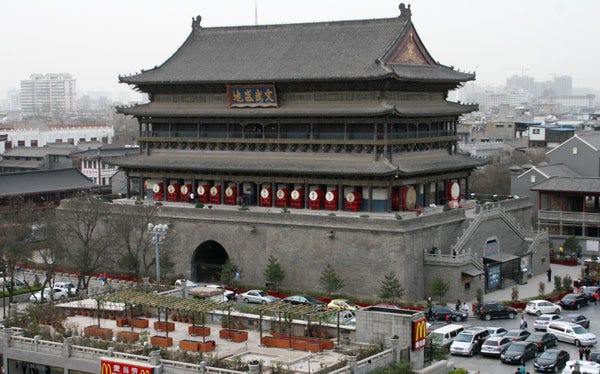
The list of attractions in the city goes on and on, including the Drum Tower, The Bell Tower, the Grand Mosque, ancient City Walls, the Wild Goose Pagoda and this is just within minutes of the city center.
Just outside the city there’s the Huaqing Palace and Hot Springs and then there’s the reason why most come here, and perhaps the very reason many chose to visit China in the first place, Emperor Qin Shihuang’s Terracotta Warriors.
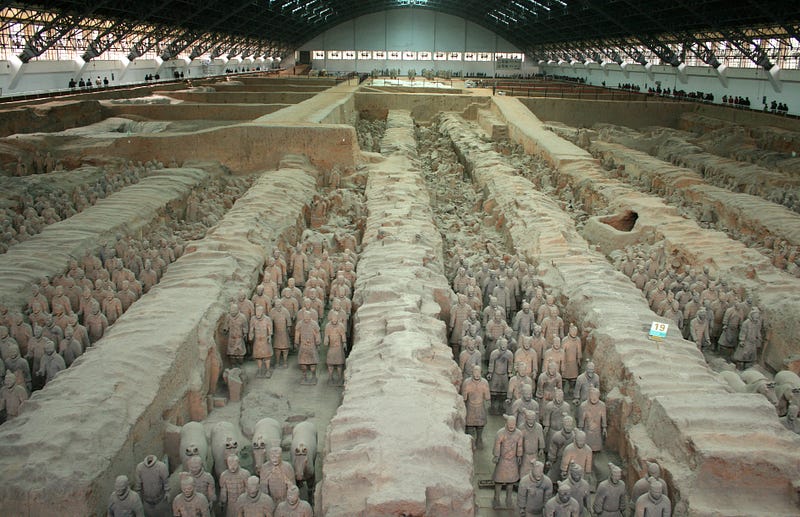
Terracotta Warriors and Horses is officially the 8th world wonder, and it’s not hard to see why. The staggering scale of the vision, the workforce, the creativity, and craftsmanship, leave one simply bewildered and in awe.
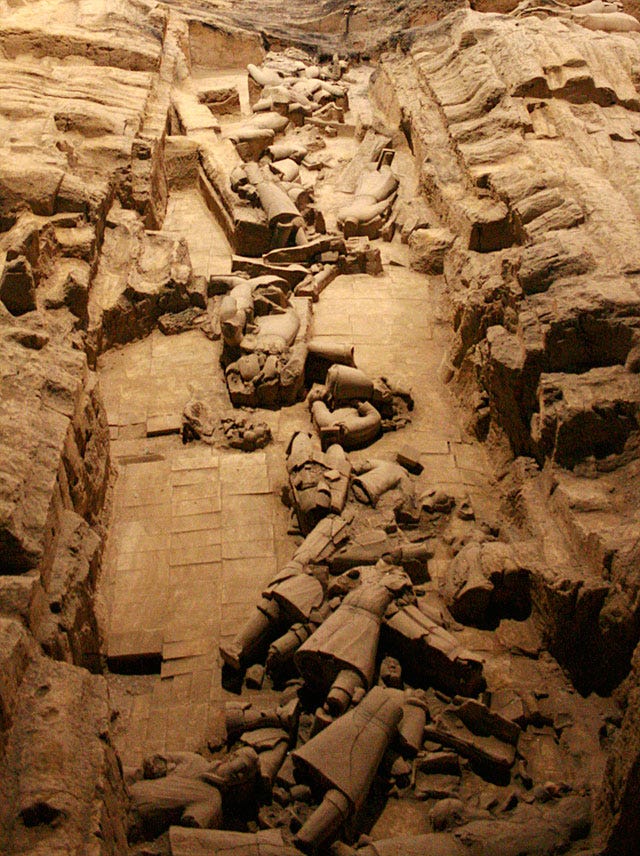
To date, more than 8,000 soldiers and 10,000 bronze weapons have been revealed at the mausoleum of Emperor Qin Shihuang after being discovered by a farmer in 1974.
Emperor Qin Shihuang is a mighty figure in Chinese history due to his legacy of uniting all the warring states sometime after 221 BC to create a unified China for the first time.
Amazingly, there is still so much that has yet to be excavated including Qin Shihuang’s tomb which, when opened, could be one of the worlds greatest archaeological reveals.
The Xian City Wall
The ancient city wall has remained intact and stretches for some 13 km encasing the city center. I was lucky to hook up with an American guy and on his suggestion, we hired bikes and rode along the top of the wall, which was superb. Taking in the amazing views and the sheer wonder of an ancient defense system that dates back to the Tang Dynasty (618–907).
The Wild Goose Pagoda
It’s a crazy name that just peaks the imagination and leaves you wondering exactly what you are in for, but the Big Wild Goose Pagoda is a must visit on the Xi’an tour. So what is it exactly?
A pagoda is a tiered temple commonly used throughout Asia as places of worship. The name “Big Wild Goose” refers to legend having that this was the place where a goose fell from the sky into the hands of hungry monks, believing it was a blessing from the gods they so named the temple.
The site is quite special to those of Buddhist faith being a place where the original Sanskrit sutras, collected during a years-long pilgrimage of many countries by the monk Xuanzang, was translated into Chinese.
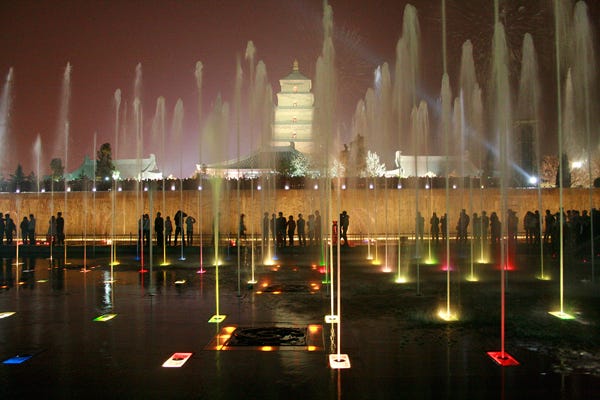
The area consists of three parts being the Big Wild Goose Pagoda (Dayan Ta), the Da Ci’en Temple, and the North Square of Big Wild Goose Pagoda. In the north square, they have a nightly water fountain show which begins at 8 pm (get there early to get a good spot).
The Great Mosque
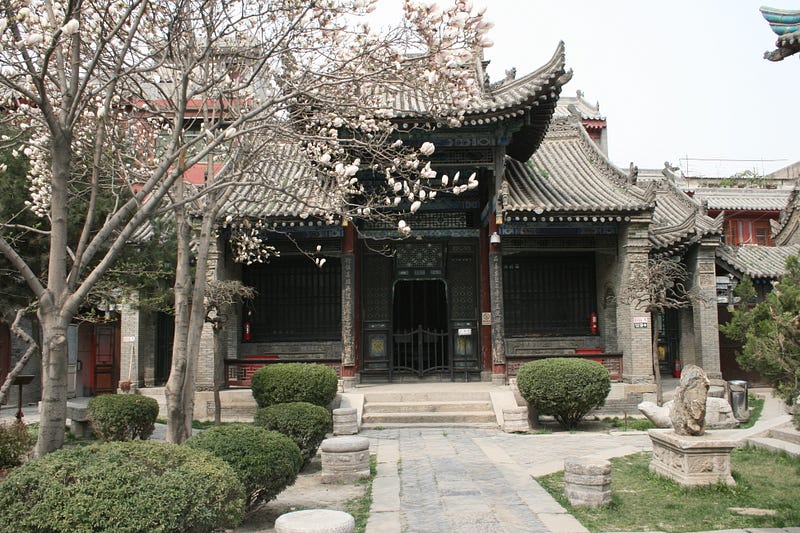
Built during the Qing dynasty, it remains the largest mosque in China covering over 12,000 sqm. While it is a popular tourist attraction it is also still a place of worship particularly for Chinese Hui Muslims.
The Muslim Quarter
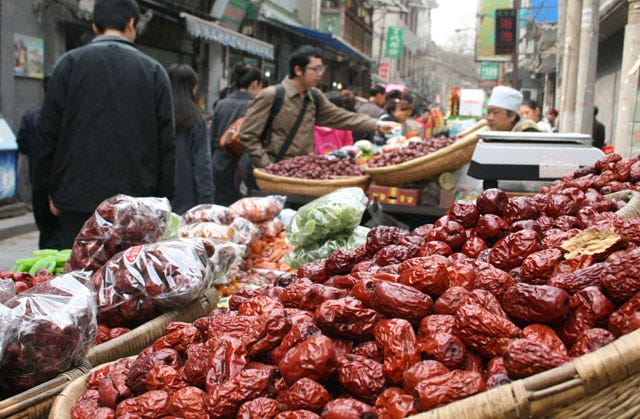
The Muslim Quarter is perhaps one of my favorite places in the city, vibrant and full of life. Traders line the streets with the stalls hawking super fresh and high-quality fruits and vegetables.
For me, the most impressive feature of this city is that there are just so many things to see, and it’s all so easy to see. The historical attractions here within the city are numerous, perhaps 30 plus worthy sites, head out of the city and there are more temples, scenic areas, tombs, mausoleums, parks, and mountains.
If you asked me, which one city should I visit in China, it would be Xi’an.
It’s such a fascinating city that not only holds the very birthplace of the Chinese civilization and having a continuous history of over 3000 years, it also holds a long-running co-existence of Hui Muslim culture and Han Chinese culture. It was the first city in China to be introduced to Islam in 651.
The city was also the starting point of the original Silk Road and being a trading city, with a long rich history of diverse cultures, it’s also a foodies city. Don’t miss Paomo (lamb stew with bread), Roujiamo (Xi’an’s ancient answer to the hamburger), Biang Biang Mian (super wide flat noodle) should get you started. And once you start, I promise you won't want to stop, it’s a foodies heaven.
[WTC 5] — This is the fifth part of a series covering what was to become a six-year journey through China, and into Chinese life and culture. I truly welcome you to follow me as I share those experiences and insights into this fascinating country.