
4 Ways Your Mental Health Is Tied to Your Content
And why that doesn't have to be a bad thing
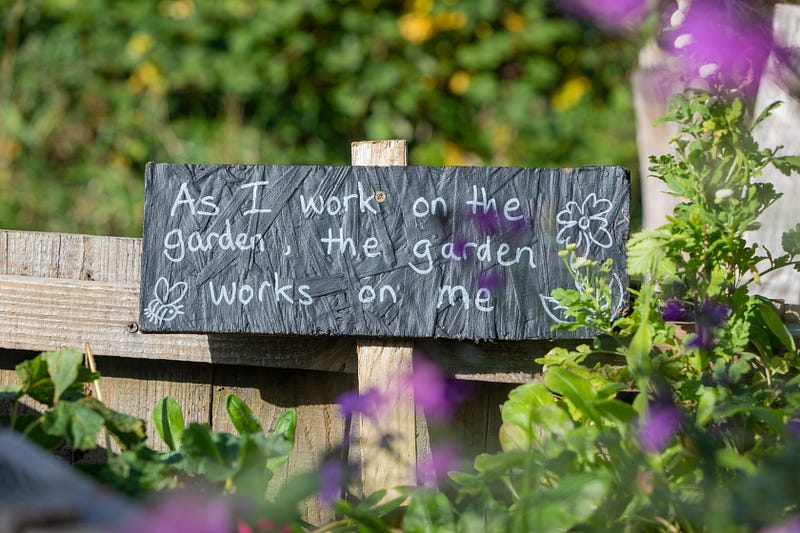
About 3 years ago, I was diagnosed with depression. Around a year ago, I had a mental breakdown that sent my life spiralling out of control. For the last 6 months, I have been piecing myself back together and forging a career as a content creator.
It's a unique and complex world, creating content online. With every passing day, the market becomes ever more saturated and the challenge of standing out from the crowd becomes harder and harder. No matter how much you enjoy your work, even those without prior mental health complaints are likely to struggle under the pressure eventually.
And that's ok.
In the race for financial independence, it's important to take care of yourself along the way. Now, with 6 months of this crazy career under my belt, I think I might have some advice to offer.
Here’s what I’ve learned.
Poring over stats will destroy your confidence
Nothing is more disheartening than clicking into a stats page and seeing that your work has flopped. Content creation is a deeply personal practice, so apathetic responses are easily taken to heart. If the clicks, views, reads, or likes don't come in, it feels like a judgment from the world, not of the piece, but of its creator.
It’s not.
Until you've built a significant following, the vast majority of your readers/viewers won't give a crap who’s behind the curtain, creating the content. All they care about is the product. If they like it, great! You might get a new follower. If they don't, it’s no big deal. That piece may have failed but the next one may well succeed. Just because they didn't like one article doesn't mean they don't like you or won't like your future work.
Pouring over stats pages is a surefire way to get yourself all tangled up in nail-biting and panic spirals if the numbers are low, or overconfident cockyness if the numbers are high.
If you’re a creator, just create. Use stats to figure out what content works, but don't obsess over the stuff that doesn't. That's what stats are for. They are not a measure of your talent or self-worth.
Comments are not in context
Comments and responses to content are often a good way to judge how well a piece has landed with an audience. However, from behind a computer or phone screen, it can also be incredibly easy to place way too much value on each and every comment left on a piece.
Positive comments are usually… well… positive. It’s negative comments that are the problem here.
For many people, a single negative response will be enough to send them spiraling, questioning their talents and their current occupation. At least, that's often the case for new writers who haven't yet gotten used to the wild west of online content creation.
The reason for this is that comments on our work are easily taken out of context, because we have no context to speak of in the first place. We don't know who the commenter is, what their life is like, where they are, what kind of stuff they are basing their comments on, or anything else that would help us to better understand how someone might have arrived at the negative response that they submitted.
This can lead us to a false belief that negative commentators represent a wider group of people, or even an entire audience, who we have just inadvertently upset.
The thing is, this is almost never actually the case. Negative comments are, more often than not, fairly isolated, singular occurrences. Even when they’re not, though it might feel like the whole world is out to get you, it's rarely more than a handful of people.
Negative comments hurt, of course they do, but they are rarely indicative of anything bigger. Think of what it would be like if a single commenter gave you a negative review in person, at a coffee shop, say. It would hurt, sure, but you wouldn't immediately think that everyone else in the cafe thought the same, would you?
You will lose faith in your ideas from time to time
I cannot tell you how often I have sat at my desk and nearly torn my hair out because no decent ideas would come. For content creators, a lack of ideas is deeply problematic and can be very distressing. Everything we create starts as an idea, so if none are forthcoming, then our output stagnates.
Except, there's no such thing a ‘no ideas’.
Seriously. The human brain is one of the most complex biological machines in existence. It’s never so quiet that there's really nothing going on upstairs (unless you're dead, in which case not being able to write articles is the least of your worries).
The problem is not lacking ideas, it's lacking faith in the ideas that do come.
Every creator I know begins to doubt their work on a semi-regular basis. For writers like me, who are perpetually struggling with mental health, questioning our abilities is often a weekly sport. But regardless of preexisting mental complaints, I have never met a creator who did not occasionally hate their own creations or doubt their skill.
You will lose faith in yourself at some point, and it will be a deeply uncomfortable and worrying experience. The solution? Get back on the horse and keep creating.
When I’m in one of those doubt riddles funks, I simply start writing, without any expectation that something good will come out at the end. That way, there’s no pressure to perform at my best, or to create my best work. The only thing I expect from myself is to make something. Anything.
The act of creating often fuels us to create further, so even if the first few things you write during a down moment are terrible, eventually the act of creating will get your wheels turning again and the ideas flowing.
You will want to write how you feel, and you should roll with it
If you’re happy, create happy content. If you’re scared, create scared content. If you’re depressed, create depressed content. It might seem obvious, but it's a simple rule that many content creators miss on a regular basis.
Writing, and pretty much all other types of creation, are skills that rely on a person's emotions and thoughts. We put ourselves and our views down on paper in the same way painters lay down their hearts with oils on canvas. Trying, therefore, to create using emotions that you are not actually feeling is an incredibly difficult task.
One of the things that audiences most like is when the creators they follow are open with them. It allows writers and readers to make connections with each other in a meaningful and welcome way.
Cold, impersonal content is everywhere online. If you want to stand out, you need to buck that trend. Be open with your thoughts and feelings, and don't lie to your audiences by pretending to be ok when you’re not. Sharing your struggles, whatever they may be, will not only endear you to your followers, but your experiences might help others to overcome similar things.
Plus, creating content that's true to yourself and your feelings is often a cathartic and very therapeutic experience. I, for one, know that writing about my mental health issues and personal struggles has helped me to work through those troubles and has garnered me much more connected, engaged followers.
Content creators are only human (as far as I know), and so it’s unavoidable that our emotions and mental health will play a role in the things we create and our experience of this profession. Sometimes, that will be a negative thing, other times it might be positive, but whatever the outcome it’s always worth taking a moment to consider how the content you create and the state of your mental healths are intertwined. You never know what truths you might unearth or what epiphanies you might find.


