
4 Ways Grad School Apps Made Me a Joyful Lifetime Learner
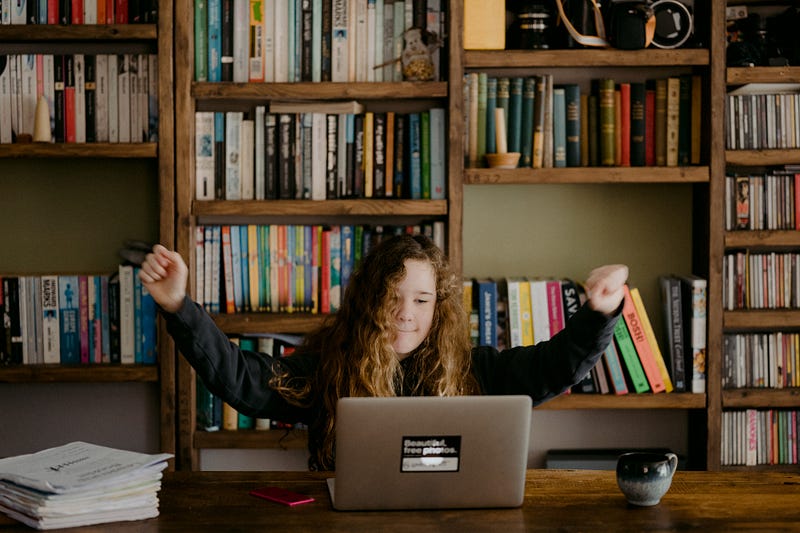
A year after graduating into a pandemic, getting an MA is a commitment to my personal growth.
I graduated from Webster Conservatory of Theatre Arts in 2020 and my plans were thrown out of the window. Moving to a bigger market? Nope. Getting callbacks for a touring show? Nah. The dreams I worked toward for years were out of reach. Not even out of reach… but completely non-existent in a world on its knees because of COVID-19.
But there were bigger things to anguish about than my career.
My parents (both healthcare workers), the safety of my friends, professors and collaborators. The worry and fear were intense. There was far too much on my plate to think about another degree program. And after four years of an intense performing arts BFA, the thought of another year of conservatory training was exhausting.
Despite the struggles of the pandemic, I made the time to apply to two programs for scriptwriting as a backup plan. I didn’t expect to get into either of them, least of all my first choice. Plot twist: I was admitted to both!
It wasn’t until I started bawling over the acceptance email that I realized how much this new opportunity meant to me. It went from a backup plan to my dream.
So why did I change my mind about applying? And how did the application process make me a lifelong learner?
I learned the value of work over time
Throughout the pandemic, I’ve created several projects. A short film over Zoom, a solo webseries filmed on my phone, anything and everything that was COVID-safe was fair game. I also had my debut play produced in February 2020, right before the COVID shutdowns. Between my play and the new projects I created, I built a body of work for myself.
I did not intend this portfolio to be submitted in a graduate school application. I was creating work based on my values and issues that were important to me. My short Zoom film was about the ripple effect police brutality has on friends and families, and my webseries is about a new grad who must create online content now that her field is inaccessible during the pandemic. My produced play is about interracial couples at different stages in their relationships. I created these pieces because I wanted to communicate the hardships I and my community experienced. I didn’t even know I’d be using them for an application.
I created projects during the pandemic because I missed doing what I loved, not because of a specific end goal.
I focused on craft for the sake of craft.
Because these works sprung from my personal experiences, it motivated me to create them despite the pandemic. I wound up with great material to send in my applications.
Creating these projects over a year produced quality work. If I had written scripts only for a specific application or created them last minute, the pieces would’ve lacked development and clarity.
Never underestimate the power of taking things at a reasonable pace. Building a body of work over time isn’t just valuable when applying for admission, but will benefit you when pitching studios or clients and connecting with other industry pros.
I focused on revision
Writing is re-writing. It’s a mantra the writers in my life repeat. Likewise, I repeat it to myself every day.
Polishing my portfolio and committing to a personal process meant I had to embrace revision. Create the work, edit the work. Step back. Research. Revise.
Then repeat research and revise over and over, adding depth and nuance to each project.
Whether I’m writing a 90-minute play, half-hour comedy pilot or a three-minute webseries episode, revision is tantamount to my process. Focusing on how I could make my existing work even better helped me grow.
It was far more effective than creating an endless stream of new projects with few layers.
I realized what made me special
There are so many creatives in the world who are incredibly skilled at what they do, and as my childhood karate teacher told me years ago; “There will always be someone better.”
It is easy to let competition get the best of you. It is easy to see shiny credits on a resume and let the little green envy bug consume you.
Take a step back and think objectively. Breathe. Ask yourself;
What can I create that no one else can?
I was nervous to apply to the grad programs I chose because the acceptance rates were so low. But I remembered a meeting I had with an awesome screenwriter-VP during my showcase last year.
VP: Do you write in a specific genre?
Me: No, I usually write about specific issues. Like things I have personal experience with.
VP: Oh yeah? Like your play about interracial relationships, do you write about that a lot?
Me: Yeah, or being biracial, struggling to fit in… that sort of thing. Something I’ve gone through, or that my family has gone through.
VP: When I was starting, the conventional wisdom was to write whatever was selling. But that assumes that you can write… say Modern Family better than Modern Family. And that’s hard to do. So setting yourself up to write about something specific instead of chasing what’s trendy is much better. I couldn’t write about what you write about because I haven’t had that experience.
That conversation made me realize just how specific my perspective was and that leaning into the specific would make my work universal.
I could do more than get into grad school by being specific. I could build a career I was proud of.
I built a cohesive brand
As I mentioned above, my work centers on specific topics and themes. Once I embraced my unique point of view, it became easier to communicate who I was through my work.
Before the pandemic hit, I focused my branding strategy on color palettes, fonts, and which outfits I’d wear to an audition. I had a list of adjectives to reference during a headshot session and memorized an elevator pitch about my acting work.
That was all fine and good, but I changed.
The pandemic changed all of us. It certainly changed who I was and what I valued, and my work needed to reflect that.
Effective branding comes from a strong sense of self. The only way to achieve that sense of self is through life experience.
I’m 23, but the pandemic made me feel like a “real adult” for the first time. That showed in my work and how I spoke with friends and family. I wasn’t a 22-year-old bright-eyed new grad anymore.
I became a 23-year-old woman who was working 60 hours a week, in night classes and creating projects while trying to be the best daughter, sister, and friend I could.
That is the type of life change you can’t plan for or expect. But when it comes, embrace it.
As soon as I accepted the new person I became, my work was richer. I got better at standing up for myself. I became a better communicator. And the new person I became exuded confidence in all areas of her life, not just grad school interviews. She found her way.
Lydia-Renee Darling is an actor, writer, and creative from Madison, WI. She is also a self-titled “quadruple M”: a mixed, multi-hyphenate media maven.