
4 Unforgettable Life Lessons From “How To Think Like a Roman Emperor.”
You’re about to change your life. Get ready for it.
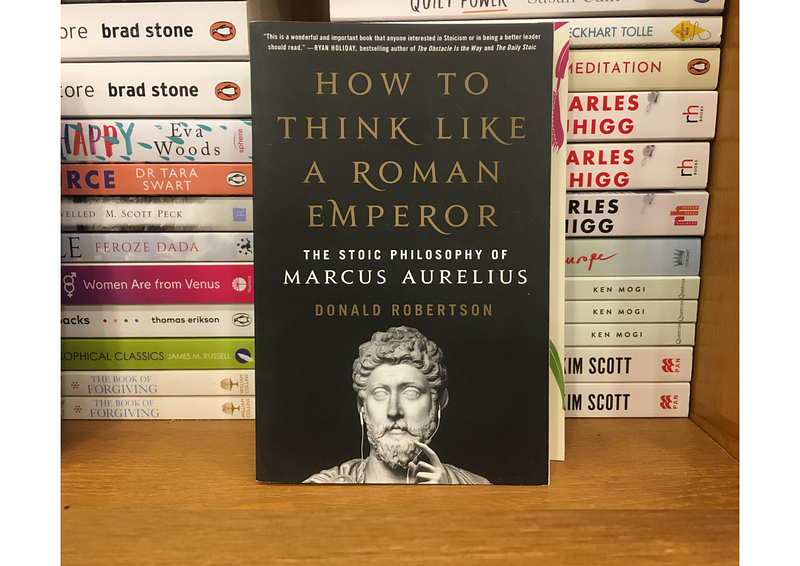
The Roman emperor — Marcus Aurelius Antoninus, was the last well-known philosopher of ancient times. According to the tradition, Marcus was a Stoic.
When the Antonine Plague hit Europe from AD166 to around AD180 (Duration:14 years), Marcus had no choice but to follow a mindful lifestyle in hard times. That’s when he wrote private notes to himself on ideas of Stoic philosophy.
In short, Marcus Aurelius provided us with a framework for dealing with daily life stresses and developing self-restraint.
Although the concept of Stoicism is very ancient, its guiding principles are still applicable today — according to cognitive-behavioral psychotherapist Donald J. Robertson.
The book “How to Think Like a Roman Emperor: The Stoic Philosophy of Marcus Aurelius” is 293 pages long. Every page examines Stoicism deeply and informs its readers using simple language.
So below are 4 main key lessons extracted from the book “How to Think Like a Roman Emperor.” Let’s get started.
1. Let Go of What You Cannot Control
Robertson believes that worrying about things we cannot control deprives us of inner peace & calm.
Marcus Aurelius spent his life mastering this mentality and eventually succeeded. Marcus, in the end, realized he could not control anything beyond his means: life and death.
All human lives are inevitable. No one has ever achieved to purchase life points with money. No one is immortal.
“From the moment we’re born we’re constantly dying, not only with each stage of life but also one day at a time.” — Donald J. Robertson.
Marcus believes that our bodies are no longer the same to which our mothers gave birth. This means we are ‘constantly changing.’ One minute is when we get closer to death and away from our birth span.
How to apply?
Donald J. Robertson advises applying cognitive dissonance — looking at your own feeling and reactions from a third person’s point of view.
For example, if you’re worried you’ll die one day and where your wealth will go, try thinking from a 3rd person’s perspective.
Here, you sound: greedy, irrational, and even unnatural. Hence, to take charge of our emotions and become the best version of ourselves, try noticing with the eyes of others.
- It’s not that hard
- Some things you can change
- Some things you can’t
The good news is that you can always take charge of your emotions and look at problems as a natural fact. This will lessen the impact of problems you cannot control. Easy.
“You have power over your mind — not outside events. Realize this, and you will find strength.” — Marcus Aurelius.
2. Make Friends With Nature
Philosophers of the Stoic school believed in living a simple yet meaningful life.
Marcus believes that we must all adapt to nature. It’s nature, from where we belong. We must live in alignment with the natural world, always. Marcus Aurelius often said:
“To live as nature requires.”
And
“All that is harmony for you, my Universe, is in harmony with me as well. Nothing that comes at the right time for you is too early or too late for me.”
Stoics believed in living a simple but meaningful life. A life where we concentrate on rational thinking and logical reasoning. In fact, it’s what keeps us sane.
How to apply?
When we make peace with nature, we also strive for a higher purpose.
Now, making peace with our nature is not limited. It also means accepting reality.
We must make peace with the lives we have. Good or bad, it’s what we have right now. Dreams are good, but they’re not logical or rational. We should accept:
- Our condition
- Life around us
- The way our lives are built
- Present
Therefore, when we contemplate nature, we accept who we are. That’s the first step towards acceptance of ourselves.
This is also known as a pragmatic approach, according to Donald J. Robertson. It’s an approach that helps you deal with things sensibly and realistically. They make you practical.
Besides, with the pragmatic approach, you can focus on present things, become close to your self and maintain peace with everything that comes your way.
3. Brush Your Virtues With Practice
According to Stoicism, men have four core virtues to follow:
- Morality
- Courage
- Wisdom, and
- Moderation
Donald J. Robertson believes that no man is perfect. Mastering these 4 virtues can take a lifetime of work.
So how do we practice? Donald Robertson’s advice is to find a balance between these (4) virtues. When you maintain a balance, you invite happiness and contentment to your lives.
“Practice even what seems impossible. The left hand is useless at almost everything for lack of practice. But it guides the reins better than the right.” — Marcus Aurelius.
Stoics believe that the sooner you adapt to this virtue, the simpler your life becomes. In today’s world, you can practice by:
- Morality- being nice
- Courage- taking a stand
- Wisdom- learning
- Moderation- not eating to the fullest
How to apply?
By practicing these 4 virtues, you can find a healthy balance. Marcus Aurelius always believes that results come from continuous actions.
Every time you practice, you’re one step ahead of where you started. Victory.
“Happiness is the reward one receives from virtuous living” — Stoic philosophy.
A human bears a variety of challenges every day, including: negative feelings, anger, trauma, and sadness. Stoic advice is to (observe) them objectively and completely (detach) these challenges from yourself.
Next, you can utilize the above 4 virtues to overcome problems in everyday life.
Simple.
4. Speak Wisely
Modern philosophers and common people have one thing in common, says Donald J. Robertson:
They rarely put theories to use.
Back in Marcus Aurelius’s time, a philosopher always lived his life wisely, but a sophist was more focused on speaking wisely.
Donald J. Robertson stated: “Sophists made the appearance that wisdom had become more important to many Romans than wisdom itself.”
But, for a topic, speaking wisely should always be secondary to living wisely.
Stoics believed that it’s not the event that makes us feel negative emotions but our *judgment* of the event.
Using negative language influences negative conclusions, hence, before you even have a chance to think rationally. Then ‘negative emotions’ become a part of you. Without even knowing, you speak negatively and dwell in negative consciousness.
How to apply?
Robertson suggests being subjective about the language.
“As an aspiring Stoic, you should begin by practicing deliberately describing events more objectively and in less emotional terms.” – Donald Robertson
Think rationally and logically about everything before speaking.
Not that Roberton wants us to be emotionless robots, but he believes what we say is *hardly* taken back.
Robertson describes using lesser motive language to describe negative events. For example:
- “I have a flat tire, and I have to get to work. Why does it happen to me always?”
- “I have a flat tire, and I have to reach to work. Ahh… so be it!”
Having a positive perspective on problems gives you the leverage to solve them. Robertson includes 5 virtues of speech according to the Stoic, Diogenes Laertius.
- Correct grammar and good vocab
- Clarity of expression
- Conciseness
- Appropriateness of style, suites to audience
- Avoidance of vulgarity
By using these 5 virtues of speech, we can change our perspective on daily life troubles and miseries.
Final Thoughts
Stoic lessons are not the final destination — It’s the start of something big.
Each quiet saying opens a world to you. It takes time to master them.
“Nothing great is created suddenly, any more than a bunch of grapes or a fig. If you tell me that you desire a fig, I answer that there must be time. Let it first blossom, then bear fruit, then ripen.” Epictetus.
Can you believe a person could think all his life philosophically, and we’re here, reading and thinking it’s (enough for a day)?
We’re better than this!
References:
https://fourminutebooks.com/how-to-think-like-a-roman-emperor-summary/