
4 Tricks Your Brain is Playing To Stop You From Achieving More
This is why you are not able to pursue your passion
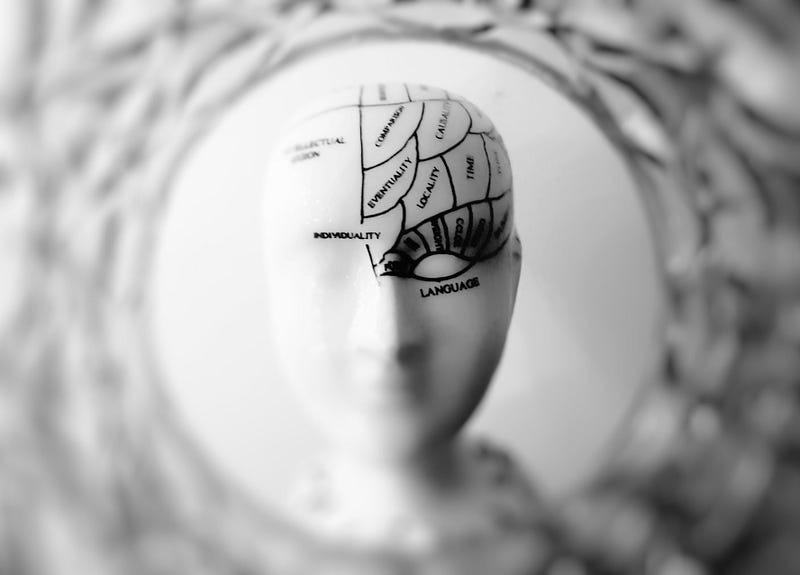
Before you decided to open this link, there was a thought process in your brain that led you to it.
The title or the image, perhaps a combination of both, worked in unison to make you click on this piece. They convinced you that this article could turn out beneficial for you.
And here you are.
You assume your observations about my article came from rational observations, but this is hardly the case.
Your initial impression about this article or the life you see around, the world you observe, the information you receive etc. gets coloured by your preconceptions.
The memories in your bank, the observations you have made, and your unique perspective affects your judgment and decision making.
Cognitive bias is simply this distortion of reality, propelled by your individual experiences.
So, the next time you meet someone and feel something about him/her, you have to remind yourself that your observations are only an interpretation of your mind. They don’t represent objective reality.
Several cognitive biases pull all kinds of tricks on you. Some of them have chained you to laziness, risk-aversion and procrastination. You aren’t growing unless you take these bias-bulls by its horns.
So, let’s look at the four critical cognitive biases that lie at the roots of your inaction.
#1 Ambiguity effect
So, have you been flirting with this idea of a business that could change your life? Do you believe it can take you to eternal stardom? Or it can culminate in a forgettable episode of misadventure.
On the other hand, sits a relatively safer job, beckoning you with its security and higher assurance of a steady income.
I bet most people would take the second one.
It happens because we tend to avoid options where pieces of important information are ambiguous or missing.
Business, however alluring it might seem to be, is an adventure into the unknowns. A safe job, although handicapped by its extent of possibilities, is a well-known variable.
Thanks to the cognitive bias called Ambiguity effect, people choose the option where the chances of a favourable outcome are more known.
This behaviour links to our species’ loss aversion. It helps individuals make effortless decisions, sticking to the general norms without breaking the pattern.
From my part of the world, the Ambiguity effect plays a significant role in shaping the educational culture.
For instance, when an average Indian youngster approaches college, he is forced to pursue a subject with a better probability of providing him with a job.
A course catering to his innate interest is not always the first choice. Parents keep an eye out for the current trend, figuring out which system is scoring a high at that moment!
Hence, the bulk of the youth lands up in places that are not their most prefered domain. They live with a lifetime of poor options, struggling to understand why their job feels so monotonous.
If we cannot press past this bias, and show the guts to follow your calls, it will merely add to our regret-list.
Remember that it is a cognitive bias; it’s just your way of misinterpreting reality. Do not let an inclination deter you from achieving the great glories.
Do not sit on your great ideas and watch someone execute the same.
#2 Hyperbolic discounting
Hyperbolic discounting is our tendency to fall for options that provide immediate rewards over long term benefits.
Doesn’t this sound very logical? I mean, who would want to wait longer?
Here is the catch: hyperbolic discounting would trick you into choosing quick rewards, even if they are smaller than the long term benefits.
Now, that’s preposterous, but that’s how you act! In fact, that’s how we have evolved to work.
Our forager ancestors would have always preferred a decision that favoured their immediate survival, rather than weighing its long term consequences. ‘Waiting’ is neither a word nor a concept that we like.
Our inability to see the future effectively has a fancy word too- it’s called temporal myopia. It means that we are bad planners.
The short term reward of an action instils in us a feeling of safety and assurance. The longer we wait, a feeling creeps inside us that our investment is less likely to deliver.
Because there is a larger arena of time at play, there are more extensive possibilities for issues to pop up.
But this is still a cognitive bias and in no way represents objective truth. A larger window of time can also give rise to larger opportunities and additional rewards.
From a modern man’s perspective, this bias has vast implications.
Famous artists, sports icons or scientists, geniuses who are flat out experts in their fields, dedicated their fair share of time to a single idea. They honed their skills and continuously filled the reservoirs of their knowledge bank.
The efforts wouldn’t have rewarded them for a long time, and alternate career choices with immediate gratifications must have glittered around. But they stuck to their long term task with single-minded devotion. When it paid, it paid tremendously.
As we sit with our higher goals, be it to write a bestseller or sing a song that goes into evergreen hit charts, we refuse to invest our efforts into it.
Because that novel will not come out next month or that magic song won’t grab attention this week. It takes practice, and a constant drive to improve over a long period to evolve into a grand scale.
If you are pursuing greatness, we need to accumulate the escape velocity to cross this bias’ threshold.
Forget short term rewards; you cannot be great in any field in a short time.
#3 Non-Adaptive Choice Switching aka Once bitten, twice shy
When I was in school, Orkut was the social media platform everyone was using. If someone made a profile on Facebook, we laughed at him.
Looking at Facebook back then, I thought I could see why it wasn’t clicking. Fb was a similar package as Orkut, only etched in a different style with minor changes here and there.
A few years later, Orkut became a distant memory and Facebook, a culture-defining idea.
Zuckerberg’s brainchild wasn’t an overwhelming success in its initial stage; neither would be your earnest endeavours as you begin.
You could have checked all the right boxes, yet the probabilities and results might have failed to align the way you wanted it to be.
The initial setbacks can cause excruciating regrets and hold you back from pursuing your dreams further.
This tendency is called Non-Adaptive Choice Switching.
Also called Once bitten, twice shy, your feelings of regret produce this bias. When reasonable efforts lead to wrong results, people are sceptical about repeating the same, even if it was objectively the best choice.
At the core of this bias is regret, an unavoidable burden that every person has to endure.
Please show me a person who has never felt regretful about something they have done, or something they have not done! Even tougher is to find a person, who never had to cross an array of failures, before clinching success.
“Regret is an insight that comes a day too late”
Despite this being an emotion that stalls your progress, regret is useful and functional.
Experienced regret or retrospective regret, help us evaluate our past actions and learn from our mistakes. Our species wouldn’t have evolved without this useful tool.
Be that as it may, for chasing your long term ambitions, you must be able to perceive the potential negative impact it can have on your efforts.
Paulo Coelho’s international bestseller, The Alchemist, translated into over 80 languages, was an abject failure in his own country. You see how things changed for him, albeit with a sad opening.
Picasso produced nearly 100 masterpieces, but he made over 50000 works of art in his lifetime. That’s a 0.2 per cent of his total effort culminating in grand success.
And you are here, wondering why your first business idea tanked or how your YouTube channel only got 79 subscribers.
As motivational speaker Mel Robbins puts it: “success is a numbers game”.
If you want to increase your chances of success, you need to increase your number of attempts.
How would you improve your statistics if you had allowed the emotion of regret to chain your creative mind?
#4 Status Quo Bias
As the name implies, Status quo bias is our tendency to keep the status quo, i.e., maintaining the current state of affairs.
In simple words, this is change-aversion.
While not all changes are rewarding, this bias would prevent you from enjoying the potential positives that might come along with change.
If you look around, you can spot umpteen instances of status quo bias operating in your life.
For instance, status quo bias is what stops you from ordering a new dish at your favourite restaurant. The new food item could have come highly recommended, but it is still a ‘change’ to embrace.
Do you see ads of Internet service providers offering more lucrative packages than your existing one? But the familiarity with the current ISP and the bias has probably chained you from trying out an objectively better package.
Even youngsters, who have struck a routine with a particular company, find it difficult to move on to a better job.
Despite better salary and comforts in a new firm, many fall for the advantage of sticking to a familiar routine in their current workplace.
What they all lack is the spine to embrace changes.
“All change is hard at first, messy in the middle, and so gorgeous at the end.” — Robin Sharma.
If you have lofty ambitions about your life, Status quo bias is something you cannot afford to cultivate.
If you are diligently reading this piece, the chances are good that you haven’t reached your life-goals yet. It would take ushering in many changes to every aspect of your game, to hunt your targets down.
From changing your attitude to building fortitude, from your workspace to work ethics, perhaps you need to allow a thousand changes to your life.
How on earth would you ever get there, if you are not pushing for transformations?
The Final Takeaway
Cognitive biases are not just another way of thinking but are a systematic deviation from rational thought.
One might feel that he has lived so comfortably with these biases for long, and therefore it doesn’t warrant any change.
But such thoughts are just another example of status quo bias.
You know biases now. It is time to introspect your actions and spot the niggles.
Do not let your brain fool you. Do not let the fear of loss, change, or risk stop you from chasing your goals.
It’s time to act.
‘Better Advice’ free email advice each week
When you sign up using this link, we’ll send you tips on how to unlock your hidden treasure of potential.