
4 Smart Considerations For When You Apply To Graduate School
All the things I wish someone told me explicitly

If you are like me in my graduate school application days, you’re doing all the research you can to pitch yourself as the best candidate.
Your goal, after all, is to get into the school of your dreams and excel in the program.
I’m here for that.
This article puts together the pieces of advice I didn’t quite find on my journey of researching on the internet, that I find myself passing on in word-of-mouth manner to research assistants in the lab.
It’s a long article, but imagine that we’re sitting in a virtual coffee shop and talking about what you need to know. This is a choose your own adventure document. Pick the pieces of advice that pertain to you best, in this virtual coffee chat. Feel free to tweet me if there are any concerns or questions that I didn’t tackle!
Consider External Funding

While most Canadian and American graduate schools provide internal funding to support students through a graduate program, it’s often just enough or just below the poverty line. Receiving external funding in my first year of my Master’s program made all the difference.
It allowed me to recover the costs of applying to graduate school. It also let me pay off my undergraduate debt.* I wasn’t going into graduate school with any kind of monetary support and paid my own way through undergrad, so that made a huge difference.
That being said, I did have friends who decided against applying for external funding because it would be an added stress to their application process. This is so valid.
That’s why I wanted to offer the middle ground, some way to handle the external funding process so that it isn’t a whole extra courseload but also to increase your chances of locking down that extra funding.
Bank on the similarities
My life motto is not to do “done” work twice. Know the similarities between the key components of each application type and do each theme at the same time.
Both external funding and grad school apps will ask for:
- Transcripts to be mailed: do this about one month prior just to be safe. (Special note for this year: many schools aren’t asking for transcripts to be mailed due to COVID-19 restrictions, so also check in on whether you need this extra step).
- Referees/ reference letters: you’re likely going to ask the same references for external funding, so letting them know at the same time as asking them to be your reference will be important. Give them a sense of how many schools you’re applying to and the number of scholarship related letters they’ll need.
- Proposed Project: you’ll likely include the same proposed project, just tweaked to the word limits for each school. Since you’re going to have to edit this document for each school and their own requirements on what to include, what’s key is to have an outline that has all your important points so you don’t forget anything major.
Applying to external funding can be done without too much additional fuss with a great added bonus of having that external funding. Be sure to check in with yourself on whether that’s something you can handle, and how to most efficiently organize around it so you get the best of both worlds.
Ask To Meet With Your Potential Supervisor
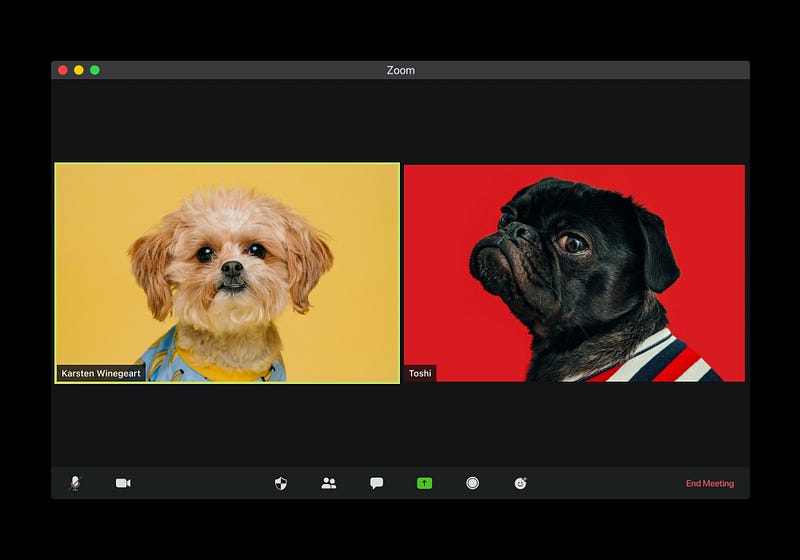
Always ask to have a quick Skype or Zoom chat with a potential supervisor before you apply. Remember that for most programs, having a supervisor to mentor you is a necessary criterion to fulfill for you to be accepted, so being clear on whether there is someone at the school who has interest, space and funding to support a new student is crucial.
There are two broad things you should be looking for and asking about when you meet.
Questions to ask
E.g., What skills would be important for a graduate student to succeed in your lab/ program?
This will help you tailor your application to include the specific qualities and traits that they’re looking for. For example, if your potential supervisor at one location is heavy on the computational modelling end, you want to play that aspect of your application up for this specific university.
Pitch your own research ideas (keep them broad with a few examples of potential specifics), acknowledge their research interests and draw the connection between them. Ask them for feedback on how they perceive the connection/ where they would be interested to see the research go.
In this, I’d look for two things. First, I would look for how much your research interests match. Going into a graduate program, some people a) have a clear idea of what they want to do and b) have a vague categorical idea of the genre of research they want but honestly is excitable and will dive right into any project with fervor.
Don’t worry. I was and still and b), and contrary to popular belief, it’s not a bad thing. Group A folks who have a clear idea might demonstrate that they have a clear goal for what they want, but this also narrows down the flexibility on where a potential supervisor wants the research to go. Group B folks might seem less “prepared” by being too open, but it gives room to collaboratively deciding what projects to go forward.
I think the middle ground you want to go is to be prepared with some ideas, but also be flexible in hearing out and being curious about how things could go. The second thing to consider is whether the supervisor is able to pivot between the two too.
Sure, group A applicants might work well with a supervisor is matches interest and allows them to take off on their own research and group B applicants might work well with a supervisor ready to assign you a project. But you never know whether your life changes in the next seven years of grad school, so finding someone who can flexibly supervise both kinds of people is important.
That’s the sign of a great supervisor.
Notice whether they spontaneously offer to connect you with existing graduate students to see what the experience in the lab and program is like. Notice whether they’re receptive to you asking for this information.
Existing grad students in the lab will have the best idea of what the actual pros and cons are of working with each prof. Trust me, each prof will have their own quirks, and it’s down to whether those quirks will bother you.
For example, my own supervisor often misses meetings because she’s in the previous meeting passionately sharing her ideas (which I know now because I have been in those passionate meetings) and she makes an incredible number of edits to manuscripts. Like. Incredible. Neither of these bother me because I value the passion and the feedback; I also know that punctuality and fewer edits are what other grad students prefer.
It’s about choosing the pet peeve that you would best be able to tolerate rather than choosing the prof with the best CV. It’s the pet peeves that students burn out on regardless of how amazing a mentor is otherwise.
Note what avenues of external scholarships you’ve already undertaken. Then ask about how your supervisor supports graduate students.
This became the most important question I asked my supervisor during my own graduate career, because wow when I asked that question I didn’t expect that my grad school experience would span over a pandemic.
Finances are hard to talk about so give some thought on how to ask this professionally. You absolutely do have the right to ask more broadly how the department supports students via funding beyond what’s easily found on their website.
For example, while baseline internal scholarship information are easily found on their website, you might want to ask more deeply about potential travel funds (for funding 1–2-month research excursions out of the country) or conference travel (at the department level or supervisor level).
Ideally, you’ll want to hear that the department has this kind of monetary support for students, including emergency bursaries, travel funding, and additional experiences like travelling for research. Getting to collaborate with researchers across the world really helps open up your networking experience.
For me, I think it’s crucial to match with a supervisor and department ready to support students in case of global disaster (I’m exaggerating a little because it’s likely it won’t happen but consider that it did and can, as it did for me).
Show Your Skills, Don’t Tell

This is more common as a piece of advice, but I think hard to implement without having tangible examples of what this means.
At the heart of it, this is asking you to provide numerical or fact/ stats based statements to back up statements like “I’m great at project management!”.
One easy way to always get at this evidence-based explanation is to ask yourself: “how do I know I’m great at project management?”
So instead of “I have great project management skills”, consider this:
In the past two years, I’ve taken three research projects to fruition. I recruited over 100 participants across three projects, taking the initiative to creatively advertise and seek ethics amendment approval to recruit [insert special population]. Of the three projects, I spearheaded the data analysis using R. Given the results, I was curious and pitched a consideration to tweak the methodology to add a third manipulation to address a confound. We are currently undertaking this final project, with plans of communicating this research at X conference in [month].
You want to demonstrate through your experience the strengths you have, especially if they’re related to project management, people skills and taking initiative. Core research skills like programming, data analysis and presentation skills are also important (depending on your type of degree).
The Cringe is Real

You know that feeling where you have to compliment yourself and it feels so brazen and exaggerated and you just want to close your document and never look at it again?
Let me repeat:
The cringe is real.
Here are some tips to deal with it:
This goes back to the tip of providing tangible examples of exactly what you did to deserve this praise. I think that cringe our social way of making sure no one toots their own horn too hard. If you’ve done the things you’ve said you’ve done, don’t be shy to say that you did, or to frame it in a positive light.
If you’re like me, the supportive words above won’t cut it. You’ll still feel the sting of the cringe. It’s extra horrendous if a professor asks you to write your own letter of recommendation. Pretend you’re writing about your best friend.
It gets so much easier after you stop writing about yourself. Start off by listing off all of the pieces of evidence, skills and traits you want to include in an outline. Write it from the point of view of ghostwriting for your best friend, who did all these amazing things, tackled all these problems, took the initiative to try all these things out. What words would you use to describe her? What emotions would you feel as you supportively urged her own to include these accomplishments without dimming her efforts?
(Side note: ultimately, as a piece of self-care, hopefully one day you treat your own accomplishments with the same support, love and care as you would a bestie. But we’re on a timeline here so if pretending is what’s going to get this grad app done, do it. We’ll work on self-discovery later.)
Summary
- Consider external funding early! It’s helpful for a lot of people and has the same components as a lot of the actual pieces of the grad apps.
- Ask to chat with your potential supervisor!
- Show, don’t tell (see above for a tangible example of what that looks like)
- The cringe is real. Pretend you’re ghostwriting for your best friend’s application, except that best friend is yourself. It helps with the cringe.
If you’ve reached this spot in the article, I wish you the best of luck on your graduate applications! It’s a tough process, so make sure you schedule in time to rest and recover.
As always, feel free to ask any questions, I’d be happy to answer them!
*Huge caveat: I went to a Canadian university and so I only had about $2k CAD in debt, which I know is not much debt. This entire amount was also a government rather than a bank loan, so interest was frozen for a) the first six months post-graduation and b) as long as I was still studying a student. That meant that it was a much smarter idea to pay down this debt immediately, while no interest was being built upon it.
Lucy (The Eggcademic) is currently in her third year of her PhD, which somehow coincided with the pandemic, so she’s hanging in there. She recommends checking out Carolyn Riker’s poem: A Bridge To Loving You.
What’s your next adventure? 🐇🌌


