avatarShawn Kong

Free AI web copilot to create summaries, insights and extended knowledge, download it at here

3248

Abstract

only person having access to creating vanity URLs?</li><li>Will there be more people in the future with this access?</li></ul><p id="8371">If you are going to be the only person handling the creation of vanity URLs, then you probably <b>need not document it extensively</b>.</p><h2 id="cc62">What channels do you/your company own where you can use vanity URLs on?</h2><ul><li>What are these channels? (e.g. Social media, Website, Email)</li></ul><p id="8300">Knowing what channels there are would help you gauge the number of different vanity URLs you would have to create if the marketing campaigns were to be a multi-channel.</p><p id="d1b4"><b>List </b>down <b>all the channels</b>.</p><h2 id="b07a">How many variations of campaigns do you/your company usually do?</h2><ul><li>Do you usually spend a lot of money on ads?</li><li>Do you have an overview of the marketing plans for the year?</li><li>Are you the person doing the marketing campaigns too?</li></ul><p id="51fd">If a lot of money is spent on ads or marketing campaigns, the <b>chances of having variations </b>would be higher too.</p><p id="770c">Having more variations would mean that you would probably have to <b>consider including the variation version</b> in the vanity URL too.</p><p id="7bc6">In order to understand your landscape, you would have to know who will have access to manage the vanity URLs, the different channels you/your company own, and the tendency to create variations in your marketing campaigns.</p><p id="0624">After doing so, you will be able to pre-empt any future requirements and prevent problems down the road.</p><h1 id="46b8">2. Set rules for naming your vanity URLs</h1><p id="c996">Now that you are more aware of the existing possibilities to use vanity URLs as well as the potential ones that might be used in the future, you can start preparing a set of rules to name the vanity URLs.</p><h2 id="5b14">Components</h2><p id="ad38">Start by listing what should be in the actual vanity URLs.</p><p id="0095">For starters, these would be good to have:</p><ul><li>Campaign name</li><li>Date</li><li>Channel</li><li>Variation</li></ul><p id="6337">Also, make sure the rules for the components include how each component should be named.</p><p id="b1be">For example, specify how the date should be listed.</p><ul><li>Month and year only — Oct2020</li><li>Numerical value — 102020</li><li>Together with the day — 25102020</li></ul><h2 id="7ae0">Sequence</h2><p id="6506">Then you move on to the sequence; how should they be arranged?</p><p id="9d5b">I usually have it like this:</p><p id="acd2">domain.com/<campaign name=""><date><channel><variation></variation></channel></date></campaign></p><p id="7c28">This is how it would possibly look with the different components in the sequence below.</p><figure id="aa5b"><img src="https://cdn-images-1.readmedium.com/v2/resize:fit:800/1*G20pwEvPQlKBbUawsC3gzg.jpeg"><figcaption>Example of an organized vanity URL — Source: Author</figcaption></figure><h2 id="7eab">Additional rules</h2><p id="29ca">These are unique rules that would apply in certain conditions or to circumvent any possible problems from outlier events.</p><p id="8396">It can be something like not including your company name in your vanity

Options

URLs to preserve the quality of branding efforts or even to spell it in a specific manner when used in vanity URLs.</p><p id="7614">Create them as and when needed.</p><h1 id="b8bb">3. Keep track</h1><p id="088f">More often than not, the platforms that you use to create the vanity URLs will have features and functions to allow you to organize and export the URLs you have created.</p><p id="97b4">This means that the platform itself is self-sufficient in getting your links organized.</p><p id="80ad">In the event that you do not have such features or access to the links, you may want to consider creating your own document to record them.</p><p id="e473">I would suggest using an excel sheet or google sheets as it is easier to form up the table.</p><p id="fbb6">Here are some of the columns you might want to consider having:</p><ul><li>Actual link</li><li>Vanity URL</li><li>Date created</li><li>Clickthroughs</li><li>Last updated</li><li>Comments</li><li>Creator (Person who created the link)</li></ul><h1 id="fcf6">4. Review</h1><p id="d589">At the very beginning, you might want to review your vanity URLs more frequently. But as time goes by, you can review them in longer intervals as the process gets more stable.</p><p id="295e">When reviewing the links, ask yourself questions like these —</p><ul><li>Were there any issues when following the rules</li><li>Are the rules still relevant?</li><li>Are the components still relevant?</li><li>Are there new channels?</li><li>Who will be accessing the links, can they create the links themselves?</li></ul><p id="4d1d">If there are new elements and answers, then you would probably need to update the relevant areas.</p><p id="5ae6">For example, if you have been following the naming convention of having the dates component by month and year — Oct2020, but your company has grown rapidly in the past 1 year and wants to increase its spend on marketing campaigns.</p><p id="9485">From having 1 online event a month, your company decides to do it 4 times a month now.</p><p id="11c6">This is when it would be better to include the day into the date component for future vanity URLs like so — 10Jan2021, 15Jan2021, 21Jan2021, 25Jan2021 so that you and your potential customers can easily distinguish when the actual event will happen.</p><p id="df8b">After successfully implementing a naming convention for your vanity URLs, you will feel more organized and will require less effort to conjure them.</p><p id="7823">Also, you may never look at a URL the same again.</p><p id="125f">If you found this guide interesting or useful, you may also want to check out this article on 6 useful ways to use tracking links -</p><div id="b069" class="link-block"> <a href="https://readmedium.com/6-useful-ways-to-use-tracking-links-3299d4fc6027"> <div> <div> <h2>6 Useful Ways to use Tracking Links</h2> <div><h3>#2 Cross Channel</h3></div> <div><p>medium.com</p></div> </div> <div> <div style="background-image: url(https://miro.readmedium.com/v2/resize:fit:320/0*n0_mPVr_BZsRm2cw)"></div> </div> </div> </a> </div></article></body>

4 Steps to Establish a Proper Vanity URL Naming Convention

Photo by Felicia Buitenwerf on Unsplash

Vanity URLs can be pretty useful in customizing links.

It allows you to change a nasty looking mishmash of text and numbers to something that is legible.
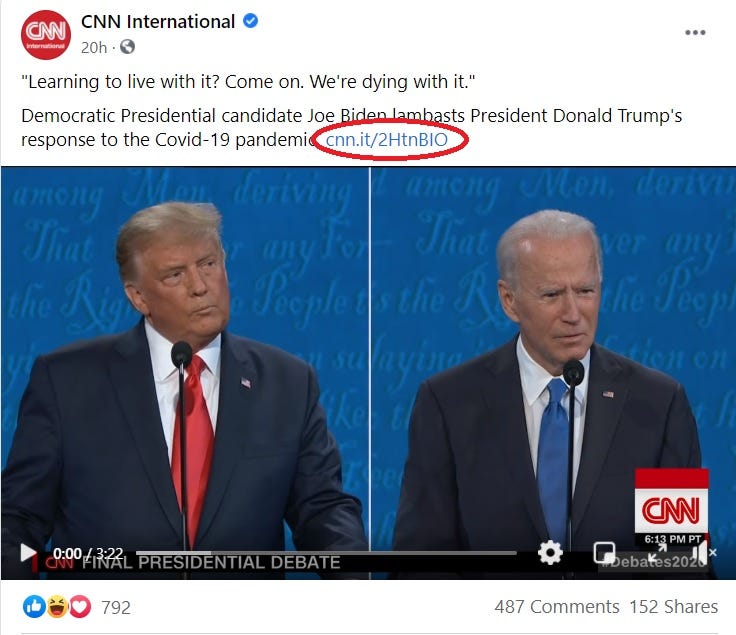
Example of a mishmash URL — Source: Author

From an emotional standpoint, a carefully thought vanity URL becomes more ‘familiar’, giving you a sense of security as it looks ‘less suspicious’ with the added human touch of recognizable words and numbers.

Would you be warier about the link when you see a post like an image below?
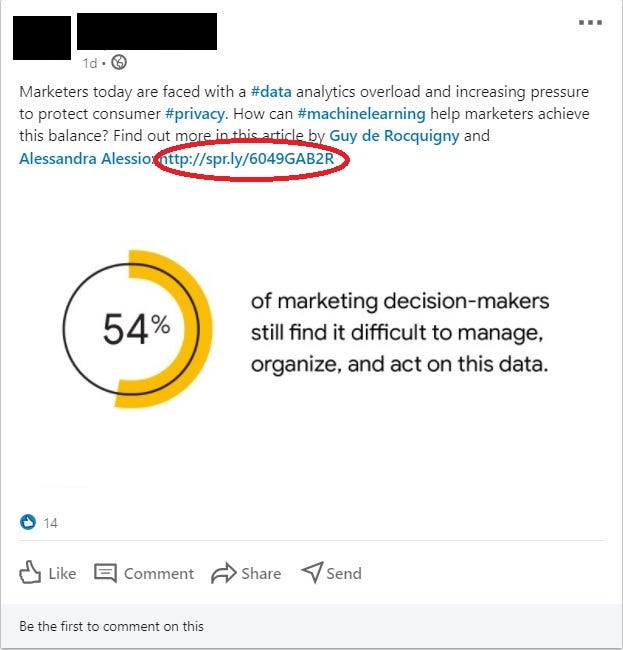
A link that leads to an article — Source: Author

The image above was actually taken from Google on LinkedIn (see below).
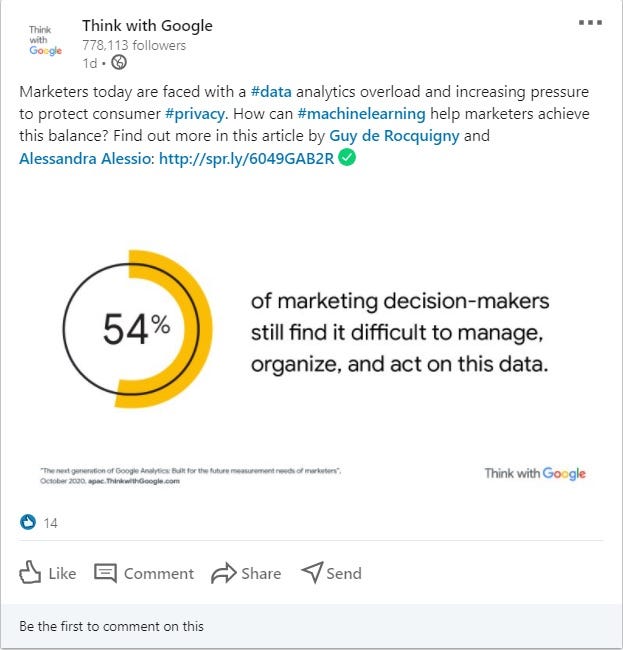
A LinkedIn Post by Google — Source: Author

Do you feel more reassured to click on the link now that there is a well-known brand name associated with the post?

Most people and companies do not have the backing of a well-known brand to instill confidence in their readers to click on their links, especially if it looks suspicious.

With near-endless combinations, the only thing limiting the number of ways you can form a vanity URL is your own creativity.

However, if your work/hobby requires you to create vanity URLs, it is good practice to have a naming convention.

Otherwise, as you create more, you might lose track of the different vanity URLs you have created, accidentally use a vanity URL you need later on, or even forget what it means and how to decrypt it.

In addition, if more than 1 person is assigned to create vanity URLs, it would get even messier if no rules are set to ensure consistency.

This article will share with you how you can be more organized through a naming convention, to prevent the above problems from happening.

A naming convention is a scheme or set of rules that will be used to label or name your vanity URLs.

Here are 4 steps to help you get started on creating one.

1. Understand your landscape

Before you begin setting rules, it is important to know the scope of which you will be using the vanity URLs.

Here are some questions to ask yourself:

How many people will be creating vanity URLs?

  • Will you be the only person having access to creating vanity URLs?
  • Will there be more people in the future with this access?

If you are going to be the only person handling the creation of vanity URLs, then you probably need not document it extensively.

What channels do you/your company own where you can use vanity URLs on?

  • What are these channels? (e.g. Social media, Website, Email)

Knowing what channels there are would help you gauge the number of different vanity URLs you would have to create if the marketing campaigns were to be a multi-channel.

List down all the channels.

How many variations of campaigns do you/your company usually do?

  • Do you usually spend a lot of money on ads?
  • Do you have an overview of the marketing plans for the year?
  • Are you the person doing the marketing campaigns too?

If a lot of money is spent on ads or marketing campaigns, the chances of having variations would be higher too.

Having more variations would mean that you would probably have to consider including the variation version in the vanity URL too.

In order to understand your landscape, you would have to know who will have access to manage the vanity URLs, the different channels you/your company own, and the tendency to create variations in your marketing campaigns.

After doing so, you will be able to pre-empt any future requirements and prevent problems down the road.

2. Set rules for naming your vanity URLs

Now that you are more aware of the existing possibilities to use vanity URLs as well as the potential ones that might be used in the future, you can start preparing a set of rules to name the vanity URLs.

Components

Start by listing what should be in the actual vanity URLs.

For starters, these would be good to have:

  • Campaign name
  • Date
  • Channel
  • Variation

Also, make sure the rules for the components include how each component should be named.

For example, specify how the date should be listed.

  • Month and year only — Oct2020
  • Numerical value — 102020
  • Together with the day — 25102020

Sequence

Then you move on to the sequence; how should they be arranged?

I usually have it like this:

domain.com/

This is how it would possibly look with the different components in the sequence below.
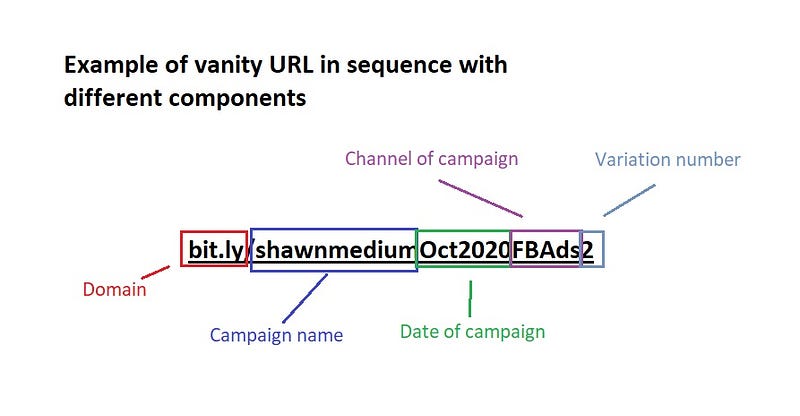
Example of an organized vanity URL — Source: Author

Additional rules

These are unique rules that would apply in certain conditions or to circumvent any possible problems from outlier events.

It can be something like not including your company name in your vanity URLs to preserve the quality of branding efforts or even to spell it in a specific manner when used in vanity URLs.

Create them as and when needed.

3. Keep track

More often than not, the platforms that you use to create the vanity URLs will have features and functions to allow you to organize and export the URLs you have created.

This means that the platform itself is self-sufficient in getting your links organized.

In the event that you do not have such features or access to the links, you may want to consider creating your own document to record them.

I would suggest using an excel sheet or google sheets as it is easier to form up the table.

Here are some of the columns you might want to consider having:

  • Actual link
  • Vanity URL
  • Date created
  • Clickthroughs
  • Last updated
  • Comments
  • Creator (Person who created the link)

4. Review

At the very beginning, you might want to review your vanity URLs more frequently. But as time goes by, you can review them in longer intervals as the process gets more stable.

When reviewing the links, ask yourself questions like these —

  • Were there any issues when following the rules
  • Are the rules still relevant?
  • Are the components still relevant?
  • Are there new channels?
  • Who will be accessing the links, can they create the links themselves?

If there are new elements and answers, then you would probably need to update the relevant areas.

For example, if you have been following the naming convention of having the dates component by month and year — Oct2020, but your company has grown rapidly in the past 1 year and wants to increase its spend on marketing campaigns.

From having 1 online event a month, your company decides to do it 4 times a month now.

This is when it would be better to include the day into the date component for future vanity URLs like so — 10Jan2021, 15Jan2021, 21Jan2021, 25Jan2021 so that you and your potential customers can easily distinguish when the actual event will happen.

After successfully implementing a naming convention for your vanity URLs, you will feel more organized and will require less effort to conjure them.

Also, you may never look at a URL the same again.

If you found this guide interesting or useful, you may also want to check out this article on 6 useful ways to use tracking links -

Marketing
Social Media
Productivity
Business
Digital Life
Recommended from ReadMedium