
4 Secrets Every Leader Can Learn From Successful Retirees
And what you can do about it, starting right now!

I have genuinely enjoyed this past decade spent as a leader in Corporate America. Yes, you read it right! It’s not been doom and gloom!
Of course, I encountered power fights, incompetence, mean and selfish behaviors. Yet, they didn’t outweigh the authentic moments of pride and realization that I was part of something bigger than me.
It wasn’t always the case, however. Like too many of us, I’ve had my dose of extreme frustration with corporate life. I would complain about office politics, the slowness of getting things done. I kept postponing and waiting until I would retire to do all the things that could make me happier, healthier, and more fulfilled.
Then, I realized I didn’t have to. So, I started to live like I’m retired, and despite all the usual difficulties, everything changed. I got more focused, procrastinated less, and became a much more effective leader. Here are the top principles I have applied that can help you too as you keep progressing as a leader:
# 1 Become an effective mentor
Your success is my success. It is probably the most fulfilling, yet challenging, achievement to reach in our individualistic society.
Think of how you can make a difference as a leader for your whole company by helping your team members or colleagues in other teams.
The point here is to extend such an offer and have a proper mentor mentality. It’s probably one of the most difficult ones when you’re in a leadership role. Team members often won’t dare to reach out. You need to volunteer your help and be strategic with your questions. Here are a few ones I’ve seen make the most significant impact:
- “What does success look like to you?” It pushes people to consider their goals and desired outcomes. It gives context to their current situation, whether it’s the big picture or a very particular situation.
- “What top three challenges are you facing?” By narrowing things down to the top perceived obstacles, you help people prioritize what’s getting in the way and have them think harder about what they control or not. The simple fact of spelling out your top challenges gives you a better sense of what you can influence or not and where you should put your energy.
- “What options have you already identified?” Here you make sure people take further ownership of how they’ll address their identified challenges. As you let them elaborate, have them explore the different aspects of such options. If they’re stuck, keep asking open-ended exploratory questions like “Tell me more…”. It helps expand their horizon and practice their critical thinking.
#2 — Turn into a lifelong learner

The daily whirlwind of corporate life can be challenging for any leader, and you’ll soon find yourself putting out fires all day long.
If you don’t step back with a deliberate effort to learn something new every day, you will regress. That’s a fact of life.
You might not experience the higher cognitive decline rate older adults face. Still, you’d better make mental acuity a key priority. Numerous psychological studies have proven that the best way to go about it is to learn new skills.
So don’t wait for your HR organization to build the perfect learning plan for you as a leader. Be proactive and dive into it! It has never been easier these days. The pandemic eliminated commutes (for now) and triggered new behaviors that are here to stay. We have traded a lot of “busy” time for “quality” time. Spend some of it with your loved ones, but make sure you keep a portion for learning too! Online learning quality is still, but new best-in-class experiences are emerging and leverage the power of communities.
On that point, I recently participated in a Product Strategy Sprint online training offered by Section 4, Scott Gallaway’s latest venture. This fast-paced two-week online program gave me much hope that education is on its way to the correct transformation. It struck the perfect balance between lecturing, break-out rooms, workshops, time for practice, and final report. Check it out; I trust more education programs will start to follow this path!
# 3 — Be physically active

By now, we all know the correct dose of physical activity is essential at every stage in life. So don’t wait until you’re retired to establish a rock-solid routine! It will pave the way for stronger mental and physical health down the line.
The essential notion here is “routine.” To make sure they stick, I typically handle my physical activities like any critical meeting.
I’m diligent about marking my calendar with daily exercises. It means blocking times in my work calendar where I specifically call the name of the activity, like “Tuesday morning, 7 am — 8 am, Speed Session — Intervals 6x800m”.
OK, I know, I’m a marathon runner. You surely don’t need to go that far to get noticeable results. But make sure you mark down your work calendar with these daily activities, even if it’s 20 minutes walking around the block. You will feel better, energized, and stronger at addressing the challenges thrown at you.
# 4 — Meet new people, experience more places
The pandemic has thrown a monkey wrench into many of our travel plans and dreams of exotic destinations. Yet, even in a more virtual way, 2020 was one of the richest years I’ve had when it came to meeting new people. As for physical activity, be deliberate about it, and it will soon become second nature.
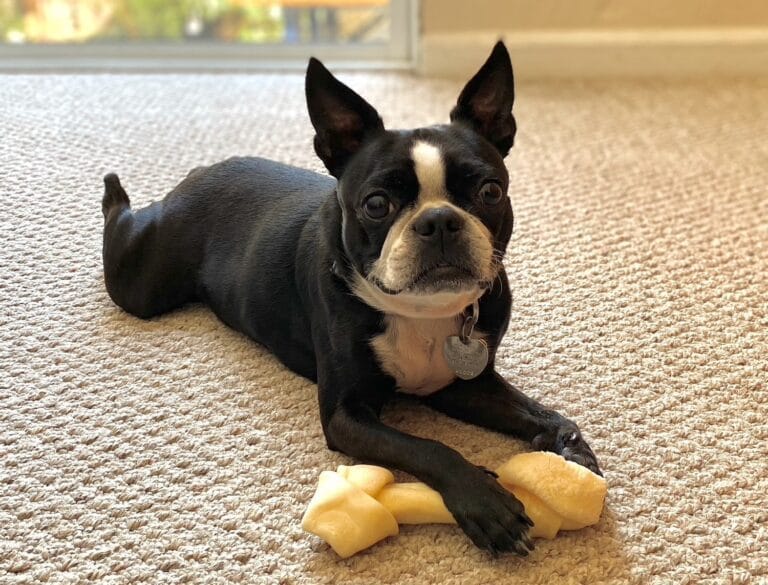
I always keep my dog in mind when I’m about to meet new people. Romeo is an adorable little Boston Terrier who expects magic in every encounter. Although it doesn’t always end up that magical, sometimes it does, and it pays off.
Meeting new people, discovering new places has proved to increase empathy, emotional intelligence, and creative thinking.
So, build the habit to reach out, make new connections and reconnect with your network too. Meet at least one new person, rekindle with two people in your network and go to one new place every week. It doesn’t have to be far. You can keep exploring your district, your city, your county.
Your ideal future is now!
Like everyone, I’ve had and will have my dose of tragedies. It’s a simple fact of life. I’m at peace with this and fully accept it.
I also realize the ideal future is now! You can experience it today and apply these four rules to your corporate and personal life.
By increasing your focus on what matters, you will become a better leader. It will also help you go through hard times with more grace and accept the unavoidable setbacks.
Don’t wait! Start practicing each of the following today:
- Mentor one team member using the framework I highlighted.
- Listen to a podcast, read an article and write down your key learning.
- Go out for a walk or run for at least 20 minutes (try a new trail, by the way!)
- Look out for second-degree connections on Linkedin who have similar roles. Reach out to one of them offering to share your thoughts (record a personalized video message instead of a text message to increase your chances of response!).
Repeat tomorrow and every day after that. I can’t wait to hear how much better you’ll soon feel! And if for whatever reason, you feel stuck and need help, I’ll be delighted to be that guide. Please write to me directly at [email protected]. Enjoy the journey!