
4 Science-Backed Tips to Eat Less and Taste More
Simple ways to enhance your eating

Most of us live in a world surrounded by food. The fact that we can snack on anything, anytime, presents us with the unique risk of constant consumption — or falling into bouts of “eating amnesia” where we consume without tasting or noticing any signals of hunger or satiety at all.
This compulsive, senseless eating poses a danger to our mental and physical health. It also causes us to waste money and resources on food we never actually wanted, needed, or even truly tasted, but consumed anyway out of boredom or instinct.
While we can’t eradicate the external cues trying to trick us into eating, we can regain control of our own habits. Whether you want to lose weight or simply maximize the joy your food brings you, these four helpful tools to eat with more intention and pleasure.
1. No cold water
“We plunged into the deep water and all was dark. Cold it was as the tide of death: almost it froze my heart.”
— J.R.R. Tolkien
Cold numbs, which is great for a sore muscle but terrible for enjoying delicious food. When you drink cold water with your meal, you’re weakening your taste perception and making it harder for your taste buds to detect the thousands of chemical signals in each bite.
In fact, Charles Spence, a professor at Oxford in experimental psychology and author of Gastrophysics, even speculates that Americans’ habit of eating meals with ice water may contribute to their excessive use of sugar and salt. When you numb your tongue and make it impossible to enjoy the layers of flavor, you need to ramp up the sweet and salty in order to taste anything at all.
I once went to a Michelin-star restaurant in Chicago where they poured us freezing cold ice water with our meal. I mindlessly drank the water as I waited for my dish without thinking much of it. By the time our food arrived, I realized with horror that all the flavors were muted. I couldn’t detect the cloves in the sauce or the hint of anise in the sorbet. It felt like I was experiencing the meal in black-and-white instead of color, like all the layers of flavor had been reduced to the generic building blocks of salty, sweet, bitter, and sour. I couldn’t help wondering why I had just spent so much money for a gourmet meal only to attenuate the most essential sense needed to experience it. It was like going to a performance only to put on a blindfold upon entering the theater.
2. Start every meal with laughter
“Ten times must you laugh during the day, and be cheerful; otherwise your stomach, the father of affliction, will disturb you in the night.“
-Friedrich Nietzsche
Have you ever felt the twist of your intestines upon seeing your deepest crush enter the room? Or the stomach wrench of a breakup? What about the gut punch of lying? The butterflies of public speaking?
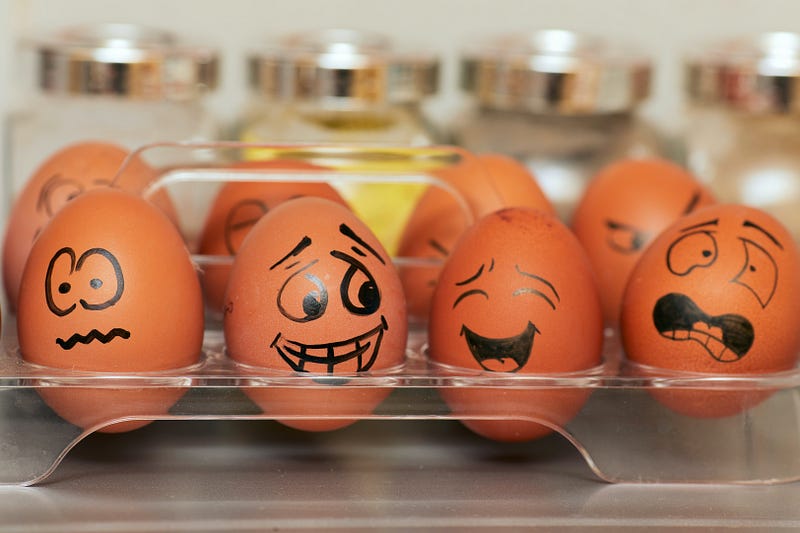
Studies of our intestinal microbiome provide the scientific evidence for something we all already know instinctually: our guts are our emotional processors. Just as they trigger the release of stomach acids and digest food, they likewise trigger and digest our feelings.
Nausea, stomach cramps, hunger, rumblings, fullness, constipation, satiety, and bloating, among many, many more gastrointestinal reactions can all be triggered or exasperated by our emotional state.
Because our guts are so perfectly tuned to our emotions, we should try to optimize our emotional state before eating.
In other words, try to eat in a good mood.
Next meal, try adding a dash of laughter to your dish before grabbing your fork. Science says it will likely make your food taste even better.
Need some recipes for a belly laugh to start off the meal? Here are some ideas:
- Invite your favorite jesters. Remember, the only thing more contagious than the BA.2 Omicron variant is laughter. The next time you host a dinner party, make sure to only invite your funniest friends.
- Play your favorite song. I always turn on my jams when I cook, so dinner naturally follows my own private mini-dance session under the stovetop lights. Even if you don’t booty shake as you stir the sauce, however, the right music will definitely get your gut in its happy place.
- Do the most ridiculous thing you can think of. Last night I put a framed photograph of Sir Patrick Stewart riding a giant sloth on the dining room table. I provided no explanation to my partner, who then told me that my spinach gnocchi tasted even better than usual. Coincidence? I think not.
- Play with your food. Go ahead and navigate your knife through the dark broccoli trees in the treacherous forest of Cheddaros. Make your enemy biscuits bleed raspberry jam as you snap them into pieces. If they don’t confess, threaten to drown them in the boiling black tea pits of Ceylon. In the Game of Scones, you win or you dine. (Or you can just line up your blueberries into the shape of a smile on your pancakes. Either way, the science shows that silliness can help you better absorb your food’s nutrients!)
- Watch your favorite comedian. Pour yourself a glass of Merlot and watch (or read) something so funny that you spit-take red wine all over your white carpet. Just make sure you finish your entertainment before you sit down for your meal so that, when you’re eating, you can best focus on the delicious food in front of you.
3. Use all your senses
“If a person fights the clear evidence of his senses he will never be able to share in genuine tranquility.”
-Epicurus
For some reason, we’ve decided that we can sniff, swirl, scrutinize, and slurp our wine in order to best identify the layers of tasting notes, and that’s totally normal and socially acceptable. But a strawberry is just a strawberry.
Screw that. Sniff, scrutinize, and chew your strawberry like a good wine, because all our fruits, vegetables, and animal products have just as much complexity, history, and beauty as your glass of pinot. That strawberry’s taste depends on the soil in which it grew, the climate of the region, the variety of the species, the water used to irrigate it, the topography of the field, and so many other factors that contribute to its flavor. So don’t be afraid to be that weirdo smelling your strawberry, biting into it slowly, and tasting the terroir where it grew.

Start with your eyes. Observe and appreciate the strawberry’s color and the unique texture of its seeded skin. This applies to your meals as well. Before you eat, take the extra minute to plate your meal in an aesthetic-pleasing manner, spreading out the ingredients across the plate so that you can see each one as you eat it. Psychology has shown that visual cues really do enhance the taste of food. (Also, if you’re aiming to eat less, spreading your food across your plate has the added bonus of making you feel more satisfied with less, because it convinces your brain that you’ve eaten more than you actually have.)
As Spencer notes in Gastrophysics, you can also enhance certain flavors with colors and shapes — taking advantage of our natural proclivity to synesthesia. We all have some degree of synesthesia, which is the psychological association between disparate senses. For example, most people find the sound of crunch best matches a star-like shape with pointy edges rather than a rounded blob.
We also connect tastes with shapes and colors. For example, we tend to associate round shapes with sweet, and angular shapes with bitter. Likewise, we often perceive the color white or blue as salty, pink as sweet, green as sour, and black as bitter. Using this knowledge, next time you make a dessert, try serving it in a pink, round bowl to enhance the sweet flavor without adding any actual sugar!
Don’t forget your ears either. Listen to the crunch of each bite. Studies show that people who hear the crunch of potato chips find them crunchier, fresher, and more satisfying than people who each have the same chips with noise-canceling devices. Hearing your food will leave you much more satisfied with less, which is one of the reasons why restaurants with loud music often encourage overeating.
Lastly, feel. If it’s something you eat with your hands, feel the texture on your fingers before feeling it on your tongue. For those of you aiming to eat less, try holding the plate (or, even better, bowl) in your hands. The physical weight of the dish will make you feel more satisfied and convince your brain that you’ve eaten a significantly more substantial amount. If you’re in a restaurant, take small bites and enjoy the texture, whether it melts in your mouth or offers a crispy friability.
4. Create a ritual
“[R]itual has an anticipatory relevance — we prepare for it, practically and psychologically; that’s part of its benefit.”
— Jeanette Winterson
One of the reasons meals out at a restaurant can feel more enjoyable or memorable than a home-cooked dinner is the actual performance of dining out. You dress presentably, go to the restaurant, sit at the table, order drinks, chat, order food, and then wait in anticipation for the food you ordered to arrive. When it does, you probably eat it more deliberately, if for no other reason than not to splatter mole sauce on your one pre-pandemic outfit that doesn’t close with a drawstring.
At home, rather, we often jump straight to eating. We don’t wait in anticipation for our plate to arrive. We don’t worry about proper manners or small bites, which means that we don’t eat deliberately.

In order to get yourself in a restaurant mindset even with your simple salad at home, try instating a ritual to perform before (or during) eating. Studies show that such ritualization of food enhances our perception of its taste and allows us to better focus on what we’re eating.
A classic and simple ritual for many families is saying grace before digging in. But you could just as well listen to a song, tell a joke, light a candle and sing happy birthday, juggle a ball, or kiss your framed photo of Sir Patrick Stewart on a sloth as your pre-meal ritual. Maybe just setting the table, pouring yourself a glass of room-temperature water, and sitting down at your dining table sets your intention to eat with love, appreciation, and joy.
You can also build tiny rituals to perform during your meal. For example, in the morning, I eat five spoonfuls of my yogurt plain. Then I open a banana, cut it into tiny pieces, and stir it into the remaining yogurt before eating the rest. This silly little ceremony serves no other purpose than to disrupt my otherwise autopilot eating and remind me to taste.
I hope these science-backed tips help you remember the joy of tasting something delicious.
If you want to read more about eating with love, check out this article: