
4 Reasons I’m Glad My Son’s Autistic and Intellectually Disabled
And I’d still be glad if he wasn’t
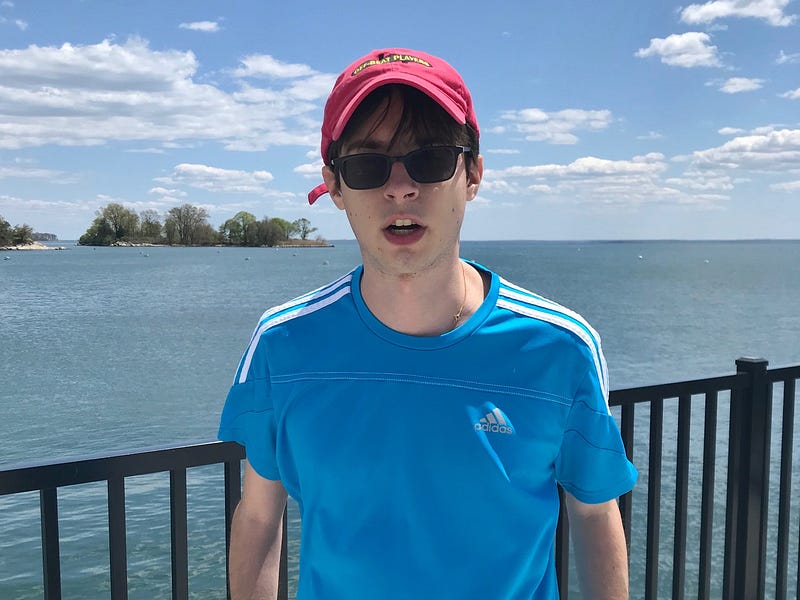
Had someone asked me twenty years ago, “Are you glad your son’s autistic and intellectually disabled?” I’d have thought the person crazy or twisted. If she’d followed up with “Well, I’m glad mine is,” I’d have thought she was suffering from either delusion or Munchausen by proxy — that syndrome where a parent (usually the mother) makes up or causes a disease in her own child just to get attention.
I’ve become that lady, but believe me, I’m not crazy and I don’t have Munchausen. It’s just that parenting has completely changed and humbled me and made me see things I thought impossible.
When I say I’m glad my son’s developmentally disabled, I speak only for myself, not for any other parent — not even my husband — at any given stage of their parenting experience. I’m also not speaking for my non-disabled son Andres, whose sibling experience I care about immensely. And I’m certainly not speaking for my son disabled son Diego or for any other person with developmental disabilities. Everyone’s experience is unique and changing.
I’m specifically talking about what Diego and his developmental disabilities have done for me, and how I feel about it all today. Basically, this is selfish me talking, honestly and openly.
Diego has forced me to confront my arrogance.
When I was pregnant, I thought about what kind of parent I wanted to be and what I wished for my child. I’d show my son the world, listen to him, support him in whatever dreams he had. I wished him to be happy and healthy. I’d love him no matter what, just as he was.
Then, as Diego grew older and was diagnosed with autism and intellectual disability, I just focused on “fixing” him, literally. I wanted to get rid of his autism and cognitive differences, for Diego to earn a high school degree, go to college, and achieve physical and financial independence.
For too long, I didn’t accept he was autistic, much less intellectually disabled. I hid it from others as well.
Whatever happened to celebrating and loving my son just the way he was? How about just wanting him to be happy? I guess I “just” wanted him to be happy as long as he fit society’s model of success. I must admit it: I needed for Diego to be “successful” and go to college not only because I believed a college education would make Diego happy, but because it would make me happy.
I was so full of it!
I actually had the arrogance to think I knew exactly what was best for Diego and that I would make it happen. I didn’t stop to think that a meaningful life didn’t require following the same path I’d taken and all my siblings’ and friends’ children were on. At some level, I must’ve known there were other paths, but it took me way too long to notice and explore them.
Diego helped me open my mind, and to re-evaluate what it means to be happy and whether happiness should be life’s end.
I’m a special education teacher because Diego’s disabled.
Ok, I know I’d likely have another fulfilling job had Diego been “normal” but it certainly wouldn’t be in special education.
If I could choose one superpower, it would be to know what my life would’ve been like given alternative choices and scenarios. Since that’s not the case, I can only speculate and my guess is I would’ve ended up doing something more “glamorous” because, well, I was full of it.
Diego and parenting have grounded me.
Diego has given me access to a different kind of mind.
Everyone’s unique. But Diego is beyond unique. He’s incorruptible, 100% authentic. He has a code and doesn’t divert from it. It includes, for instance, never saying anything negative about anyone, and telling people to “talk about something else” when he hears them criticizing others.
It doesn’t occur to Diego that you need to learn anything to a specific level within a given time frame. You just keep trying and learning. He gets satisfaction from the process and that’s it.
Diego’s mind notes differences but he doesn’t judge them as good, bad, better, worse, preferred or dispreferred. He’ll say, “Rob doesn’t walk; he has a wheelchair,” or “Jessie has a voice box to talk” because that’s their reality, and there’s no pity or admiration in either observation.
He profiles with no intention to attach any negative stereotype, only to know how he can engage the person better by, for example, saying “Hola” or “Ciao” instead of “Hello”.
Diego’s mind records everything that happens any given year, which is pretty cool. Off the top of his head, he can list people he met, movies released, places he visited, and any family member who died, got married or was born in any given year. He also has a great visual memory and never loses his child-like interest in what he loves.
I used to constantly be thinking about how to turn Diego’s relative strengths into gainful employment. It was all about achieving what everyone’s supposed to achieve. Diego has taught me that not everyone must have a paying job to contribute to society or feel fulfilled. Not every ability needs to be monetized!
The complexity of any human mind is unfathomable. It’s just that this complexity becomes evident when you witness a unique mind like Diego’s. It’s not special in that it operates better or worse than other minds. It’s just that it operates very differently because of his developmental disabilities.
Diego has shown me the human potential for love.
This is, if not Diego’s gift to the world, at least his marvelous gift to me and our large extended family. Diego is a sac of love. He knows humans are capable of doing bad things and is fascinated by villains in legends and Disney movies, but he is incapable of evil.
Plus he’s disarmingly affectionate and says the kindest things. He strokes your arm when you’re sad, tells you he’ll take care of you when you’re old, and instantly forgives you. Any haughtiness and grandiosity my husband and I have he has managed to soften.
Parents worry a lot about what will happen to their disabled children when they’re gone. I worry a bit too, and I do plan for Diego in a way I never would if he wasn’t disabled. But Diego has taught me I shouldn’t expect to know what will be good for him in a decade or two. I must focus on the present and what brings Diego joy and fulfillment now.
You know how sometimes you read about people who’ve lost a limb or two and who say they wouldn’t change a thing? Or people who’ve lost their fortune and later say that’s the best thing that ever happened to them? It sounds crazy but these experiences can be true. It has been true for me when it comes to Diego.
I’m aware it’s an illogical assertion since I’d love Diego just as much if he wasn’t autistic or intellectually disabled, that is, if he’d been born normal. I know so not only in theory but because my second son, Andres, isn’t developmentally disabled and I love him infinitely too. I’m glad he’s not disabled!
I will admit that getting over (to the extent that I have) the hangups and arrogance and BS that having Diego brought to the fore was a torturous journey. Some days Diego drives me nuts with his constant talking on the same topics. Sometimes I don’t feel like helping him brush his teeth and shave, and it frustrates me to no end that we can’t get rid of his toenail fungus because he’ll put on his socks on wet feet. I also feel bad telling him he can’t get a driver’s license and that we’ll need to wait for self-driving cars to come out.
The difficulties are real, and just like an amputee wouldn’t wish an amputation on others, I don’t wish disability on anyone either.
Still, I’m being totally honest when I say I feel equally lucky about the children I have. And I marvel at the fact I’ve come to feel this way.