
4 Reasons Gaming is Good for You
And why you should adopt it as a habit.
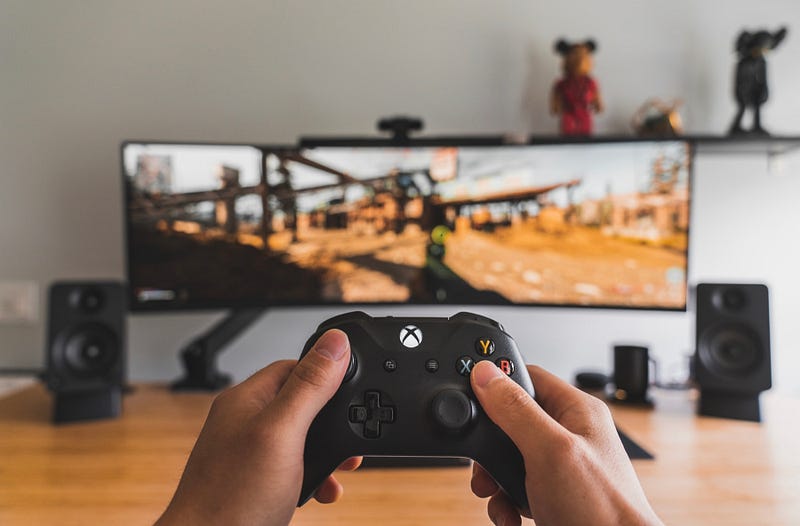
There are 2.3 billion people today who play video games.
Is the world heading towards doom? Not necessarily. In fact, maybe not at all — gamers might be our future.
It is difficult for people who do not play video games to understand gaming. It is easily dismissed as a waste of time, escapism, an act of isolation or loneliness, or simply an addiction we need to get rid of.
There has been a lot of research in the past on how gaming can be linked to anxiety, isolation, loneliness, depression, and many other negative attributes. Gaming addiction has recently been categorized as a disorder.
This is in extreme cases though — a case of addiction disorders.
What happens if you play for 2–3 hours a days, say 20 hours a week? There has not been enough research done on the benefits of gaming, which is thankfully starting to gain traction. What has been discovered so far though, may surprise you.
What might also surprise you, is what qualifies as a game. Many of us might claim we have never played a video game, thinking those refer to the likes of Minecraft, Call of Duty, or League of Legends. However, if you have ever spent time addicted to Candy Crush [or Tetris!] then you are a gamer too — welcome to the gaming community.
So here are 4 transferrable skills gaming can give you.
A growth mindset
Carol Dweck coined this new term and explained it as a mindset where one enjoys challenges, and can see failures not as hindrances but as an essential part of the process to get better and develop talent.
This is exactly what gaming does. It develops curiousity to learn.
Gamers persevere through challenges and difficulties while playing, until they master the level or game they’re at. They see failures as simply part of the process of getting better. They are not embarrassed to fail, they do not see the struggle as a sign of unintelligence, they see it as part of the game and part of being in the community.
This mindset is then applied to everything in life — work, school, social settings, and relationships.
Self-confidence
Gaming builds confidence.
Each time you play a game, you need to learn how to play it. Each new level or world you break into, not only teaches you something new, it also proves to you how you were able to learn something new.
When kids discover new games on their iPad and learn how to master them, they are building the confidence in seeing what they are able to do. This is applicable at any age — learning builds your grey matter. Learning builds confidence.
Any game designed to be challenging will naturally build your confidence.
If you want to know if this is the ‘right’ game to build confidence, ask yourself: what have you gotten better at in this game? What is the hardest thing you have achieved in this game? This can be as simple as ‘how to communicate better with my teammates’ to ‘I can control my breathing better in stressful situations’ if you are competing at a more professional level.
Social skills and a support system
This might come as a surprise — gaming can build social skills.
Gamers are not afraid to ask for help when they are struggling in a game. This breaks walls between gamers, and when there is a time when they need to reach out for [non-gaming] help, they generally find it easier to reach out to their gaming friends for support, since they have done so already.
As Jane McGonigal puts it, there is a cultural currency to playing a game your peers play — it naturally makes it easier to have a friend group or a community around you, you immediately have something in common with your peers.
This means, playing the most popular game is a good thing!
Adaptability
Gaming explores new and potential futuristic worlds. It opens our minds to ‘unrealistic’ possibilities.
When the pandemic hit, gamers who had played pandemic-simulating games in the past were more accepting of mask-wearing and social isolation, since the concept was not new to them!
Gaming can be used as a safe environment to explore these potential future scenarios. There are games currently which explore the possibility of total internet cut-off, and how you can survive if such a scenario came into play. It might sound impossible. This happens already in smaller communities in China and India through political control of the media. It could happen globally one day.
Gaming works your mind’s muscle, allowing a more open mindset to the normative world we live in today, and improving the ability to deal with unexpected events in our future.
According to Dr. McGonigal, there has been no research on the negative impacts of gaming for gamers who play under 21 hours a week.
It is worth the effort then to explore the benefits of gaming, and to allow yourselves [and your kids] to play games guilt-free.


