
Cultural Analysis
4 Novels About Love Set Amidst Violence in South Korea
Deep bonds form during protest, state suppression, and the aftermath of war in South Korea’s 20th century history
In 2019, ongoing, large-scale violence caused me to leave my home. Traumatic ripples plagued my life for some time afterward and sent me on a search for stories similar to my own. Though at the time I wanted to escape violence, I found myself headfirst into novels that I hoped would mirror my emotional state and provide some salve. In my accidental study of the literature, I discovered that violence in fiction had two main forms of expression: physical (graphic bodily acts) and psychological (thoughts and emotions). While the first showed the worst in people, the second seemed to show the best. It provided hope and a sense of connection by knowing that I was (that we were) not alone in suffering. These last stories were the ones I focused on.
As I made my way through various literatures I got stuck on South Korea — a country with a violent modern history, surviving war, dictatorship, continued uprisings, and brutal State repression following its split from the North after WWII. Rather than a backdrop, this political landscape was central to the stories I read set in the modern period. Still, in the midst of it all, there was love. And hope for the future. What I like about the four novels below is that they don’t shy away from the violent reality of South Korea’s recent past, but neither do they fall into nihilism. Love and pain and separation and rebirth are equally integral to their stories. I left each with a sense, not that everything would be alright, but that it was alright if it wasn’t.
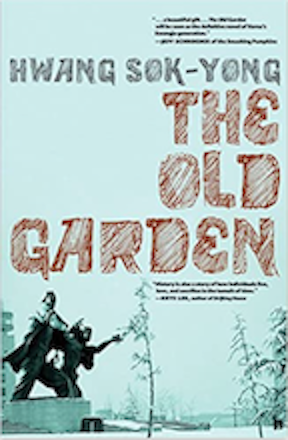
The Old Garden by Hwang Sok-yong (translated by Jay Oh)
The novel covers a roughly 20-year period in 1980s and 90s South Korea, following a man and a woman who encounter each other briefly, fall in love, and are separated indefinitely by structural circumstances (he’s an activist, imprisoned for 18 years). Though separated, the two continue to affect each other for the rest of their lives. Flipping back and forth between first-person perspectives, the novel takes us through the turbulent years before the transition to democracy and shows the effects of State violence on everyday individuals. For the protagonists, tragedy is not only in their separation, but in all the normal ills that befall them as they try to live quiet lives. Yet, rather than leaving the reader hopeless, the novel reaffirms humanity through the bonds that form, and the love that can take shape, even or especially in the midst of terrible circumstances.
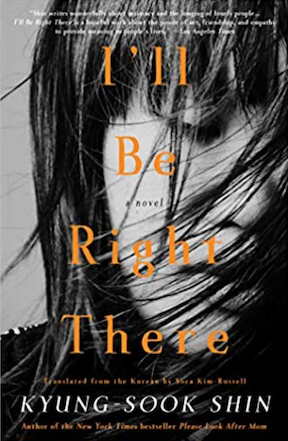
I’ll Be Right There by Shin Kyung-sook (translated by Sora Kim-Russell)
Set during the pre-democratic 1980s protests, the novel follows three central characters just trying to be alright in the midst of heavy and ongoing violence in the streets, as part of riots and repression. The book is somewhat atmospheric in its telling but always lands on the ground, rooting itself in physical reality with strong descriptions of how the characters are experiencing it all. Two of the three central characters are deeply in love but their traumas are too severe for them to enter fully into a relationship. Instead, the reader is pulled from the high of their ‘meet-cute’ during a protest — and all the opportunities for romance that might entail — to the low of knowing they are too defensive to risk being with each other. Still, it is lovely to see them through their pain. It gave me hope not for the possibility of a better future, but in knowing I wasn’t alone.
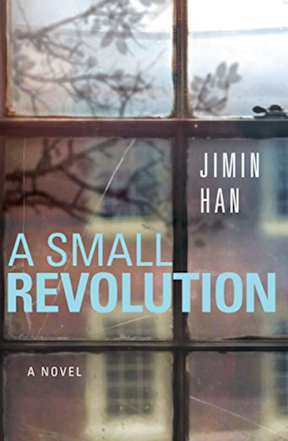
A Small Revolution by Jimin Han
This one is a little different. It’s a mystery, and so, has the makings of a genre book more than a literary one. Also, it’s about Korean-American students and set between Seoul and the US. The basic premise is that three students from the US (one female and two male) meet on a college trip to South Korea in the late 1980s. They get wrapped up in the protests, one of the males disappears, and some months later the other male takes the female hostage (along with her two friends) in their dorm at a US college. The romance blooms in Seoul between the female protagonist and the male who later disappears. The story flips between the present hostage situation and the prior trip to Korea, feeding information to the reader, until the story converges in the present time. While this one may be aiming to produce an elusive or despondent feeling, it is filled with the naïve love of a young woman and her continual hope for a better future.
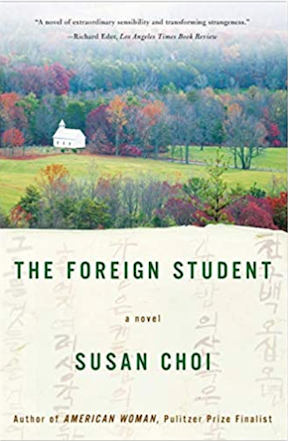
The Foreign Student by Susan Choi
Taking place in the Southern United States just after the Korean War, this is a love story between an American woman and a Korean man who meet at university, where he has come to start life over after his country, family, and life are torn apart in the war. Following the backstories of the two protagonists, we learn of the individual traumas they’ve experienced, how they became the people they are today, and (implicitly) why they are drawn to each other. While much of the story occurs in the US (both in the present timeline and in the woman’s backstory), the man’s history presents an account of the South Korean landscape amidst horrific violence and upheaval during war. Unlike the books above, which produce a feeling of common humanity through suffering, this novel offers the main characters the possibility of escaping that suffering through their love for each other. It’s a reminder too that surviving doesn’t just mark the end of something, but also the beginning.