
4 Non-Data Science Books That Will Make You a Better Data Scientist
These 4 books teach you things that online courses don’t.

Data science goes beyond data and models. At the end of the day, you need to use your communication skills to sell your ideas persuasively, use great storytelling to make the most difficult concept easy to understand for everyone and use people skills to work well with others.
All of this isn’t taught in online courses or masters programs. Fortunately, you can learn them by reading books that aren’t actually meant for data science but have great value for data scientists.
Here are 4 books that will help you stand out as a data scientist.
Disclaimer: Some of the links in this article are affiliate links and if you go through them to make a purchase I will earn a commission with no extra cost to you.
The Presentation Secrets of Steve Jobs
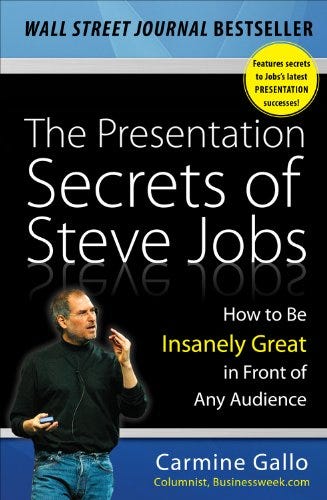
Most people who assisted to a Job’s presentation described it as a memorable and exciting experience. He not only presented his ideas effortlessly but he had the ability to turn boring topics into exciting stories.
This and other techniques he used made him a great communicator. Data scientists need also to be good communicators, so you have a lot to learn from Jobs.
In the book, you’ll learn how to create a story that simplifies complex concepts, use the right techniques to keep your audience engaged, and sell your ideas persuasively.
There are many points that make this book great. I’d like to highlight those that you’d need in a presentation:
- Make numbers meaningful: At the end of any project, you have ratios that indicate how good or bad is a model. Instead of just saying what those numbers mean, you should emphasize the impact those numbers have on the business. When Jobs presented the iPod, he didn’t just mention it had 30GB of storage but described what you could store with it: “7 500 songs, 25 000 photos, and 75 000 hours of videos”
- Answer the one question that matters most: When preparing for a presentation you should put in your audience’s shoes and ask yourself “Why should I care?” People don’t care about you, but themselves. Show them how you can help them achieve their goals.
- Create an inspiring story: Jobs created the story before building the slides. These stories helped him capture the imagination of his audience.
- Build visually engaging slides: There are very few elements in Job’s slides, yet they’re very powerful. You might notice that he doesn’t use bullet points, but headlines that are memorable, concise, and offer personal benefit.
I also highly recommend you watch Job’s keynote presentations. I found many of them on YouTube. There you can see all his techniques in action.
Links: You can get this book here.
Storytelling with Data: A Data Visualization Guide for Business Professionals
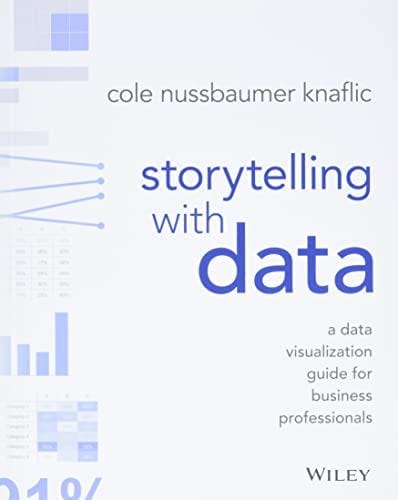
This book might seem exclusively for data scientists (it has the word data in it), but it’s not.
The book focuses on explanatory analysis rather than on exploratory analysis. In both, you might find visualizations, but they’re used for different purposes.
Exploratory analysis is what data scientists do on a daily basis when analyzing the data they’re working with in order to discover patterns, spot anomalies, etc. In contrast, a data scientist will do an explanatory analysis to transform the data into information that a broad audience will be able to understand.
The goal of this book is to help you use the power of storytelling to easily explain any concept and make people engage with your presentation.
What I like about the book is that not only contains theory, but also real-world examples that you can use in your next presentation.
Some things you’ll learn are how to:
- Use great storytelling to help your message resonate with your audience
- Determine the appropriate type of graph for your situation
- Direct your audience’s attention to the most important parts of your data
- Use concepts of design in data visualization
Link: You can get this book here.
People Skills for Analytical Thinkers
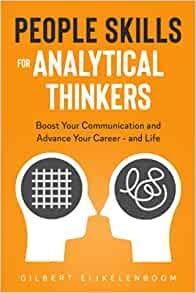
If you ever had problems presenting your ideas and explaining your analysis to non-technical people, you need to start working on your people skills.
People skills are as valuable as your analytical skills. This will help you gain self-confidence, have productive social interaction (even with people with different personalities) and get people to listen to your ideas attentively.
The book is perfect for analytical thinkers that want to communicate better in the business world.
The book uses algorithm and data metaphors to explain all this human behavior
What makes the book great for data scientists is that the book speaks your language. It doesn’t dive into human behavior explanations without using metaphors that a data scientist will understand.
In the book, you’ll understand what are “your own algorithms” and how they can produce bad outputs (e.g., you’re afraid to express your ideas or say “no” to people) that make you perform badly at work.
Of course, none of the lessons in this book will help you if you don’t put them into practice. That’s why I highly recommend you do the exercises that are at the end of each chapter.
Link: You can get this book here
Naked Statistics
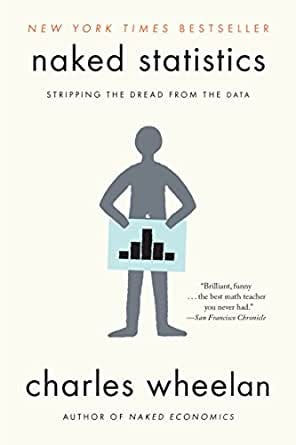
If you ever had trouble understanding statistical concepts or explaining the statistic behind the data you’re working with, this is your book.
One of the goals of this book, as mentioned by the author, is to make the most important statical concept more intuitive and accessible for anyone interested in the power of numbers and data.
The author uses many analogies and real-world applications of common statistics such as the mean, median, standard deviation, and more. When reading the book, I felt that even if you are quite familiar with these concepts, you can steal the techniques and examples the author uses to describe each concept.
The book helps you explain statistics with simple language
I included Naked Statistics in this list, thinking more of communication than statistics. Again, if you already have knowledge of statistics, the book might seem basic, but it’s still worth your time if you want to improve your communication skills. Explaining statistics to your peers is easy, but things get more complicated with people without a technical background.
Remember, one of the points of statistics is to inform our lives not only to colleagues but to anyone. The style of communication of the author and the examples in the book will help you talk about statistics in layman’s terms.
Link: You can get this book here.